Current Affairs
Karnataka and Andhra Pradesh Lead India’s Social Media Ban for Children
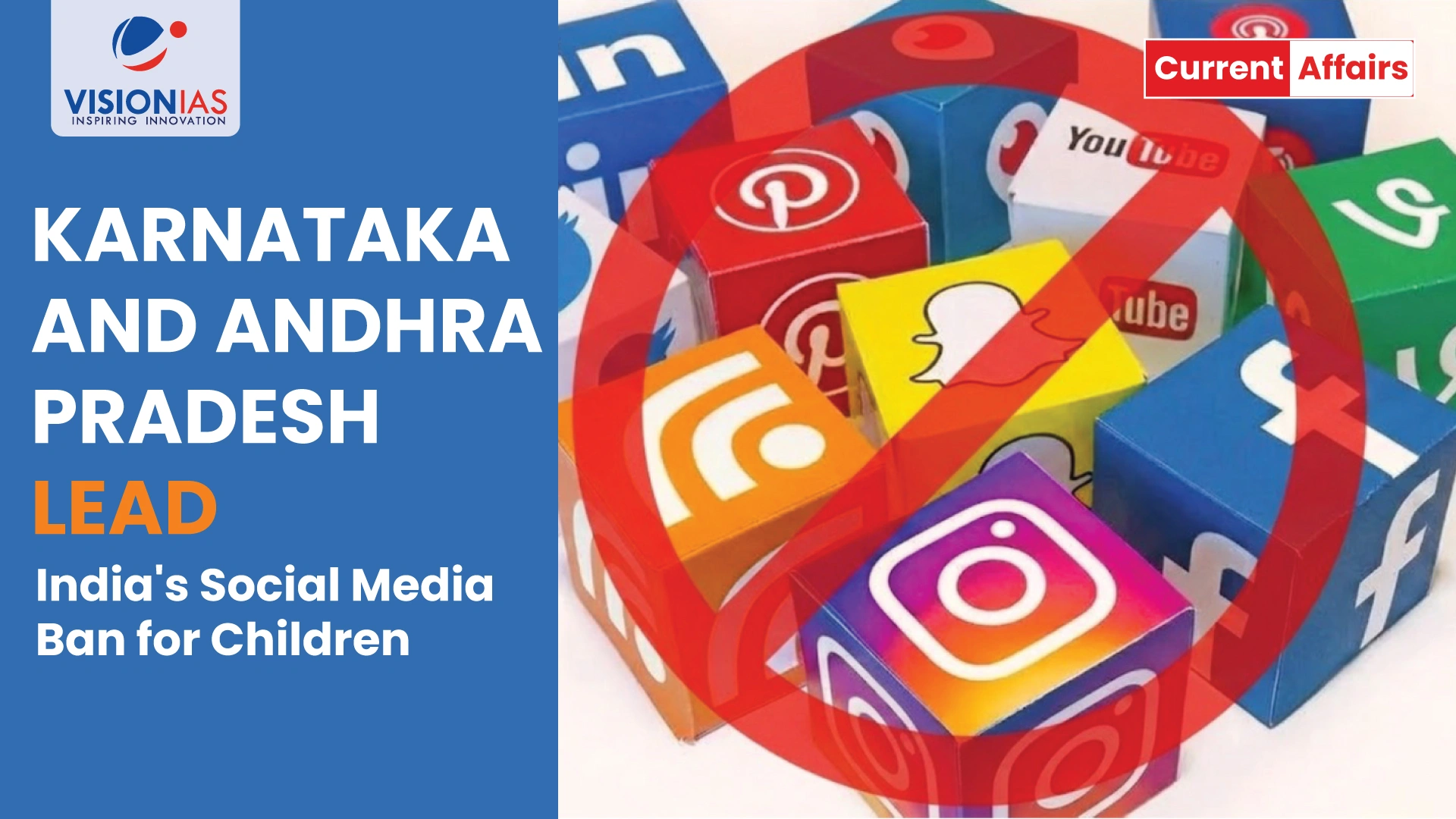






Karnataka and Andhra Pradesh announced a ban on social media use by children under 16 and below 13 respectively on March 6, 2026.
On March 6, 2026, two of India’s southern states made statements about children’s digital rights. Karnataka, home to India’s Silicon Valley Bengaluru, announced a social media ban for all children under the age of 16. Within hours, Andhra Pradesh Chief Minister also announced the introduction of similar restrictions targeting children under 13, within a 90-day timeframe.
Together, these two states have placed the negative effects of social media squarely at the centre of India’s policy agenda. The twin announcements signal that digital addiction, cyberbullying, and worsening mental health issues among children are no longer just parental concerns, but urgent matters of state governance.
What Karnataka and Andhra Pradesh Have Proposed
Karnataka: A Budget-Backed Ban for Under-16s
Karnataka Chief Minister announced the social media ban in his budget speech, framing it within a comprehensive education reform programme titled “Uttama Kalike, Ujjwala Bhavishya” (Better Learning, Brighter Future). With ₹47,224 crore allocated to school education alone, the state has paired the ban with significant investment in structured digital learning.
Andhra Pradesh: A 90-Day Deadline with a Lower Age Threshold
Andhra Pradesh’s announcement was equally swift but structurally different. Andhra Pradesh’s CM set a 90-day implementation deadline and targeted children under 13 years of age. The state is also exploring a “graded” approach, which would allow monitored and restricted access for children aged 13 to 16, rather than an outright prohibition.
Why Now? Mental Health and Digital Addiction Crisis
The simultaneous actions by both states are not coincidental. They reflect a convergence of clinical evidence, academic concern, and growing social anxiety about the negative effects of social media on children.
The 2025-26 Economic Survey of India flagged a link between high screen time and deteriorating mental health issues in the 15-24 age group, citing anxiety, sleep disorders, and declining attention spans as the most visible symptoms. In Karnataka, this concern was amplified at a February 2026 vice-chancellors’ conclave, where university leaders highlighted that digital addiction was visibly eroding academic performance and physical fitness.
Child development specialists in Bengaluru note that social media platforms are deliberately engineered to exploit adolescent neurology. Using “dark patterns” , infinite scroll, push notifications, and variable reward systems, these platforms stimulate the brain’s dopamine reward circuitry, creating compulsive usage. Since the prefrontal cortex, which governs impulse control, is not fully developed until the early twenties, adolescents are biologically disadvantaged in resisting these mechanisms.
Limitations of State Authority Over Digital Platforms
Both the Karnataka and Andhra Pradesh social media bans face the same fundamental constitutional challenge. Under the Seventh Schedule of the Indian Constitution, “Communication” and the regulation of digital intermediaries fall under the exclusive domain of the Union Government. This is primarily governed by the IT Act, 2000 and IT (Intermediary Guidelines) Rules, 2021.
Legal analysts note that while states may attempt to justify intervention through “public health” or “child welfare” arguments (both State List subjects), the moment such a measure directly operates on digital platforms, it is likely to face questions of constitutional fit and legislative competence.
A relevant precedent is All India Gaming Federation v. State of Karnataka (2022), where the High Court struck down a state-level ban on skill-based online games as unconstitutional, ruling that absolute prohibitions on legitimate businesses violated Article 19(1)(g). A similar challenge to the social media ban is plausible.
Global Trend of Social media ban
Karnataka and Andhra Pradesh are not acting in a vacuum. Their social media bans are part of an accelerating global wave of digital containment policies for minors, with Australia leading the charge in December 2025.
| Country/Region | Age Restriction | Implementation Status |
| Australia | Under 16 | Effective December 2025; resulted in the removal of approximately 4.7 million underage accounts. |
| France | Under 15 | Approved January 2026; necessitates ID and selfie verification. |
| Spain | Under 16 | Announced February 2026; mandates age verification. |
| Indonesia | Under 16 | Announced March 2026, following a compliance audit of Meta. |
Australia’s ban removed approximately 4.7 million underage accounts in its first month. However, the effectiveness of enforcement remains contested. Reddit and other platforms have filed challenges in the Australian High Court, arguing the ban infringes on political communication.
Stakeholder Reactions: Support, Scepticism, and Concern
Industry: Comply, But Question the Approach
Meta has stated it will comply with social media bans wherever enforced, but has pushed back on the targeting of social media platforms specifically. The company argues that similar child safety standards should be applied to all apps that minors access. Meta advocates for app-store level parental controls as a more comprehensive and technically viable alternative.
Internet Freedom Foundation: Disproportionate and Potentially Harmful
The Internet Freedom Foundation (IFF) has been the most prominent critic, arguing that blanket social media bans are a disproportionate response that “fail to address root causes” including platform design choices that maximise engagement over safety and inadequate digital literacy infrastructure.
The IFF has raised a particularly pointed concern about digital gender equity. In India, only 33.3% of women have ever used the internet, compared to 57.1% of men. When bans are framed around child protection, they potentially translate into parents restricting female children’s device access disproportionately, widening the gender digital divide. For both Karnataka and Andhra Pradesh, ensuring the ban does not become a tool of social control requires explicit safeguards.
Educators and Parents: Welcome, But Wary of the Gaps
Educational bodies across both states have given the bans a cautious welcome, but have flagged a practical contradiction: schools in Karnataka and Andhra Pradesh routinely send homework and assignments through WhatsApp. Without reforming how schools communicate, a social media ban will create friction in the very educational process it claims to protect.
Child rights experts stress that the bans must be accompanied by teacher training, counsellor deployment, and parent awareness programmes. A state-level ban cannot substitute for parental accountability and cultural change especially when children’s relationship with devices begins at home, long before they enter a classroom.
Conclusion
The simultaneous announcements by Karnataka and Andhra Pradesh on March 6, 2026, mark a turning point in how Indian states are approaching the negative effects of social media on children.
Together, they represent India’s most serious policy intervention yet against digital addiction, cyberbullying, and the mental health issues associated with unregulated online access for minors.
Master Digital Age Governance & Technology Trends with VisionIAS Comprehensive Current Affairs →
Social media ban FAQs
1. Which Indian states announced a ban on social media for children in March, 2026?
Ans. Karnataka and Andhra Pradesh.
2. What is the minimum age to use social media under Karnataka’s ban
Ans. 16 years.
3. What is the minimum age for social media use under Andhra Pradesh’s ban?
Ans. 13 years.
4. Which country’s social media ban for minors served as a global benchmark ahead of India’s state-level bans?
Ans. Australia
5. What constitutional challenge do Karnataka and Andhra Pradesh’s social media bans face?
Ans. Digital platform regulation falls under Union Government jurisdiction, making state-level bans potentially unconstitutional.