Krishi Sakhi Convergence Programme (KSCP)
Updated: 16 Oct 2025
Ministry:
Ministry of Agriculture & Farmers Welfare
Beneficiary:
Women and Girls
Overview
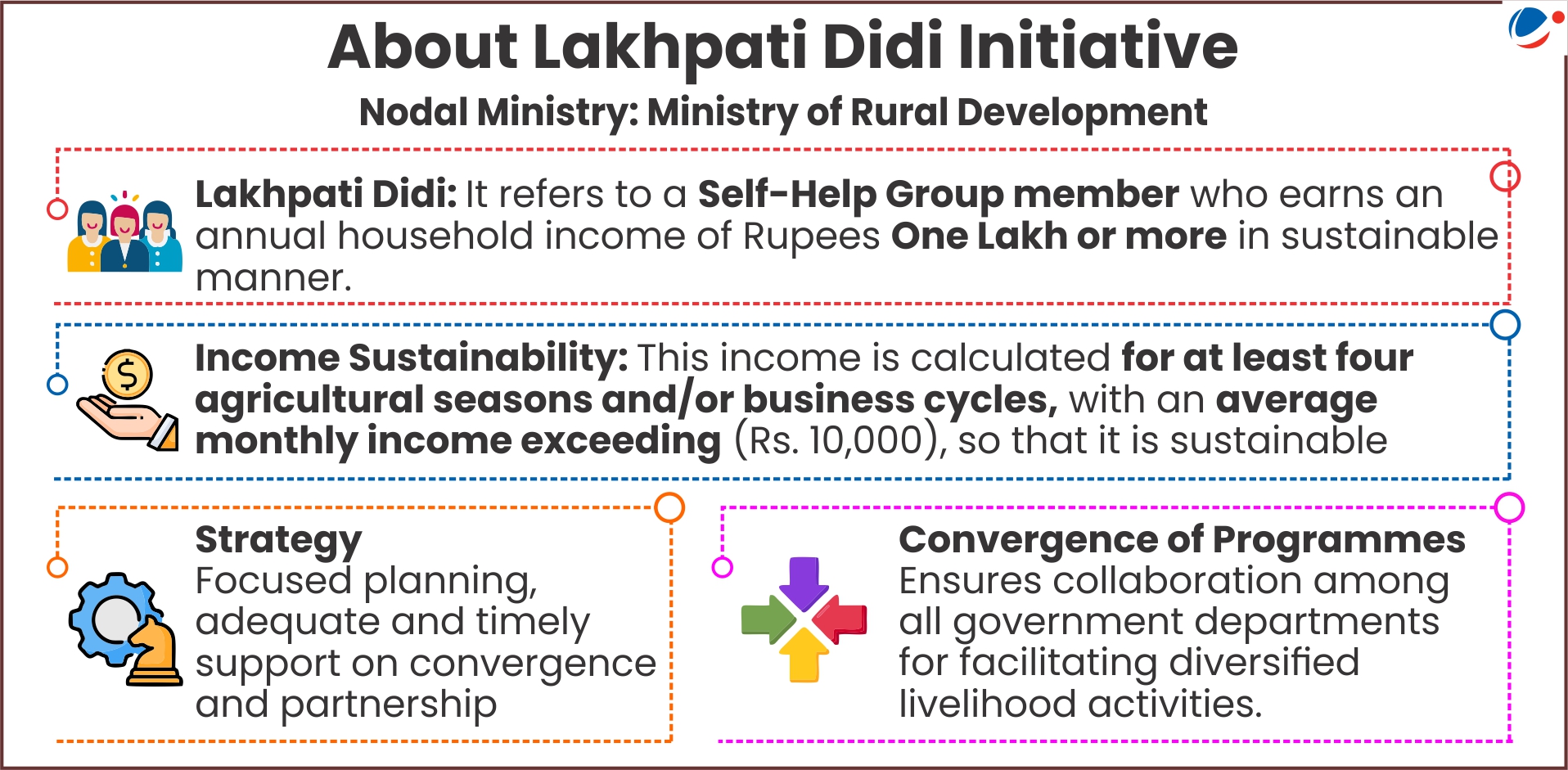
The Krishi Sakhi Convergence Programme empowers rural women as trained para-extension workers to support farmers through agroecological practices, soil health management, and scheme implementation under the ‘Lakhpati Didi’ initiative.
- Purpose: Transform rural India through the empowerment of rural Women as Krishi Sakhi.
- Background: Under the 'Lakhpati Didi' program, the aim is to create 3 crore Lakhpati Didis, one dimension of which is Krishi Sakhi.
- Training to Krishi Shakhi: KSCP involves imparting training and certification to Krishi Sakhis as Para-extension Workers.
- Types of Training Provided to Krishi Sakhis
- Agro Ecological Practices from land preparation to harvest
- Organising Farmer Field schools
- Seed banks + Establishment and Management
- Soil health, soil and moisture conservation practices
- Integrated Farming Systems Basics of Livestock
- Management Preparation and use of Bio inputs and establishment of Bio inputs shops
- Basic communication skills
- Employment for Krishi Sakhis: Trained Krishi Sakhis will take a test to become certified Para-extension Workers. They will support ministry schemes.