Atal Bhujal Yojana (Atal Jal) - Ministry of Jal Shakti | Current Affairs | Vision IAS

Upgrade to Premium Today

Start Now
MENU
Home
Quick Links

High-quality MCQs and Mains Answer Writing to sharpen skills and reinforce learning every day.

Watch explainer and thematic concept-building videos under initiatives like Deep Dive, Master Classes, etc., on important UPSC topics.

A short, intensive, and exam-focused programme, insights from the Economic Survey, Union Budget, and UPSC current affairs.

ESC

Atal Bhujal Yojana (Atal Jal)

Updated: 16 Oct 2025
Ministry: Ministry of Jal Shakti
Beneficiary: Rural Households, Miscellaneous

Overview

Atal Bhujal Yojana (Atal Jal) is a Central Sector Scheme launched by the Government of India to promote sustainable groundwater management through community participation.

Quick facts 

  • Purpose: To improve ground water management.
  • Type: Central Sector Scheme
  • Funding: 50% through World Bank loan and remaining through budgetary support
  • Women empowerment: Mandatory participation of women

Objective

  • Ground water management through community participation in identified priority areas in seven States.

Salient features
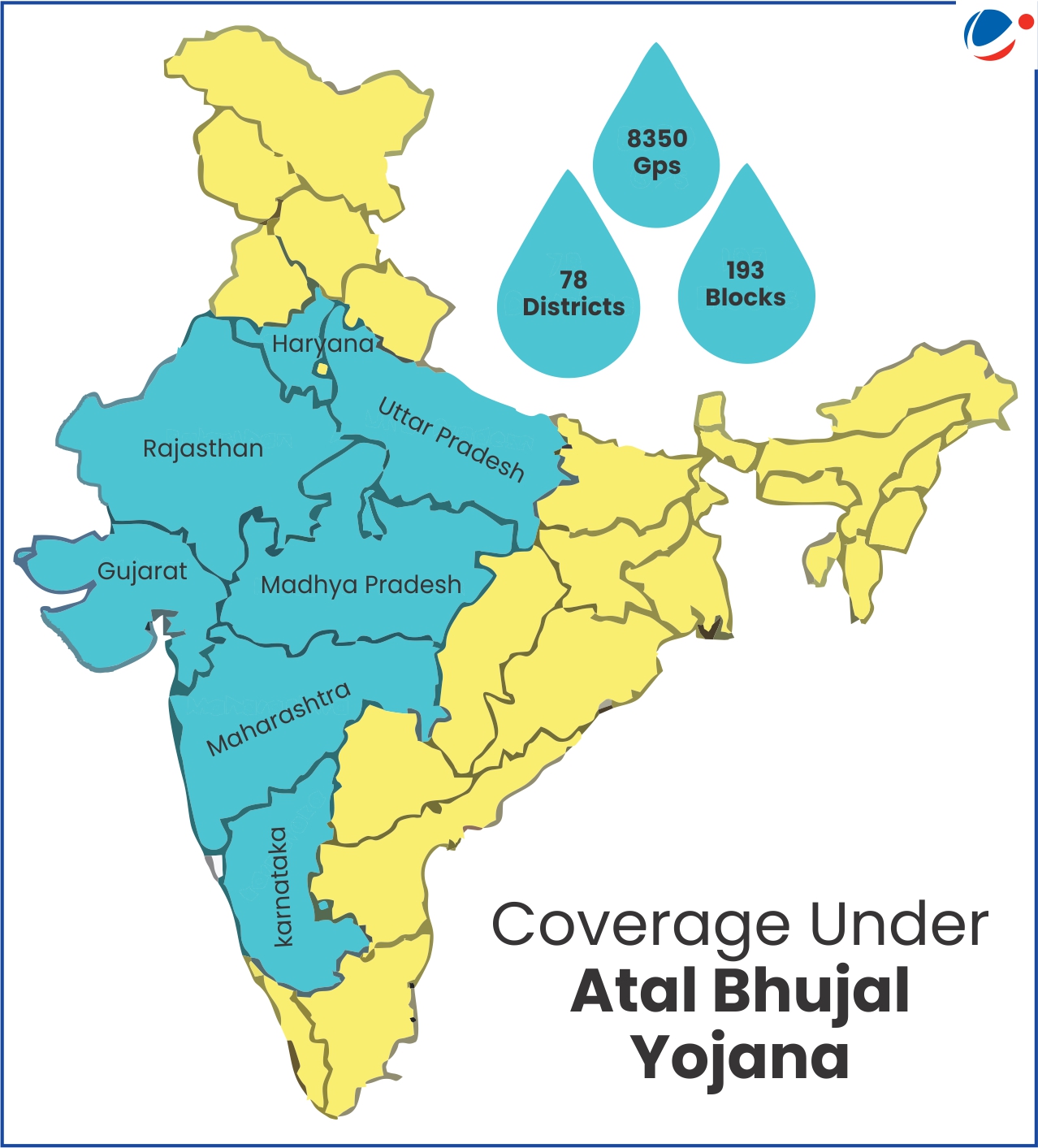
  • Goal: The goal of Atal Jal is to demonstrate community-led sustainable ground water management which can be taken to scale. 
  • Coverage: Water stressed areas of 7 states (Refer to the Map).
  • Incentives to States: States receive incentives under the scheme based on performance and achievements of predefined indicators.
  • Grassroots level governance: Active participation of the communities. Gram Panchayat wise, Water Security Plans (WSPs) & their implementation.
  • IEC activities: For sustainable ground water management. Institutional Strengthening and Capacity Building. 
  • Nodal Implementing agency: Central Ground Water Board (CGWB) of the Department of Water Resources, River Development and Ganga Rejuvenation.
    • CGWB is the apex multi-disciplinary scientific organization under the Ministry of Jal Shakti. 
  • It is entrusted with the responsibilities of providing scientific inputs for management, exploration, monitoring, assessment, augmentation and regulation of ground water resources of the country.
  • Initiatives to improve the effectiveness of the scheme
    • Standard Operating Procedures for data collection by the stakeholders, 
    • Modifications in MIS to make it more user-friendly
    • Regular reviews at various levels along with field visits by National Program Monitoring Unit (NPMU) officers etc.