English
Final 3-Months Strategy for UPSC Prelims 2026
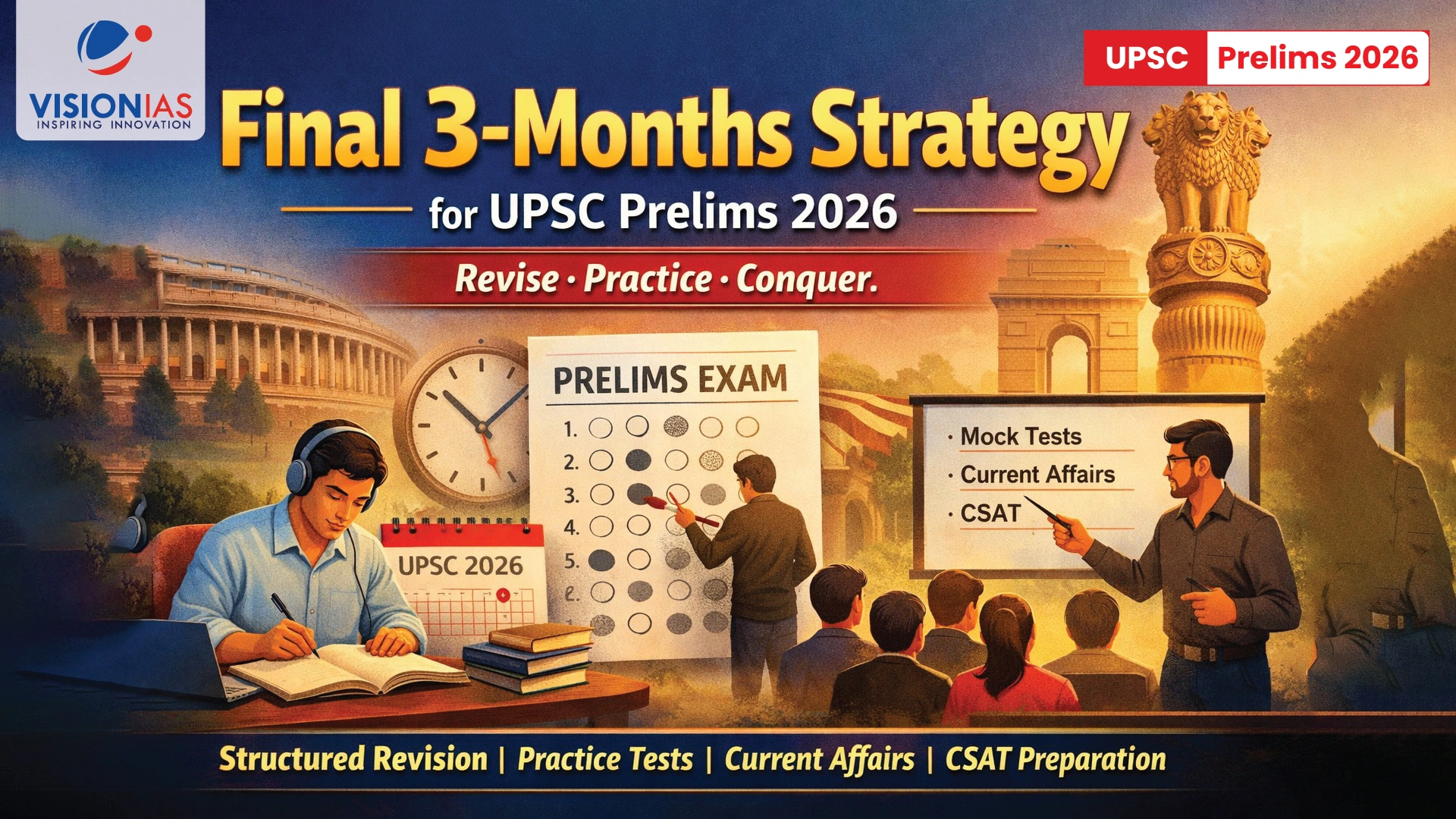





The countdown to UPSC Prelims 2026 is not just about the number of days left; it is about clarity, consolidation, and calibrated execution. By the time an aspirant enters the final three months before the Preliminary Examination, the phase of exploration must end. What remains is refinement — of concepts, of recall, of decision-making under pressure.
The Prelims stage of the Civil Services Examination is often described as unpredictable, but a closer look reveals that it is not uncertainty that defines it — it is precision. The final three months must therefore be approached not as a time to add more content, but as a period to sharpen what has already been studied. The difference between clearing and missing the cut-off is rarely about effort; it is about alignment.
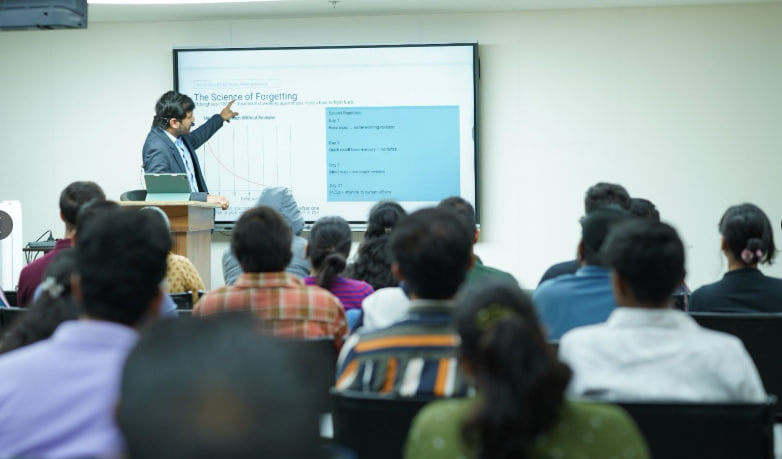
A glimpse from the interactive session on “Final 3-Months Strategy for UPSC Prelims 2026: A Complete Roadmap to Crack Prelims,” conducted by faculty Jatin Gupta at the VisionIAS Classroom Centre.
Watch: Final 3-Months Strategy for UPSC Prelims 2026 by Jatin Gupta Sir
Understanding the Nature of the Last 90 Days
The last three months before UPSC Prelims 2026 are psychologically different from the rest of the preparation journey. Anxiety rises, comparisons increase, and the temptation to restart preparation from scratch becomes strong. However, this phase demands discipline in continuity, not disruption.
At this stage, the syllabus should already be covered at least once. The objective now is layered revision. Instead of reading new books or changing sources, the focus must remain on consolidation. Every subject — Polity, Economy, History, Geography, Environment, Science & Technology, and Current Affairs — needs to be revisited with the intent of recall, not fresh learning.
Prelims is not a memory test in isolation. It is a test of recognition and elimination. Therefore, preparation in these three months must simulate the actual decision-making environment of the exam hall.
Building a Structured Revision Cycle
A structured revision cycle becomes the backbone of the final three months. Each subject must be revisited multiple times, but with increasing speed and sharper focus.
In the first month of this phase, revision should still allow space for conceptual clarification. Weak areas must be identified through practice tests and immediately reinforced. This is the time to revisit core sources — standard textbooks, personal notes, and important current affairs compilations.
The second month should transition into active recall. Instead of passively reading, aspirants must attempt to reproduce information mentally before verifying it. This strengthens retention and reduces dependency on re-reading.
The final month before UPSC Prelims 2026 must be dedicated to rapid revision and test-based reinforcement. At this point, familiarity with content is assumed. What matters now is speed, confidence, and accuracy.
Do rapid revision and boost score for Prelims 2026 with VisionIAS Prelims SpeedUp
The Central Role of Practice Tests
Mock tests become indispensable in the final three months. However, their purpose is often misunderstood. The value of a mock test lies not in the score achieved, but in the analysis conducted afterward.
Each test must be followed by a detailed review of mistakes. Patterns begin to emerge: areas of overconfidence, recurring conceptual gaps, or tendencies to make avoidable errors. These patterns, once identified, can be corrected.
Practicing elimination techniques also becomes critical. Many Prelims questions are designed to reward partial knowledge combined with logical reasoning. Learning how to narrow down options, recognize extreme statements, and identify traps significantly increases accuracy.
It is important that test frequency increases gradually. Initially, one or two full-length tests per week may suffice. As the exam approaches, simulation must become more frequent, replicating the real exam environment — strict time limits, minimal distractions, and realistic pressure.
Practice with VisionIAS All India Prelims Test Series 2026 for Prelims 2026 mastery.
Current Affairs: Integration, Not Isolation
Current Affairs often creates confusion in the last phase of preparation. Aspirants worry about missing recent developments and begin accumulating new material. This tendency can be counterproductive.
Instead of chasing fresh sources, the focus should remain on revising consolidated material prepared over the year. The relevance of current events must always be understood in connection with static subjects. Environment-related current developments, economic policy updates, international relations events — all must be linked to core concepts.
The last three months are not about expanding the current affairs base; they are about integrating it with existing knowledge. Repeated revision ensures that information becomes interconnected rather than fragmented.
Consolidate and revise current affairs with VisionIAS PT365.
Strengthening CSAT Preparation
While General Studies Paper I draws primary attention, neglecting CSAT can prove costly. In recent years, CSAT has posed challenges even to otherwise well-prepared candidates.
The final three months must include consistent practice of comprehension passages, basic numeracy, logical reasoning, and data interpretation. For those comfortable with CSAT, weekly practice is sufficient to maintain rhythm. For others, focused daily practice may be required.
Clearing CSAT is mandatory, and complacency at this stage can undermine the entire UPSC Prelims 2026 attempt.
Managing Psychological Pressure
The psychological dimension of the last three months is often underestimated. Self-doubt intensifies, especially when mock scores fluctuate. It is essential to remember that variation in mock performance is natural.
Consistency in routine reduces anxiety. Fixed revision hours, scheduled test practice, and planned breaks help maintain stability. Comparing preparation journeys with others only diverts mental energy. The focus must remain inward.
Confidence in the exam hall emerges not from last-minute cramming, but from sustained preparation. By the final month, the goal is to reduce cognitive overload, not increase it.
Avoiding Common Mistakes in the Final Phase
Several recurring mistakes can derail preparation during the final stretch. Changing study material at the last moment creates confusion. Attempting to cover entirely new books dilutes revision time. Over-analyzing every mock score can damage morale.
Equally risky is the temptation to revise selectively, ignoring subjects perceived as strong. Balanced revision ensures that unexpected questions do not cause disproportionate damage.
The final three months must be governed by restraint as much as by effort.
The Last Two Weeks Before the Exam
As UPSC Prelims 2026 approaches, preparation must become lighter yet sharper. This period is meant for quick revision of facts, formulas, constitutional articles, important reports, environmental conventions, and high-yield areas.
Sleep patterns should be stabilized according to exam timing. Attempting full-length mock tests too close to the exam may increase stress; shorter revision drills can be more effective.
Most importantly, the mind must be kept calm. The exam rewards clarity more than intensity in the final days.
Concluding the Final Phase with Clarity
The final three months before UPSC Prelims 2026 are not about discovering new strategies. They are about executing a disciplined plan with consistency. The groundwork laid over months must now be consolidated with precision.
When the exam day arrives, preparation should feel complete, not hurried. Every subject revised multiple times, every mock analyzed thoughtfully, every weakness addressed consciously — this is what transforms preparation into performance.
UPSC Prelims is not won in the last week. It is secured in the last three months through structured revision, analytical practice, psychological balance, and unwavering focus.
The difference between uncertainty and confidence lies not in luck, but in preparation aligned with purpose.