100 years of the discovery of the Harappan Civilisation | Current Affairs | Vision IAS
MENU
Home

Periodically curated articles and updates on national and international developments relevant for UPSC Civil Services Examination.

Quick Links

High-quality MCQs and Mains Answer Writing to sharpen skills and reinforce learning every day.

Watch explainer and thematic concept-building videos under initiatives like Deep Dive, Master Classes, etc., on important UPSC topics.

ESC

John Marshall, the then-Director General of the Archaeological Survey of India (ASI), announced the discovery of “Civilisation of the Indus Valley” on September 20, 1924.

  • Two ASI archaeologists were instrumental in the discovery: Daya Ram Sahni (ASI’s first Indian Director-General) and Rakhal Das Banerji, who excavated Harappa and Mohenjodaro respectively.

About Harappan Civilization

  • It spans across 2,000 sites in India, Pakistan, and Afghanistan. Most of the sites are found located between the Indus and the Saraswati River basins.
    • Five major cities: Rakhigarhi, Mohenjodaro, Harappa, Dholavira and Ganweriwala.
  • Extent of Civilization: Daimabad in Maharashtra (Southernmost), Alamgirpur in UP (Easternmost), Sutgakendor in Pakistan (Westernmost), and Manda in Jammu (Northernmost).
  • Classification: Early phase (6000 BCE-2600 BCE), the mature period (2600 BCE to 1900 BCE), and the late phase (1900 BCE-1300 BCE).

New Evidences for Harappan Civilization

  • New Archaeological excavation reveals 5,200-year-old Harappan settlement at Padta Bet in Kachchh, Gujarat.
  • DNA analysis of skeletons from Rakhigarhi revealed that DNA of the Harappans has continued till today and a majority of South Asian population appear to be their descendants. 
    • Due to trade and cultural contacts of the Harappans with distant regions, there is a mixture of genes in small quantities

Characteristic features of the Harappan civilization

  • Town Planning and Structures: Citadels and Great Baths in Mohenjodaro and large-scale use of burnt bricks, and carefully planned drainage system.
  • Technology and Crafts:  Highly developed micro-drilling, bead-making, shell-cutting, metal-working, Seal-making, Pottery making, standardised weights and terracotta toys. E.g. Chanhudaro site.
  • Art of Writing: Fully developed Indus script, but not deciphered yet. 
  • Trade: Port city of Lothal, Commercial link with Afghanistan, Iran, Tigris and Euphrates. Mesopotamians used to call the Indus region as Meluha.
Watch Video News Today

Explore Related Content

Discover more articles, videos, and terms related to this topic

RELATED VIDEOS

3
News Today 28th March 2024

News Today 28th March 2024

YouTube HD
News Today (Sep 25, 2024)

News Today (Sep 25, 2024)

YouTube HD
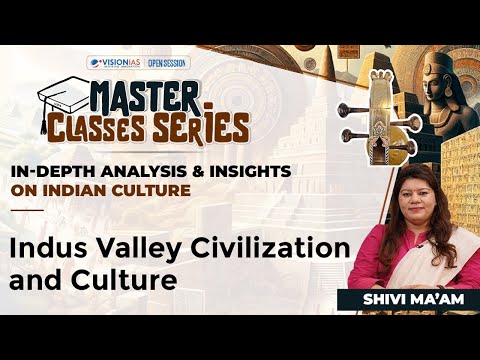
Indus Valley Civilization and Culture

Indus Valley Civilization and Culture

YouTube HD
Title is required. Maximum 500 characters.

Search Notes

Filter Notes

Loading your notes...
Searching your notes...
Loading more notes...
You've reached the end of your notes

No notes yet

Create your first note to get started.

No notes found

Try adjusting your search criteria or clear the search.

Saving...
Saved

Please select a subject.

Referenced Articles

linked

No references added yet

Subscribe for Premium Features