


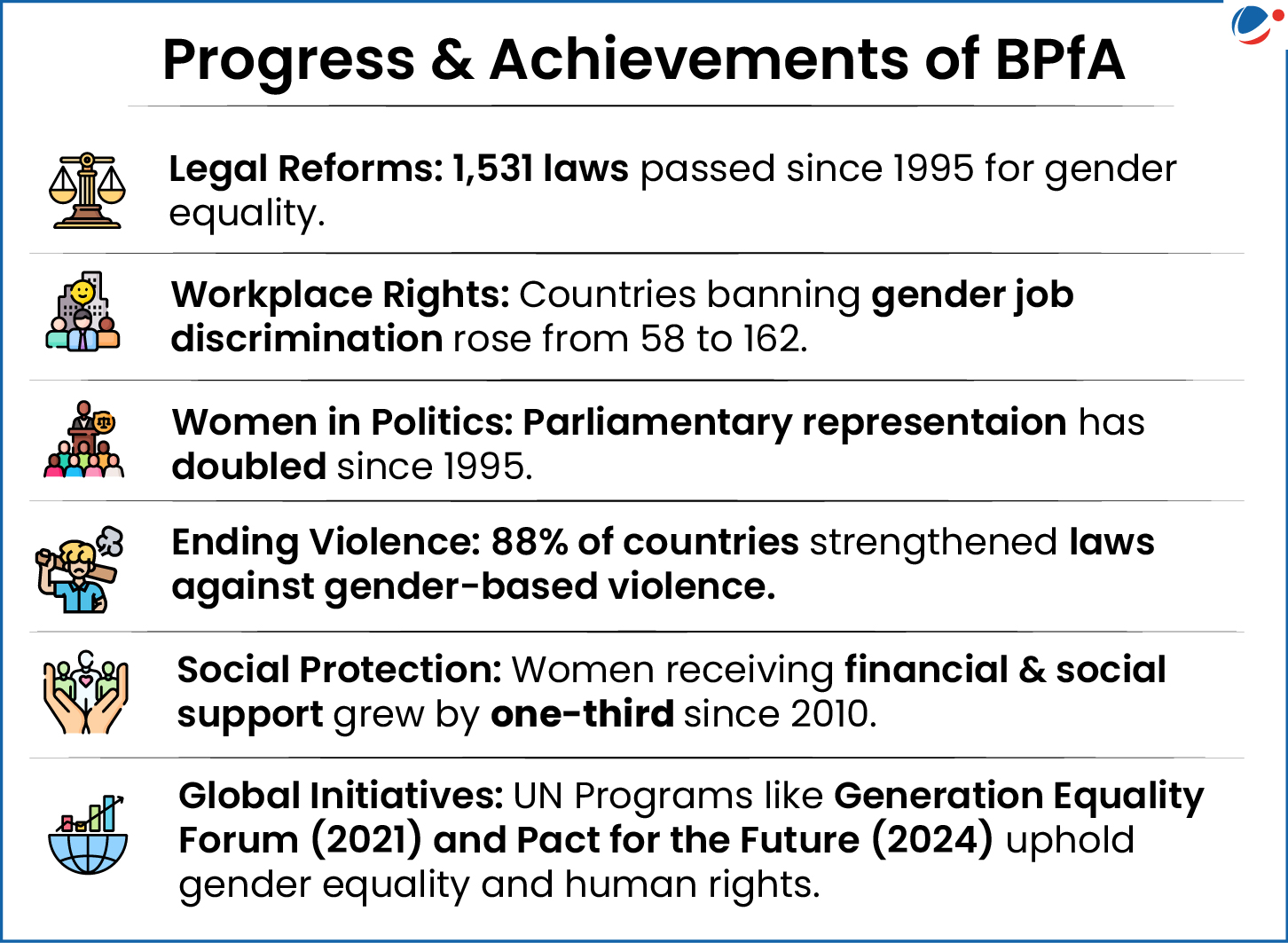
Report reviews global progress on the Beijing Platform for Action (BPfA), adopted by 189 countries (including India) in 1995 to advance gender equality across 12 key areas.
- BPfA was adopted by the UN’s Fourth World Conference on Women in Beijing (China).
Key Challenges for Women Highlighted in Report
- Economic Inequality: Women earn 20% less, with many in insecure, unpaid jobs. Ending extreme poverty for women will take 137 years.
- Violence & Safety: 1 in 3 women face physical or sexual violence. 53% experience online gender-based abuse. 25% countries report backlash against women’s rights in 2024.
- Political Exclusion: Only 87 countries have had a woman leader. Women hold 27% of parliamentary and 36% of local seats.
- Climate Crisis: By 2050, 236 million women may face food insecurity due to climate change.
- Gender-Responsive Policies: 54% of countries track gender equality spending, but only 26% meet SDG standards for it.
Way Ahead: Beijing+30 Action Agenda
UN Women’s Beijing+30 Action Agenda focuses on 6+1 key (“+1” emphasizes youth inclusion in these efforts) actions for gender equality:
- Close the digital gender gap
- Women centric sustainable economic development
- End violence against women
- Increase women’s leadership
- Ensure accountability in peace, security and humanitarian action;
- Promote climate justice

