


Navkar Mahamantra Divas is celebration of spiritual harmony and ethical consciousness that seeks to unite people through the collective chanting of the Navkar Mahamantra.
- Navkar Mahamantra, the most revered and universal chant in Jainism, pay respects to:
- Arihant (who attained Keval Gyan or perfect knowledge),
- Siddhas (who eradicated eight karmas and attained Moksha),
- Acharya (who follow Mahavrat),
- Upadhyayas (who impart knowledge of Moksha), and
- Sadhus (who refine themselves through penance and progress towards Moksha).
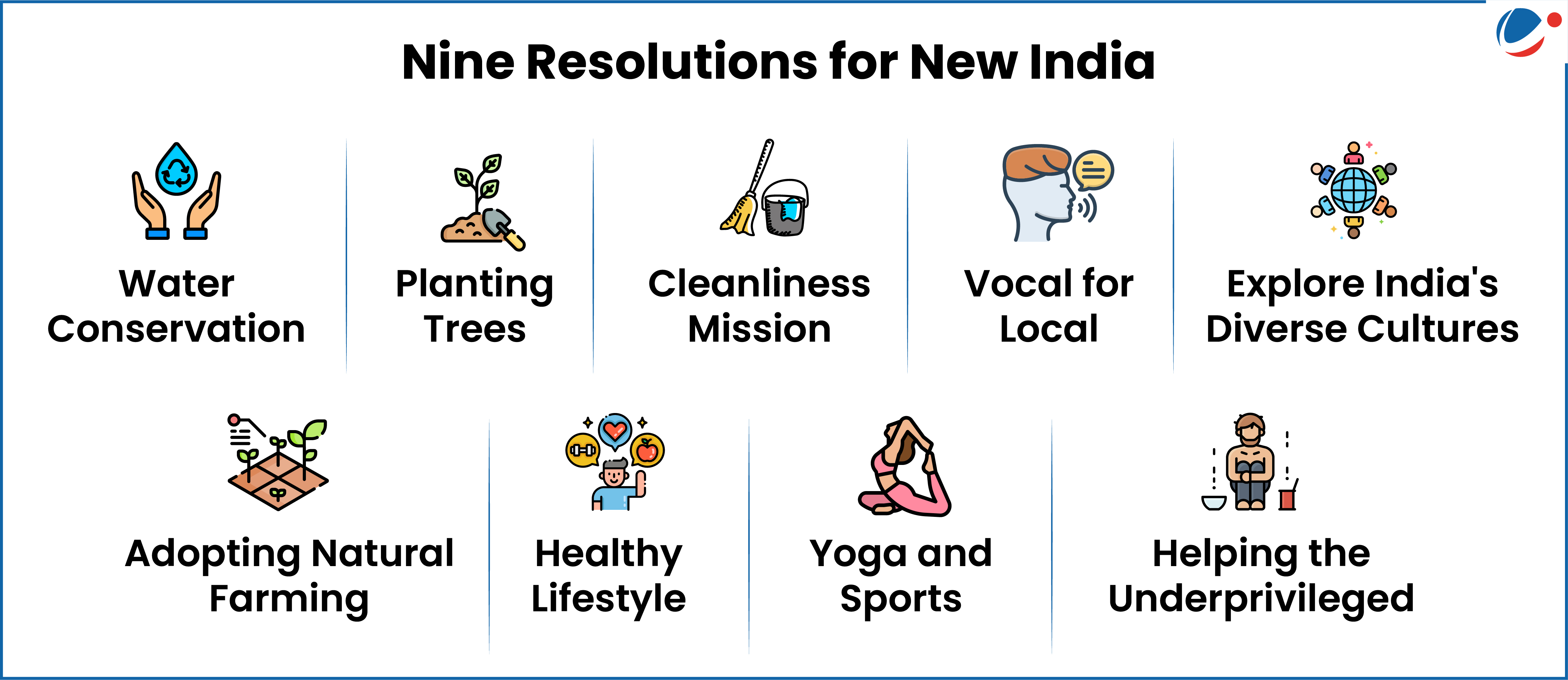
- Inspired by Navkar Mantra, Prime Minister proposed nine resolutions for a New India (see infographic).
Jainism’s Principles and their role in addressing Contemporary Challenges
- Parasparopagraho Jivanam (Interdependence of Life): It emphasizes the interdependence of all living beings promoting nature restoration, preserving biodiversity, and highlighting the need for international cooperation.
- Ahimsa (Nonviolence): It is key to peace — countering war, hate, and violence. Mahatma Gandhi’s example even inspired global leaders to choose peace over conflict."
- Anekantavada (Doctrine of many viewpoints): It promotes empathy and open-mindedness, helping prevent situations of war and conflict.
- Aparigraha (Non-possession): Directly counters consumerism, materialism and greed., which aligns with Mission LiFE, promoting simple, sustainable living through self-restraint.
- Satya (Truthfulness) and Asteya (Non-stealing): These values emphasize honesty, integrity, and fairness — principles crucial to combat corruption, corporate exploitation, and ethical erosion.


