
Self-regulatory body introduces code of standards for influencer marketing business | Current Affairs | Vision IAS
MENU
Home

Periodically curated articles and updates on national and international developments relevant for UPSC Civil Services Examination.

Quick Links

High-quality MCQs and Mains Answer Writing to sharpen skills and reinforce learning every day.

Watch explainer and thematic concept-building videos under initiatives like Deep Dive, Master Classes, etc., on important UPSC topics.

ESC

Industry leaders have launched the India Influencer Governing Council (IIGC), a self-regulatory body for Influencer marketing with members from major firms like Meta and Google.

  • It introduced a Code of Standards and weekly influencer ratings to ensure transparency, accountability, and ethical content creation in India’s digital ecosystem.
    • Influencer marketing is projected to reach Rs 3,375 crore by 2026.

Need for regulating Influencer Marketing

  • Consumer Misinformation and Fraud: Influencers often promote unverified products, like health supplements or crypto schemes.
    • Regulation can enforce accountability, ensuring claims are substantiated.
  • Exploitation of Vulnerable Audiences: Influencers often target young or impressionable followers.
    • Regulations can protect minors by restricting promotions of age-inappropriate products, like alcohol or gambling.
  • Unfair Competition and Market Distortion: Unregulated influencer campaigns can undermine traditional advertising, which faces stricter scrutiny.
  • Mental Health and Unrealistic Standards: Influencer content can promote harmful beauty or lifestyle ideas. There is a need to curb deceptive editing (e.g., filters) and mandate warnings.
  • Platform Accountability Gaps: Social media platforms often evade responsibility for influencer content. Regulation can force platforms to monitor and remove violative content.
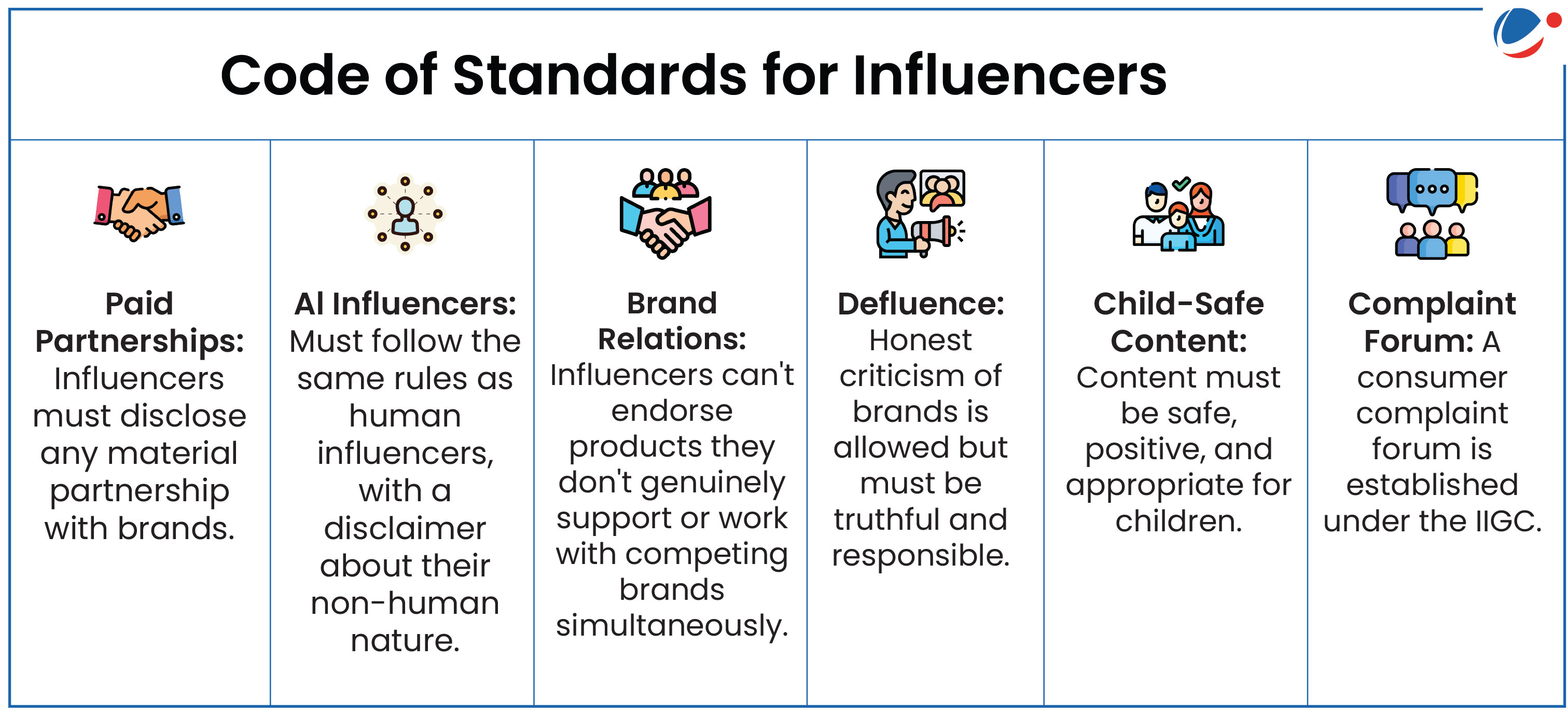
Infographic titled "Code of Standards for Influencers" with six columns, each featuring an icon and text:  Paid Partnerships: Influencers must disclose any material partnership with brands.  AI Influencers: Must follow the same rules as human influencers, with a disclaimer about their non-human nature.  Brand Relations: Influencers can't endorse products they don't genuinely support or work with competing brands simultaneously.  Defluence: Honest criticism of brands is allowed but must be truthful and responsible.  Child-Safe Content: Content must be safe, positive, and appropriate for children.  Complaint Forum: A consumer complaint forum is established under the IIGC (Indian Influencer Guidelines Code).
Watch Video News Today

Explore Related Content

Discover more articles, videos, and terms related to this topic

RELATED VIDEOS

1
Lateral Entry

Lateral Entry

YouTube HD
Title is required. Maximum 500 characters.

Search Notes

Filter Notes

Loading your notes...
Searching your notes...
Loading more notes...
You've reached the end of your notes

No notes yet

Create your first note to get started.

No notes found

Try adjusting your search criteria or clear the search.

Saving...
Saved

Please select a subject.

Referenced Articles

linked

No references added yet