Prime Minister highlights Next generation GST reforms | Current Affairs | Vision IAS
MENU
Home

Periodically curated articles and updates on national and international developments relevant for UPSC Civil Services Examination.

Quick Links

High-quality MCQs and Mains Answer Writing to sharpen skills and reinforce learning every day.

Watch explainer and thematic concept-building videos under initiatives like Deep Dive, Master Classes, etc., on important UPSC topics.

ESC

The reforms built on pillars of structural reforms, rate rationalisation, and ease of living have been sent to the Group of Ministers (GoM) constituted by the GST Council

Key Pillars of Proposed Reforms

  • Structural Reforms:
    • Inverted duty structure correction: Align input–output tax rates to reduce accumulation of input tax credit and support value addition.
      • Inverted duties refer to a situation where the import tariff on inputs is higher than the tax levied on the final output.  It is also observed in cases where the inputs are taxed but the final output good is tax-exempt. 
    • Resolving classification issues: To streamline rates, minimize disputes, simplify compliance, and ensure equity.
    • Stability and Predictability: To provide long-term clarity on rates and policy direction to build industry confidence.
  • Rate Rationalisation: It includes the following
    • Reduction of taxes on common-man items and aspirational goods
    • Reduction of slabs: It aims to essentially move towards simple tax with 2 slabs (Standard and Merit).Special rates only for select few items.
    • Using fiscal space created by the end of Compensation Cess for long-term sustainability.
  • Ease of Living: 
    • It includes technology driven seamless registration, implementing pre-filled returns (reducing manual intervention and eliminating mismatches) and faster and automated processing of refunds for exporters.

About Goods and Services Tax (GST)

  • It is a comprehensive indirect tax levied on the supply of goods and services in India.
  • It was introduced in 2017 by the 101st Constitutional Amendment Act.
  • Main Features
    • One Nation, One Tax: It has replaced multiple Central and State  indirect taxes  such as excise duty, service tax
    • Dual Structure:  Comprises the Central GST (CGST) and the State GST (SGST).
    • Governance: GST Council is the key decision making body.
Watch Video News Today

Explore Related Content

Discover more articles, videos, and terms related to this topic

RELATED VIDEOS

3
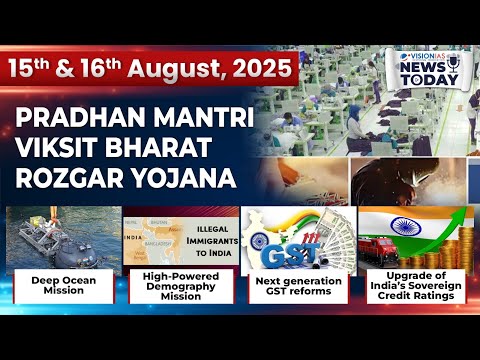
News Today (Aug 15-16, 2025)

News Today (Aug 15-16, 2025)

YouTube HD
News Today (Jul 02, 2024)

News Today (Jul 02, 2024)

YouTube HD
News Today (Sep 04, 2025)

News Today (Sep 04, 2025)

YouTube HD
Title is required. Maximum 500 characters.

Search Notes

Filter Notes

Loading your notes...
Searching your notes...
Loading more notes...
You've reached the end of your notes

No notes yet

Create your first note to get started.

No notes found

Try adjusting your search criteria or clear the search.

Saving...
Saved

Please select a subject.

Referenced Articles

linked

No references added yet

Subscribe for Premium Features