


The IMD identified the cause as a confluence of the monsoon trough and an active western disturbance. This is called the "2-System Interaction"
- This interaction is further intensified by additional circulations drawing moisture from both the Arabian Sea and the Bay of Bengal into the Himalayan foothills.
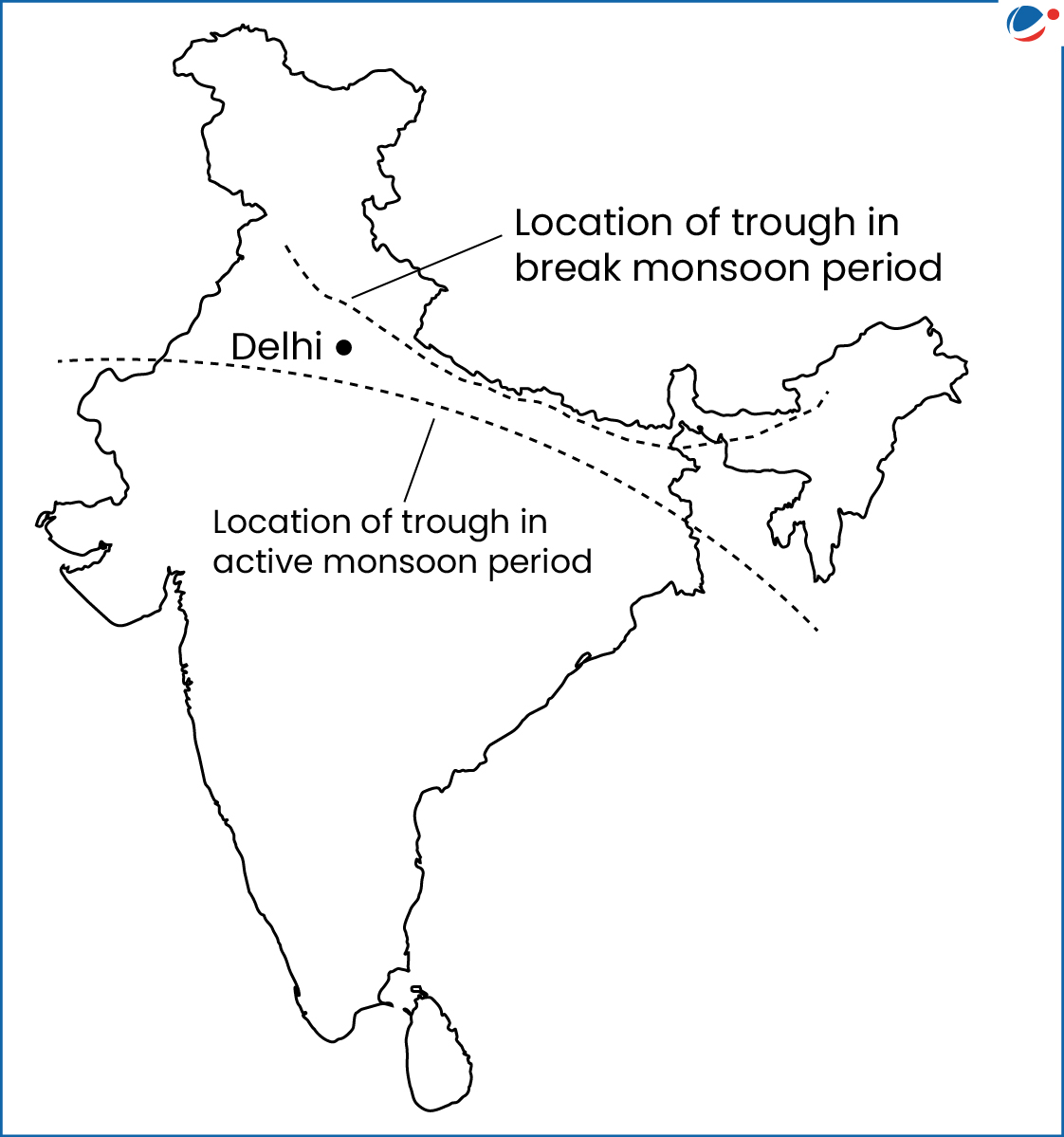
Monsoon Trough and its Impact
- The monsoon trough is an elongated low-pressure area extending from the Northwest India to the Bay of Bengal, acting as a semi-permanent feature of monsoon circulation.
- Its southward migration typically results in active monsoon conditions across India.
- During this event, the western end of the monsoon trough was near its normal position, while the eastern end was positioned south of its normal location.
Western Disturbances and their Impact
- Western Disturbances are low-pressure systems that typically move from west to east over northern India, usually during winter, bringing clouds and precipitation.
- They often arise over the Mediterranean.
- Their convergence with the monsoon system creates highly unstable weather conditions, significantly increasing rainfall activity.
- A western disturbance is manifested as a cyclonic circulation over Northwest India.


