


The CJI said while environment protection norms should be vigorously enforced, the HC had also spoken about the need for ensuring the delicate balance with development.
About Mangroves
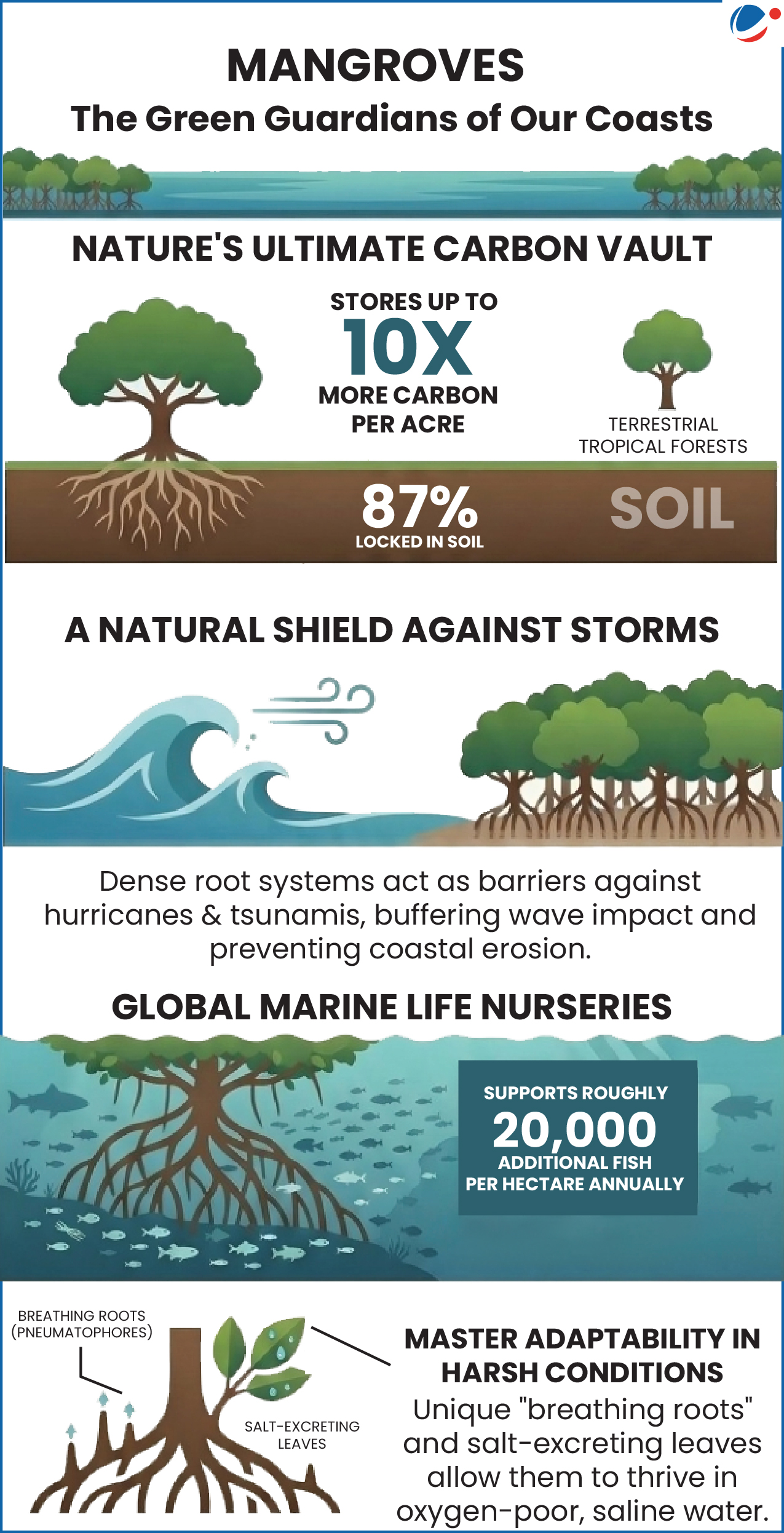
- Definition: Mangroves are salt-tolerant plant communities that thrive in tropical and subtropical intertidal zones where land meets the sea.
- Types: Four main types: Red, Black, White, and Buttonwood.
- Distribution in India: Mangrove forests span a total of 4,991.68 sq. km across nine states and four Union Territories.
- West Bengal holds the largest share at 42.45%, followed by Gujarat and Andaman & Nicobar Islands.
- Threats: Unchecked destruction for infrastructure and development.
- Climate change and rising CO2 levels are causing "hypercapnic hypoxia" which is a state of depleted oxygen in mangrove waters that severely threatens their function as fish nurseries.
Way Forward
- Protecting these ecosystems requires a delicate balance between sustainable development and conservation.
- Strict enforcement of Coastal Regulation Zone (CRZ) laws, and mandated compensatory afforestation.
- Promotion of community-driven restoration programs like the Mangrove Initiative for Shoreline Habitats & Tangible Incomes (MISHTI) initiative are vital steps.





