
Gurudev Rabindranath Tagore | Current Affairs | Vision IAS

Upgrade to Premium Today

Start Now
MENU
Home
Quick Links

High-quality MCQs and Mains Answer Writing to sharpen skills and reinforce learning every day.

Watch explainer and thematic concept-building videos under initiatives like Deep Dive, Master Classes, etc., on important UPSC topics.

A short, intensive, and exam-focused programme, insights from the Economic Survey, Union Budget, and UPSC current affairs.

ESC

In Summary

  • Gurudev Rabindranath Tagore (1861-1941), born in Calcutta, was the youngest son of Debendranath Tagore and primarily home-schooled.
  • He published over fifty poetry volumes, including Gitanjali, earning the 1913 Nobel Prize in Literature, the first for an Indian.
  • Tagore wrote national anthems for India and Bangladesh, founded Shantiniketan, and returned his knighthood in protest of the Jalliawala Bagh Massacre.

In Summary

The Home Minister paid tribute to Gurudev Rabindranath Tagore on his death anniversary.

About Gurudev Rabindranath Tagore (1861-1941)
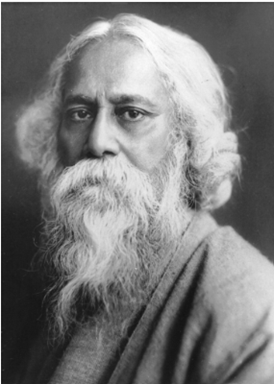
  • Early Life: Born in Calcutta as the youngest son of Debendranath Tagore (a leader of the Brahmo Samaj), he was primarily educated at home.
  • Literary Legacy
    • He published over fifty volumes of poetry, including Manasi (1890), Sonar Tari (1894), and his most acclaimed translated collection, Gitanjali: Song Offerings (1912).
    • 1913 Nobel Prize in Literature: First Indian and non-European laureate; awarded for Gitanjali and its deeply sensitive, beautiful poetry. 
    • He wrote the national anthems of two countries: India ("Jana Gana Mana") and Bangladesh ("Amar Shonar Bangla").
  • Social and Educational Work: He also founded an experimental school at Shantiniketan (UNESCO World Heritage Site).
  • Nationalism & Knighthood: He was knighted by the British government in 1915 but returned it to protest against the Jalliawala Bagh Massacre (1919).
  • Values: Humanism, patriotism, freedom of thought, love for nature, creativity, peace.
Watch Video News Today

Explore Related Content

Discover more articles, videos, and terms related to this topic

RELATED TERMS

3

UNESCO World Heritage Site

A designation given by the United Nations Educational, Scientific and Cultural Organization (UNESCO) to sites of exceptional cultural or natural significance. These sites are recognized for their universal value and are protected for future generations.

Nobel Prize in Literature

An annual award given by the Swedish Academy to authors for outstanding contributions in the field of literature. Rabindranath Tagore was the first Indian and non-European to receive this prestigious award in 1913 for his collection of poems, Gitanjali.

Shantiniketan

An ashram and later an experimental school founded by Rabindranath Tagore in West Bengal, India. It emphasized a holistic approach to education, integrating art, music, and a deep connection with nature, and is now a UNESCO World Heritage Site.

Title is required. Maximum 500 characters.

Search Notes

Filter Notes

Loading your notes...
Searching your notes...
Loading more notes...
You've reached the end of your notes

No notes yet

Create your first note to get started.

No notes found

Try adjusting your search criteria or clear the search.

Saving...
Saved

Please select a subject.

Referenced Articles

linked

No references added yet