


To enhance EU’s protection of children online, EU KIDS Act is structured around four pillars. These include-
- Social media delay: Children aged 15 and above would be able to create their own accounts on social media.
- For children aged 13 and under 15, Guardian-controlled "mini accounts" to access age-appropriate social media and video-sharing platforms with safeguards (restricted social contacts, one-hour daily screen time limit).
- Children between 3 and under 13 cannot access social media, but they can access child-friendly video platforms through guardian-managed accounts.
- Safety-by-design: Bans addictive features, harmful content recommendations, infinite scrolling, and unsolicited contact, while mandating privacy-by-default and restricted AI companions.
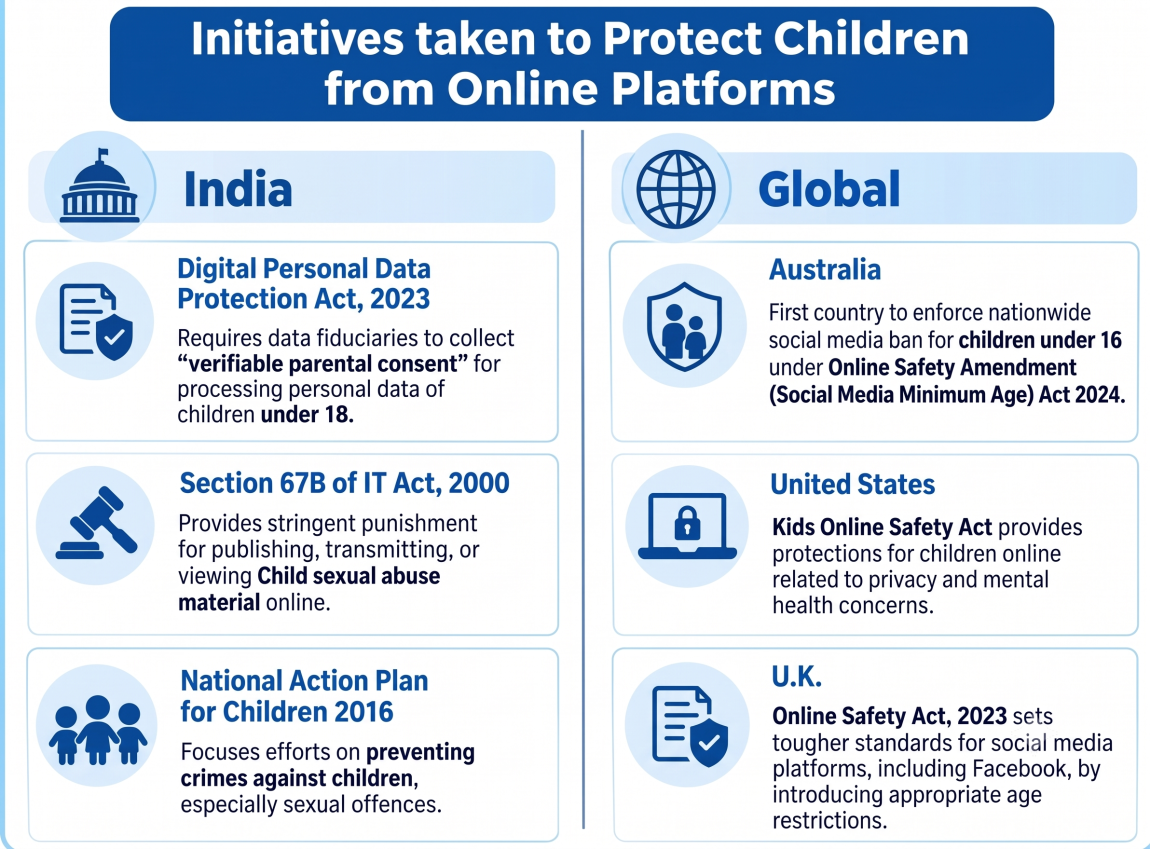
- Privacy-preserving age assurance: Online platforms and app stores like EU age verification app must verify ages for new accounts, and estimate existing users’ ages using reasonable indicators.
- Effective enforcement: Large platforms must prove compliance with ‘safety by design’ through compliance plans and independent audits.
Need for regulating social media for children
- Cognitive Development: Excessive use may impair concentration, learning, memory retention and academic performance.
- Social Development: Reduces face-to-face interaction, causing isolation, and emotional regulation difficulties.
- Online Safety: Exposes children to cyber-bullying, exploitation, harmful content and online predators.
- Dangerous Viral Trends: E.g. Blackout Challenge and Devious Lick can lead to injuries, legal consequences and disciplinary action.


