India-U.S. Cooperation Amid Political Strains
In 2025, India-U.S. relations are marked by political strains, highlighted by the postponed Quad Leaders’ Summit in India. Despite these challenges, robust cooperation continues, particularly in defense and technology sectors.
Political and Economic Dynamics
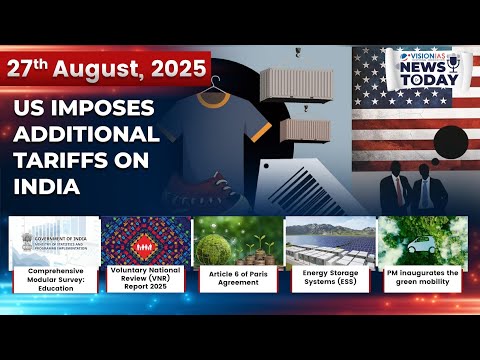
- U.S. trade sanctions on India and its improving relations with Pakistan have strained political engagement.
- India's exports to the U.S. have declined sharply, reflecting these tensions.
- Economic frictions persist due to U.S. tariffs on Indian purchases of Russian crude oil, while China and Pakistan enjoy favorable terms.
- India perceives a rapprochement between the U.S. and China, impacting its diplomatic stance.
Institutional and Defense Cooperation
- Despite political tensions, institutional engagement has accelerated.
- The July 2025 Quad Foreign Ministers’ meeting introduced new initiatives in maritime security, economic cooperation, and critical technologies.
- The Quad’s Counterterrorism Working Group held its third meeting, reinforcing operational relevance beyond political issues.
- Defense cooperation, strengthened by the 2025 Defence Framework Agreement, remains robust, focusing on joint coordination, information sharing, and technological collaboration.
Key Developments and Agreements
- Since the 2008 India-U.S. civil nuclear deal, defense and technology agreements have steadily deepened.
- Key agreements include:
- 2023 India-US Defence Acceleration Ecosystem (INDUS-X)
- Logistics Exchange Memorandum Of Agreement (LEMOA, 2016)
- Communications Compatibility and Security Agreement (COMCASA, 2018)
- Basic Exchange and Cooperation Agreement (BECA, 2020)
- Security of Supply Arrangement (SOSA, 2024)
- The NISAR satellite, a joint U.S.-India NASA ISRO project, launched in July 2025, enhances technological collaboration.
Regional and Infrastructural Cooperation
- In November 2025, the inaugural Quad Ports of the Future Conference in Mumbai focused on developing resilient and secure ports.
- This initiative underscores the importance of quality infrastructure development in Quad cooperation, promoting regional connectivity.
Conclusion and Future Outlook
Despite political challenges, the India-U.S. relationship continues to evolve through strong institutional frameworks. The dual-track dynamic of political and institutional engagements fosters trust and resilience, allowing the partnership to navigate geopolitical challenges effectively. Moving forward, both nations must deepen institutional understanding and expand cooperation across sectors to build robust, long-term partnerships.