Current Affairs
Lokmata Ahilyabai Holkar Birth Anniversary: Life, Governance, and Legacy That Shaped India
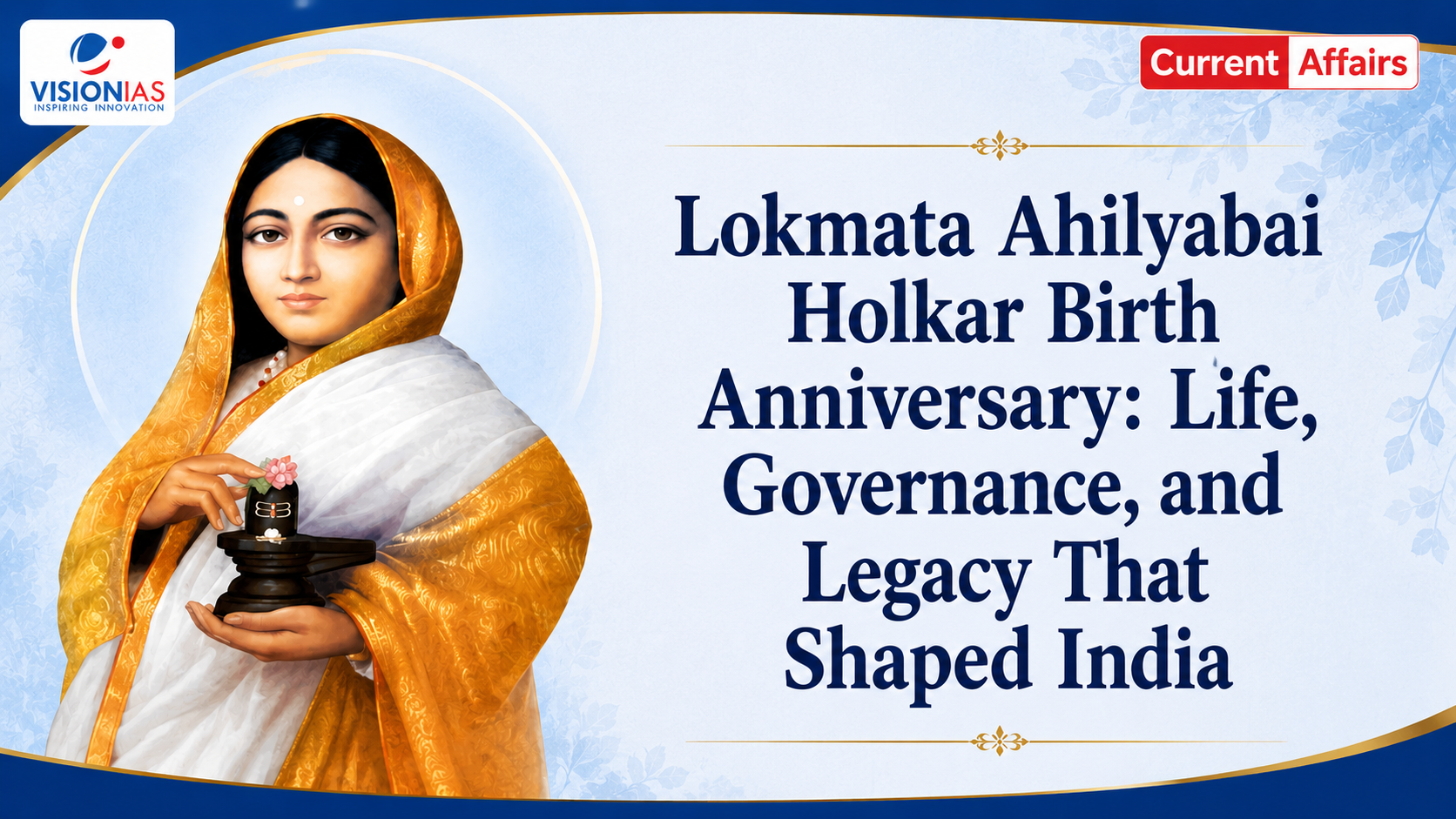












Rani Ahilyabai Holkar was one of the most respected rulers of the Maratha Malwa kingdom and is remembered for her just governance, public welfare initiatives, and cultural patronage.
Every year on May 31, India observes the birth anniversary of Lokmata Ahilyabai Holkar, one of the most respected rulers in Indian history. Born in 1725 in Chaundi village of present-day Maharashtra, she governed the Malwa kingdom from 1767 to 1795. Her reign is remembered for just administration, public welfare, and the restoration of India’s cultural and religious heritage.
On her birth anniversary in 2026, the Prime Minister of India paid tribute, noting that her life stands as a model of good governance, patriotism, and cultural pride. She led with a strong sense of duty and worked for the welfare of all sections of society.
Early Life and Entry into Governance
Rani Ahilyabai Holkar was born on May 31, 1725, to Mankoji Rao Shinde in Chaundi village of present-day Ahilyanagar (formerly Ahmednagar) district. She married Khanderao Holkar, son of Malhar Rao Holkar, a powerful officer of Peshwa Baji Rao posted in Malwa to collect Chauth and Sardeshmukhi. It was Malhar Rao Holkar who recognised her ability and guided her in matters of administration.
Key events that shaped her path to power:
- 1754: Khanderao Holkar was killed in the Battle of Kumbher.
- 1766: Malhar Rao Holkar passed away, leaving the kingdom without a senior male heir.
- 1767: Lokmata Ahilyabai Holkar assumed full charge of the Malwa kingdom and ruled until 1795.
Despite pressure to observe Sati after her husband’s death, she chose to govern. She appointed Tukoji Rao Holkar (adopted son of Malhar Rao Holkar) as commander of her army and established Maheshwar in Madhya Pradesh as the new seat of the Holkar dynasty.
Governance and Administration
The reign of Lokmata Ahilyabai Holkar is studied as a model of dharma-based governance, built on the principles of sewa (service), nyaya (justice), and dharma (duty). Her administration was inclusive and welfare-oriented.
Inclusive Administration
One of the defining features of her rule was the inclusion of marginalised communities in the governance structure. She incorporated Bhil, Gond, and Dalit communities into her administrative system. A well-organised tax system existed under her rule, and revenue was directed toward public infrastructure and welfare.
Economic Development
She transformed Malwa into a centre of trade and craftsmanship:
- Maheshwar and Indore became important centres of trade and commerce.
- She promoted the Maheshwari weaving industry, whose sarees and fabrics today hold a Geographical Indication (GI) tag as a registered handicraft.
- Her economic policies balanced revenue collection with the welfare of artisans, traders, and farmers.
Temple Restoration and Cultural Contributions
Rani Ahilyabai Holkar funded the construction and restoration of temples, ghats, wells, and dharamshalas across India. This work combined religious devotion with public welfare, as these structures served pilgrims and ordinary travellers alike.
Her major contributions to India’s religious heritage include:
- Kashi Vishwanath Temple, Varanasi: One of the twelve Jyotirlingas, located on the western bank of the Ganga, was rebuilt under her patronage.
- Somnath Temple, Gujarat: Believed to be the first Jyotirlinga dedicated to Lord Shiva, this temple was raided by Mahmud Ghazni, the Delhi Sultanate, and Aurangzeb, and was restored under her direction. Rani Ahilyabai Holkar sponsored the construction of a Shiva temple and pilgrimage facilities at Somnath in the 18th century, helping revive worship at the site.
- She built dharamshalas and ghats across major pilgrimage routes, making travel accessible to people from all backgrounds.
She was also a patron of Sanskrit and Marathi literature:
- Khushali Ram: Sanskrit scholar supported under her patronage.
- Moropant: Marathi poet known for his political commentary on the Ramayana and Mahabharata, Akhyanas based on Puranas, and works like Aarya Bharata and Kekavali.
- Shahir Anantaphandi: Known for composing Lavani and Powadas.
Social Reforms
Lokmata Ahilyabai Holkar took concrete steps on social issues that were largely ignored by rulers of her time. Her interventions covered education, caste discrimination, and the status of women.
- Women’s education: She worked to promote education for women in an era when it received little attention.
- Widow remarriage: She supported the practice and worked against the social stigma attached to widows.
- Sati: She actively resisted the practice of Sati.
- Untouchability: She took steps against caste-based discrimination in her territory.
- Tribal inclusion: She worked to mainstream Bhil and Gond tribes by integrating them into administrative structures.
Her life places her in a long tradition of Indian women who held positions of power and knowledge, including Vedic scholars like Maitreyi and Lopamudra, medieval devotees like Mirabai, and warriors like Rani Abbakka Chowta and Jhalkaribai. Celebrating Lokmata Ahilyabai Holkar is also an act of reclaiming this history.
The Holkar Dynasty and the Maratha Confederacy
The Holkar Dynasty was a part of the Maratha Confederacy, which included the Bhonsle of Nagpur, Gaekwad of Baroda, and Sindhia of Gwalior. Founded by Malhar Rao Holkar, the dynasty played a significant role in the politics of central India.
Key facts about the Holkar dynasty:
- Malhar Rao Holkar founded the dynasty as an officer of Peshwa Baji Rao.
- Rani Ahilyabai Holkar ruled from 1767 to 1795 and is the most celebrated ruler of the dynasty.
- Malhar Rao II (1811 to 1833) was pivotal in the Third Anglo-Maratha War (1817 to 1819).
- The defeat at the Battle of Mahidpur led to the Treaty of Mandsaur in 1818, which governed relations between the Holkars and the British.
Conclusion
On her birth anniversary, remembering Lokmata Ahilyabai Holkar is not only an act of historical commemoration. It is also an opportunity to engage with India’s own governance traditions. Her principles of sewa, nyaya, and dharma remain relevant to contemporary debates on good governance, social inclusion, and cultural identity.
Her contributions to temple restoration, women’s welfare, tribal inclusion, and economic development show that Lokmata Ahilyabai Holkar exercised power with a clear sense of public responsibility. Her legacy continues to be relevant to every generation.
Master Digital Age Governance & Technology Trends with VisionIAS Comprehensive Current Affairs →
Lokmata Ahilyabai Holkar FAQs
1. How long did Lokmata Ahilyabai Holkar rule the Malwa kingdom?
Ans: She ruled from 1767 to 1795, a period of 28 years.
2. Which temple did Lokmata Ahilyabai Holkar rebuild in Varanasi?
Ans: Kashi Vishwanath Temple.
3. What was the capital of Lokmata Ahilyabai Holkar’s kingdom?
Ans: Maheshwar, Madhya Pradesh.
4. Which weaving industry did Rani Ahilyabai Holkar promote?
Ans: The Maheshwari weaving industry, now holding a GI tag.
5. What social practices did Rani Ahilyabai Holkar oppose?
Ans: She opposed Sati, untouchability, and the stigma against widow remarriage.