General Studies 1
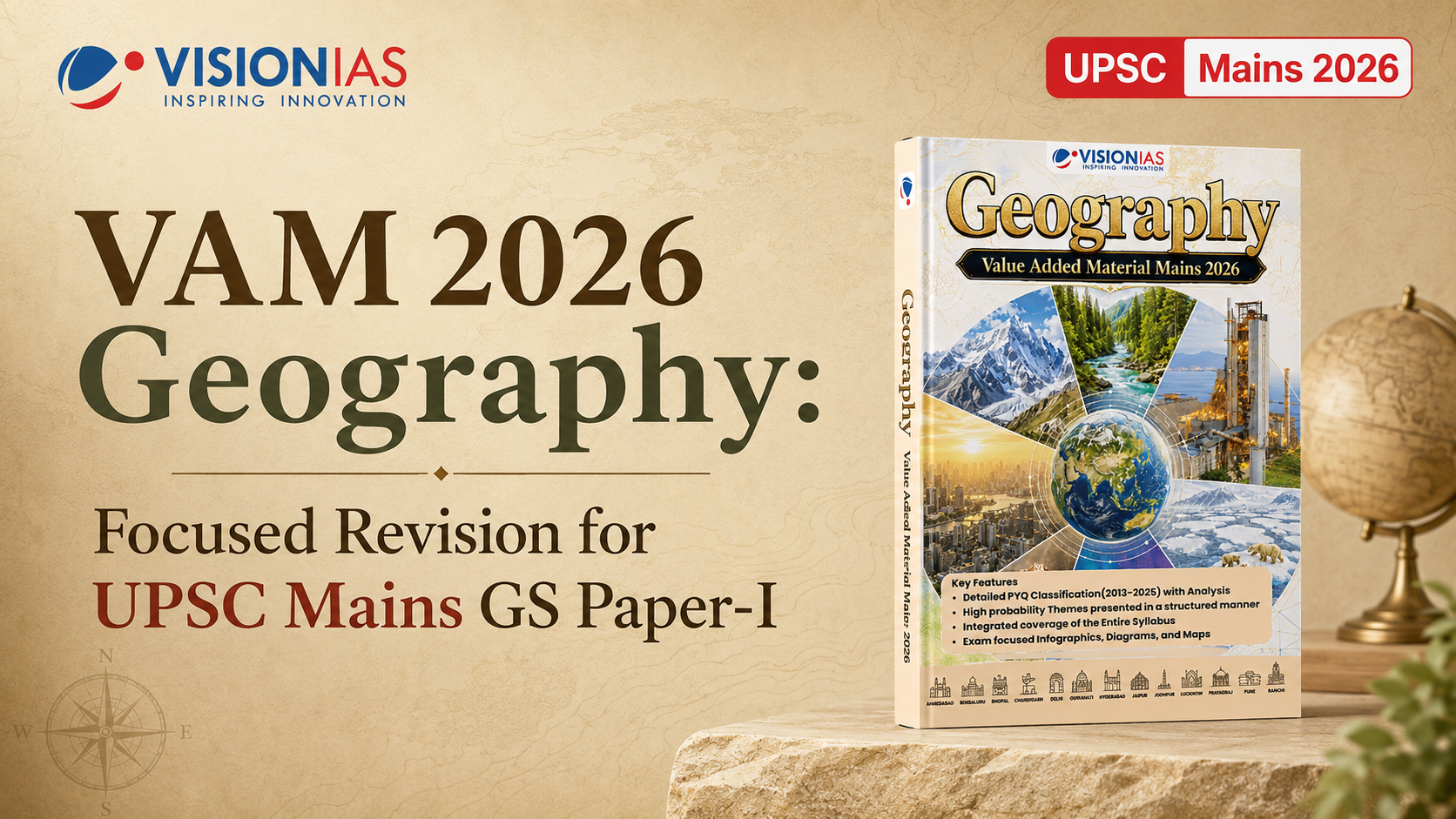
VisionIAS VAM 2026 Geography: Focused Revision for UPSC Mains GS Paper-I








The journey from UPSC Prelims to Mains is not just about covering more content. It is about converting knowledge into structured, analytical, and well-presented answers. This becomes especially important in Geography, a subject that connects the physical world with human activities, natural resources, industries, environment, disasters, and regional development.
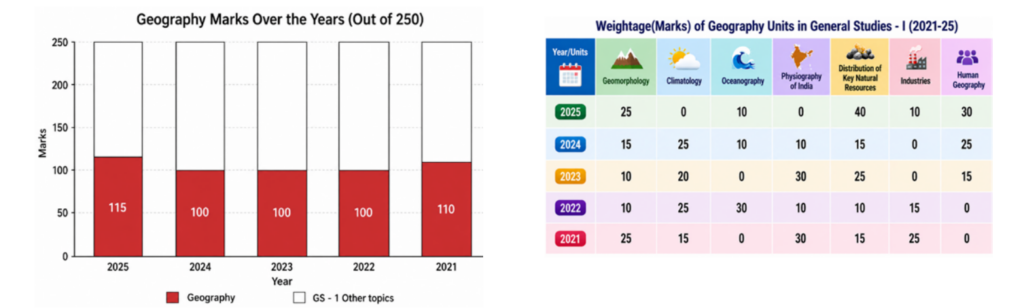
In GS Paper-I, Geography continues to hold significant importance. Over the years, UPSC has not limited Geography questions to direct factual recall. Instead, questions increasingly demand conceptual clarity, spatial understanding, map-based orientation, current linkage, and the ability to interconnect physical geography with society, economy, and environment.
This is where VisionIAS Value Added Material (VAM) Geography 2026 becomes a useful and exam-oriented resource for aspirants preparing for UPSC CSE Mains 2026.
It is designed not merely as another set of notes, but as a strategic answer-enrichment tool that helps aspirants revise Geography in a structured, thematic, and high-retention manner.
[Download: Download VAM Geography 2026 PDF]
Why Geography Needs a Focused Strategy for UPSC Mains
Geography is a multi-dimensional subject. A single question can require the aspirant to combine concepts, examples, diagrams, maps, location-based analysis, and contemporary developments.
For example, a question on cyclones may require understanding of atmospheric circulation, sea surface temperature, pressure systems, disaster impact, coastal vulnerability, and mitigation. Similarly, a question on industries may demand discussion on raw material location, energy resources, transport linkages, ports, markets, labour, policy support, and global supply chain changes.
Therefore, Geography preparation for Mains requires more than reading standard content. It requires:
- Conceptual clarity
- PYQ-based prioritisation
- Region-specific examples
- Map and diagram-based presentation
- Interlinking of physical and human geography
- Analytical answer writing
- Concise revision material
The VisionIAS VAM Geography 2026 has been designed to meet these requirements.
Also, Read blog to know VAM 2025 Reflection in UPSC Mains 2025 GS- 1 paper
What Makes VisionIAS VAM Geography 2026 Useful?
1. PYQ-Based and Exam-Oriented Approach
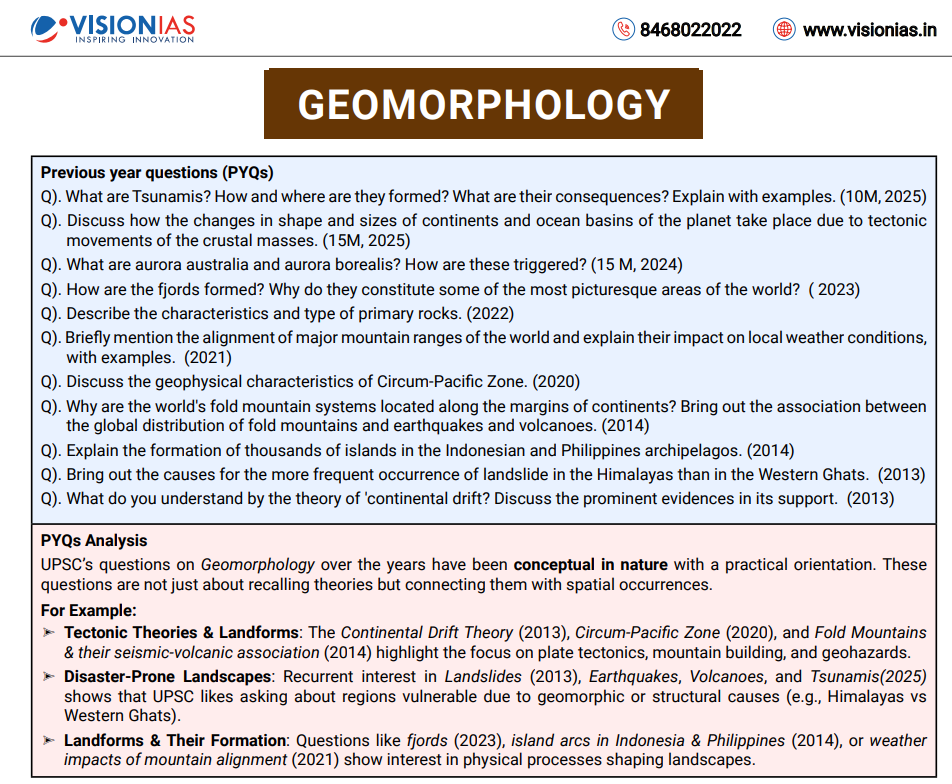
A strong Geography answer begins with understanding what UPSC actually asks. The VAM begins chapters with Previous Year Questions (PYQs) and their analysis, helping aspirants identify recurring themes, conceptual focus areas, and the nature of questions asked in recent years.
This helps aspirants avoid random preparation and focus on what is relevant for the exam.
For instance, in Geomorphology, PYQs show repeated emphasis on topics such as tectonic movements, tsunamis, fold mountains, landslides, island formation, fjords, auroras, earthquakes, and volcanic activity. This makes it clear that UPSC expects aspirants to understand not only definitions but also processes, locations, causes, and consequences.
2. Structured Coverage of the GS Paper-I Geography Syllabus
The UPSC GS Paper-I Geography syllabus includes:
- Salient features of the world’s physical geography
- Distribution of key natural resources across the world
- Factors responsible for the location of industries
- Important geophysical phenomena such as earthquakes, tsunamis, volcanic activity, cyclones, etc.
- Changes in critical geographical features including water bodies, ice caps, flora, and fauna
VAM Geography 2026 breaks this broad syllabus into clear and manageable units. The major chapters include:
- Geomorphology
- Climatology
- Oceanography
- Physiography of India
- Distribution of Key Natural Resources
- Industries
- Human Geography
This structure helps aspirants revise Geography in a syllabus-aligned manner and reduces confusion during the final phase of preparation.
3. Integrated Approach to Geography
Geography is not a subject of isolated compartments. Physical features influence human settlements. Climate shapes agriculture. Resources determine industries. Disasters affect development. Migration changes cities. Environmental degradation modifies ecosystems and livelihoods.
The VAM adopts this integrated approach by linking different dimensions of Geography.
For example:
- Earthquakes, tsunamis, volcanoes, landslides, and avalanches are discussed within Geomorphology.
- Cyclones, heatwaves, monsoon variations, El Niño, and IOD are linked with Climatology.
- Changes in critical geographical features such as Himalayan glacier melting, cryosphere changes, wetland loss, land degradation, and urban flooding are integrated within relevant themes.
- Human Geography has also been included, considering the increasing relevance of population, migration, development, GIS, remote sensing, AI, and planning-based questions.
This helps aspirants develop a holistic and interlinked understanding, which is essential for writing analytical answers.
How VAM Geography Helps in Answer Writing
Aspirants often know the content but struggle to present it effectively. Geography answers need to be precise, visual, region-specific, and analytical.
The VAM Geography 2026 helps aspirants improve answer writing in the following ways:
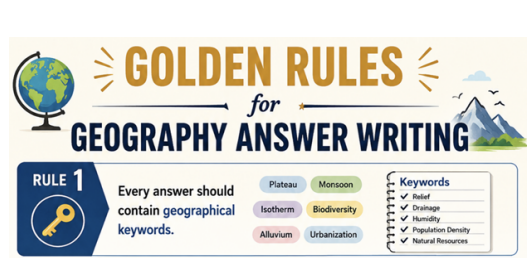
1. Use of Geographical Keywords
Good Geography answers should use subject-specific keywords. Terms such as plate tectonics, subduction, orographic rainfall, thermal inversion, drainage basin, geomorphic processes, resource endowment, industrial agglomeration, demographic transition, urban primacy, and carrying capacity make answers more precise and technically sound.
2. Inclusion of Maps, Diagrams and Flowcharts
Geography is a visual subject. A small, well-labelled map or diagram can make an answer more impactful and examiner-friendly.
For example:
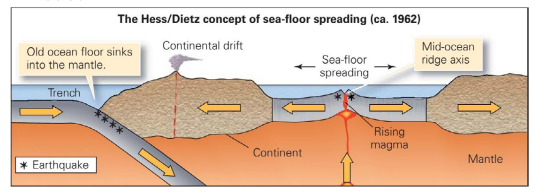
- Draw a simple plate boundary diagram for earthquake-related questions.
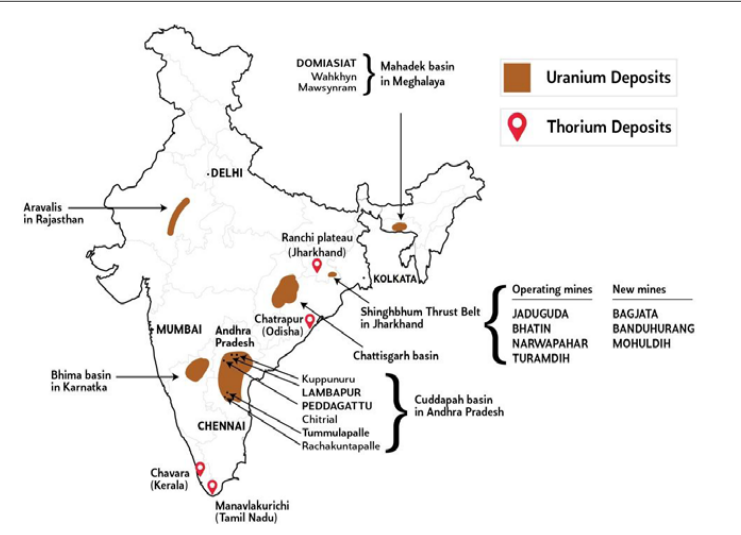
- Use a map to show distribution of minerals or industrial regions.
- Use a flowchart for causes and consequences of land degradation.
- Use a cyclone structure diagram for questions on tropical cyclones.
- Use a schematic for ocean currents, sea-floor spreading, or monsoon mechanism.
The VAM includes multiple visual elements, diagrams, maps, and infographics that aspirants can adapt in their answers.
3. Region-Specific Examples
UPSC answers become stronger when they include specific geographical examples. Instead of writing generic points, aspirants should mention examples such as:
- Himalayas for landslides, earthquakes, glacial retreat, and river systems
- Western Ghats for biodiversity, rainfall, and orographic influence
- Thar Desert for arid geomorphology and desertification
- Indo-Gangetic Plains for population density and agriculture
- Mumbai, Chennai, and Kolkata for port-based industrial locations
- Bhadla Solar Park in Rajasthan and Pavagada Solar Park in Karnataka for solar energy
The VAM encourages this region-specific approach, which adds authenticity and depth to answers.
4. Interlinking Physical Geography with Economy, Society and Environment
A high-quality Geography answer should show interlinkages. For example:
- Glacial retreat is not only a physical geography issue; it affects water security, agriculture, hydropower, disasters, and livelihoods.
- Urban flooding is linked with drainage, land-use change, wetlands, poor planning, and climate variability.
- Industrial location is linked with raw materials, transport, markets, labour, policy, and global supply chains.
- Population distribution is linked with land, soil, water resources, employment, migration, and urban development.
Such interlinking helps aspirants write answers that are multidimensional and aligned with UPSC’s expectations.
5. Focus on Analysis, Not Just Definition
UPSC rarely rewards answers that stop at definitions. A good answer must explain causes, processes, impacts, regional variations, and way forward.
For example, in a question on land degradation, an average answer may define land degradation and list a few causes. A better answer will analyse how soil erosion, climate change, faulty irrigation, deforestation, overgrazing, mining, and urban expansion contribute to land degradation, and then connect it with food security, biodiversity, livelihoods, and sustainable land management.
VAM Geography 2026 encourages this analytical orientation.
Sample: How VAM Geography Can Improve an Answer
Let us take an example from Geomorphology.
Possible UPSC-Style Question
“Discuss how tectonic movements change the shape and size of continents and ocean basins. Explain with suitable examples.”
A generic answer may only mention continental drift and plate tectonics. However, with the help of VAM Geography, aspirants can structure the answer more effectively.
Introduction
Begin with the idea that the present distribution of continents and oceans is the result of long-term tectonic processes operating through the movement of lithospheric plates.
Body Part 1: Mechanisms
Explain major mechanisms such as:
- Continental drift from Pangaea to present-day continents
- Sea-floor spreading at mid-ocean ridges
- Subduction of oceanic crust at convergent boundaries
- Continental collision leading to mountain building
- Rift formation and future ocean basin development
Body Part 2: Examples
Add examples such as:
- Atlantic Ocean widening due to sea-floor spreading
- Pacific Ocean shrinking due to subduction
- Himalayas formed due to Indian Plate and Eurasian Plate collision
- East African Rift as a future ocean-forming region
- Island arcs such as Japan and the Philippines due to oceanic-oceanic convergence
[Note: Can add relevant diagrams of Sea-Floor Spreading / Plate Boundary and East African Rift Valley / Oceanic Convergence Diagram]
Conclusion
Conclude by stating that tectonic processes are continuous and dynamic, and they shape not only the physical landscape but also hazards, resources, and human settlement patterns.
This format makes the answer conceptual, visual, example-rich, and analytical.
Key Areas Covered in VAM Geography 2026
1. Geomorphology
The section covers the origin and evolution of the Earth, internal structure, seismic waves, geomagnetism, forces acting on Earth, plate tectonics, rocks, rock cycle, soils, soil degradation, and conservation.
It also integrates geophysical phenomena such as earthquakes, volcanoes, tsunamis, landslides, and avalanches.
2. Climatology
This section helps aspirants understand atmospheric structure, temperature distribution, heat budget, pressure belts, atmospheric circulation, winds, jet streams, air masses, fronts, cyclones, monsoon, ENSO, IOD, and biomes.
This is useful for questions related to monsoon variability, tropical cyclones, climate anomalies, heatwaves, and disaster vulnerability.
3. Oceanography
The Oceanography section includes ocean relief, ocean floor mapping, temperature, salinity, density, ocean currents, deep ocean circulation, sea-level changes, ocean deposits, marine resources, and marine pollution.
This helps in questions related to ocean currents, marine resources, sea-level rise, coastal vulnerability, and climate regulation.
4. Physiography of India
This section covers the Himalayas, Northern Plains, Thar Desert, Peninsular Plateau, Western and Eastern Ghats, Coastal Plains, drainage system, inland waterways, interlinking of rivers, islands, natural vegetation, mangroves, and soils of India.
For GS Paper-I, this section is highly useful because India-based examples make answers more grounded and region-specific.
5. Distribution of Key Natural Resources
The VAM covers minerals, critical minerals, water resources, groundwater management, land resources, land degradation, coal, petroleum, natural gas, solar energy, wind energy, nuclear energy, bio-energy, geothermal energy, alternate sources of energy, mining, and deep-sea mining.
This is useful for questions that demand spatial understanding of resource distribution and its link with economy, geopolitics, sustainability, and regional development.
6. Industries
The Industries section deals with classification of industries, world industrial regions, industrial regions of India, industrial corridors, emerging industrial clusters, mineral-based industries, iron and steel, IT, semiconductor, agro-based industries, sugar, cotton, jute, tea, coffee, rubber, pharmaceutical, fertiliser, automobile, shipbuilding, space industry, and global supply chains.
This is extremely useful for questions on industrial location, resource-based industries, port-based industries, supply chains, and changing patterns of manufacturing.
7. Human Geography
Human Geography has been added with emphasis on emerging question trends. Recent UPSC questions have linked population distribution, migration, human development, demographic winter, GIS, remote sensing, AI, drones, and planning.
This section helps aspirants connect Geography with development, governance, technology, and public policy.
How to Use VAM Geography 2026 Effectively
Step 1: Start with PYQ Analysis
Before reading any chapter, first go through the PYQs and analysis given at the beginning. This will help you understand what UPSC expects from that topic.
Step 2: Mark Keywords and Diagrams
While reading, identify keywords, diagrams, and maps that can be used in answers. Prepare a separate list of 20–30 high-utility diagrams for quick revision.
Step 3: Convert Content into Answer Frameworks
For important topics, prepare a basic structure:
- Introduction
- Concept / process
- Spatial distribution
- Examples
- Impact / significance
- Challenges
- Way forward
- Conclusion
Step 4: Use Region-Specific Examples
Try to add at least one Indian or global example wherever relevant. Geography answers become more powerful when examples are specific.
Step 5: Practice Map-Based Presentation
Even a small outline map can improve answer quality. Practice using maps for resources, industries, physiographic divisions, climate regions, and disaster-prone areas.
Step 6: Revise with Visuals
In the final phase, revise diagrams, tables, flowcharts, maps, and PYQ analysis. These are easier to retain and reproduce in the exam hall.
Last-Mile Benefits of VAM Geography 2026
During the final phase before Mains, aspirants often face the challenge of revising large volumes of material in a short time. VAM Geography helps by offering:
- Consolidated syllabus coverage
- PYQ-based prioritisation
- High-probability themes
- Structured explanation of concepts
- Diagrams, maps, and infographics
- Region-specific examples
- Integrated physical and human geography
- Answer-writing orientation
It allows aspirants to move from scattered preparation to strategic revision.
[Download: Download VAM Geography 2026 PDF]
Final Word
Geography can become a scoring component of GS Paper-I when preparation is precise, visual, and analytical. Aspirants should not treat Geography as a subject of definitions alone. It must be prepared through processes, locations, examples, maps, interlinkages, and contemporary relevance.
VisionIAS VAM Geography 2026 is designed to support this approach. It helps aspirants strengthen conceptual clarity, revise the syllabus in a structured manner, and enrich answers with diagrams, maps, PYQ insights, and region-specific examples.
Use it as an answer-enrichment resource. Integrate it with your notes, revise it with PYQs, practice diagrams, and use its frameworks to write concise, well-structured, and high-scoring answers.
When geographical concepts meet clarity, maps, examples, and analysis, answer quality improves. Let VAM Geography 2026 be your strategic companion for UPSC Mains GS Paper-I.
VisionIAS Value added Material (VAM) Reflections in UPSC GS paper 2025
Below are the related links showcasing how VisionIAS VAM (Value added material) were reflected in UPSC GS Papers 2025 and how they proved helpful in enhancing UPSC Mains answer writing.
| GS Paper 1 : Reflections from VAM | GS Paper 2 : Reflections from VAM |
| GS Paper 3 : Reflections from VAM | GS Paper 4 (Ethics) : Reflections from VAM |
FAQs on VisionIAS VAM Geography 2026
1. What is VisionIAS VAM Geography 2026?
VisionIAS Value Added Material Geography 2026 is an exam-oriented resource designed for UPSC CSE Mains GS Paper-I Geography. It provides structured coverage of the syllabus, PYQ analysis, important themes, diagrams, maps, and answer-enrichment content.
2. How does VAM Geography help in answer writing?
It helps aspirants write better answers by providing geographical keywords, region-specific examples, diagrams, maps, flowcharts, and interlinked analysis of physical and human geography.
3. Is VAM Geography useful for last-minute revision?
Yes. Its structured chapters, PYQ analysis, visual elements, maps, and thematic coverage make it useful for quick and effective revision before Mains.
4. Does it cover the entire GS Paper-I Geography syllabus?
Yes. It covers major GS Paper-I Geography areas, including Physical Geography, Natural Resources, Industries, Important Geophysical Phenomena, Physiography of India, and Human Geography.
5. What is the best way to use VAM Geography 2026?
Start with PYQ analysis, mark diagrams and keywords, prepare answer frameworks, revise region-specific examples, and practice writing answers using maps and flowcharts.