General Studies 1
Why History Has Become Highly Important in UPSC Mains 2026


History in UPSC Mains – An Overview
Preparing for UPSC 2026 Mains often feels overwhelming because a large part of the examination is linked to dynamic current affairs with an almost unlimited scope. In comparison, History remains one of the few areas of UPSC GS 1 with a relatively fixed and predictable syllabus.
Recent UPSC trends clearly highlight its growing importance. In the UPSC Mains 2025 Examination, History in its broader sense — including Ancient History, Medieval History, Art & Culture, Modern India, World History, and Post-Independence India — together accounted for 75 marks in GS Paper 1.
More importantly, most questions emerged from recurring and classical themes. Questions on the Harappan Civilization, Chandella Art, Akbar’s religious syncretism, Jyotiba Phule, French Revolution, and Post-Independence consolidation reflected UPSC’s increasing focus on analytical understanding rather than mere factual recall; of these classical themes.

The Real Challenge of History Preparation for Mains Exam
Today, the biggest problem is not the lack of study material. Most aspirants already possess more content than they can revise effectively.
The actual challenge lies in:
- scattered preparation,
- excessive information accumulation,
- inability to identify high-yield themes,
- and difficulty in presenting analytical answers under examination pressure.
Many students prepare History as static information. However, UPSC increasingly demands:
- conceptual clarity,
- structured arguments,
- theme-based understanding,
- and effective articulation within a limited time.
This is where focused and exam-oriented Value Added Material (VAM) becomes important.
The Philosophy Behind VisionIAS History Value Added Materials
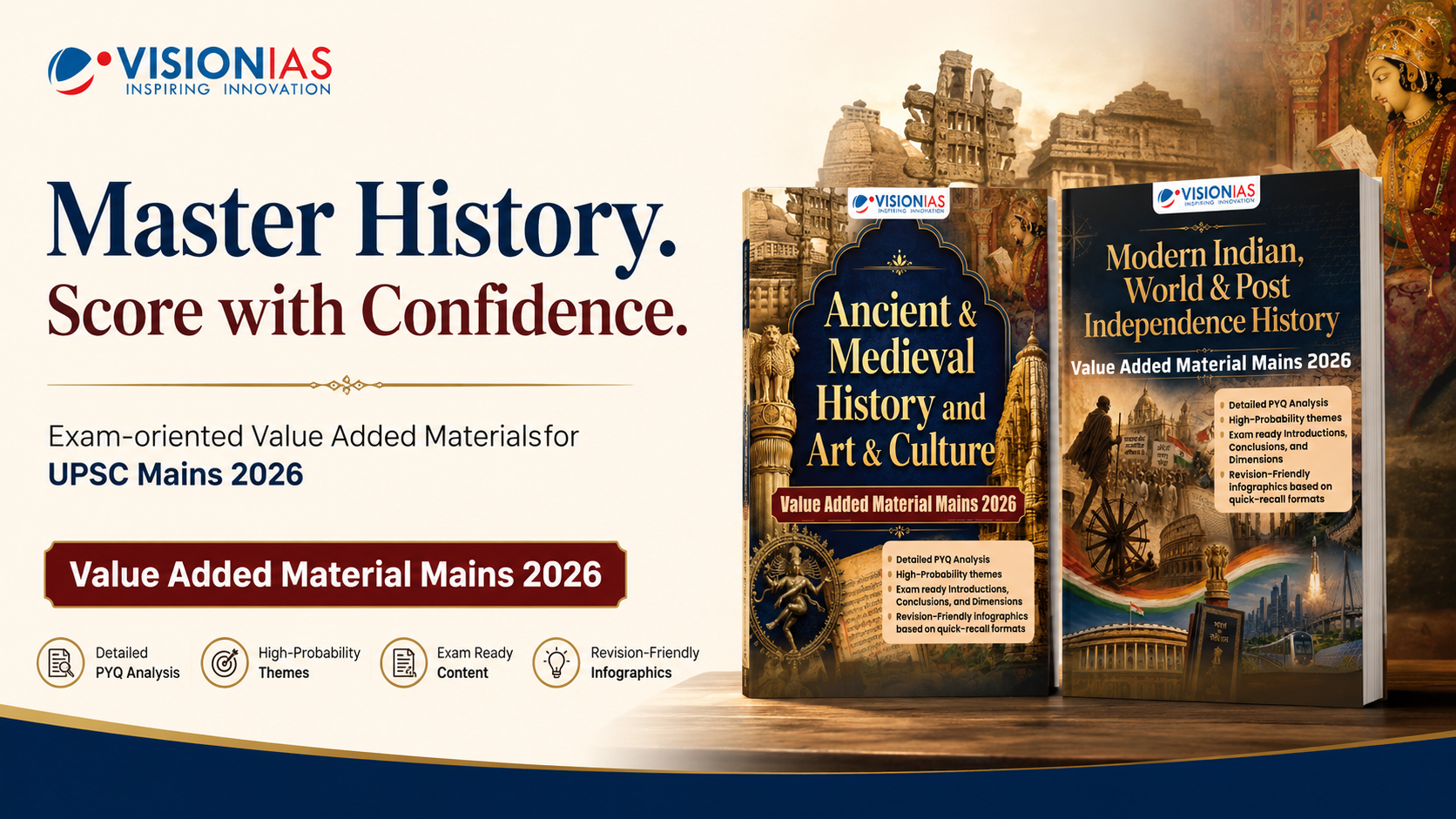
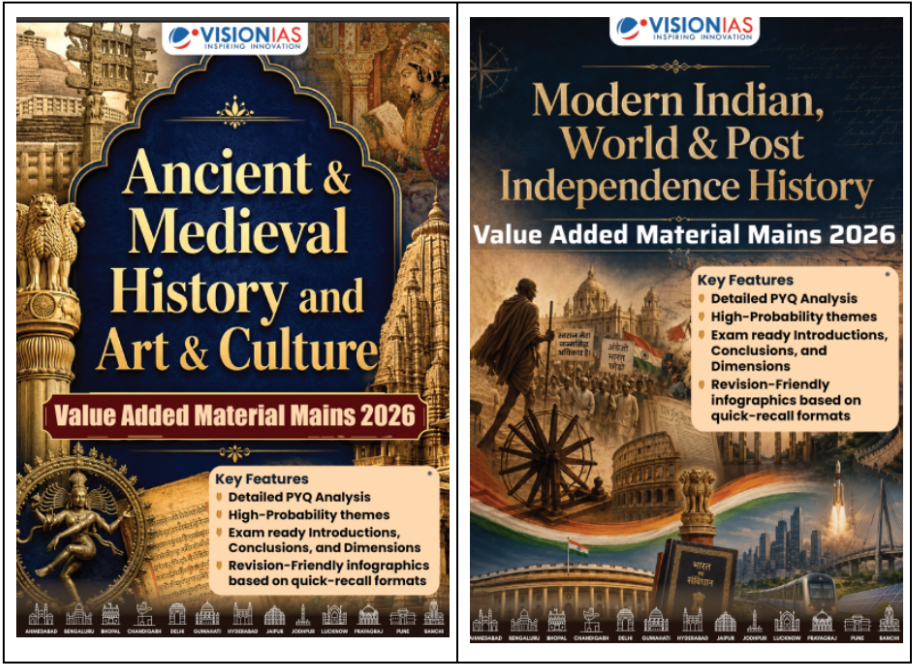
The VisionIAS GS Paper 1 History VAMs are designed not as conventional notes, but as exam-oriented preparation tools created specifically for UPSC civil services Mains 2026 GS1.
The idea behind these VAMs is simple: Convert predictable History themes into exam-ready preparation.
Built through detailed analysis of Previous Year Questions (PYQs) and recurring UPSC trends, the material focuses on preparing the syllabus through high-probability themes instead of broad and unfocused coverage.
Special emphasis has been placed on:
- exam-replicable introductions, conclusions, and arguments,
- revision-friendly presentation,
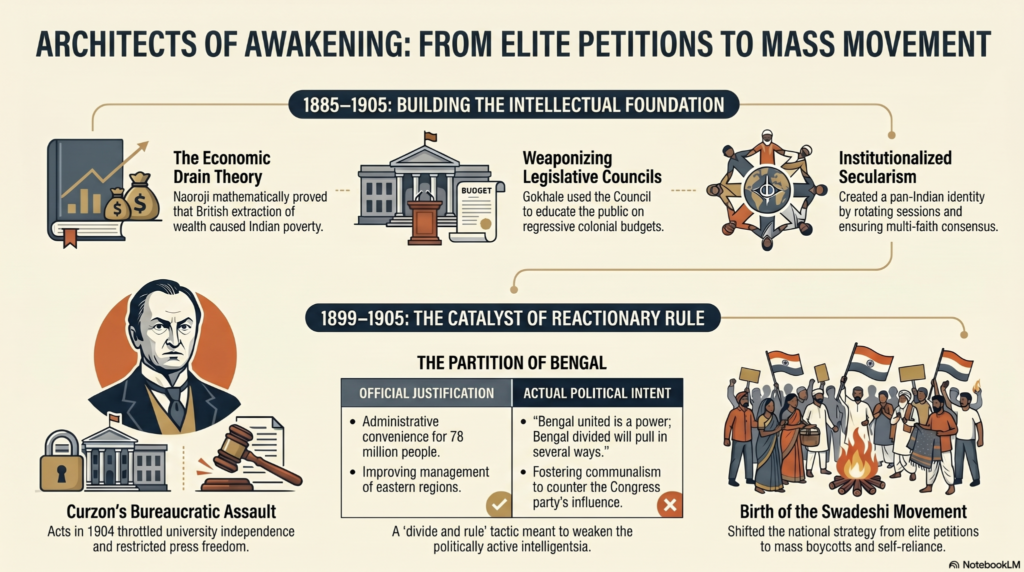
- and visual learning through infographics and analytical frameworks.
The objective is to reduce the precious time spent thinking during the mains examination so that aspirants can focus more on answer writing and overall paper completion.
Ancient & Medieval History and Art & Culture – Value Added Material
The Ancient & Medieval History and Art & Culture VAM focuses on some of the most stable and predictable portions of History.
Keeping recent UPSC trends in mind, the material emphasizes:
- recurring cultural and historical themes,
- conceptual understanding,
- analytical interpretation,
- and quick revision.
The use of exam-replicable infographics, visual frameworks, thematic consolidation, and quick-recall formats makes revision more efficient and improves retention before the examination.
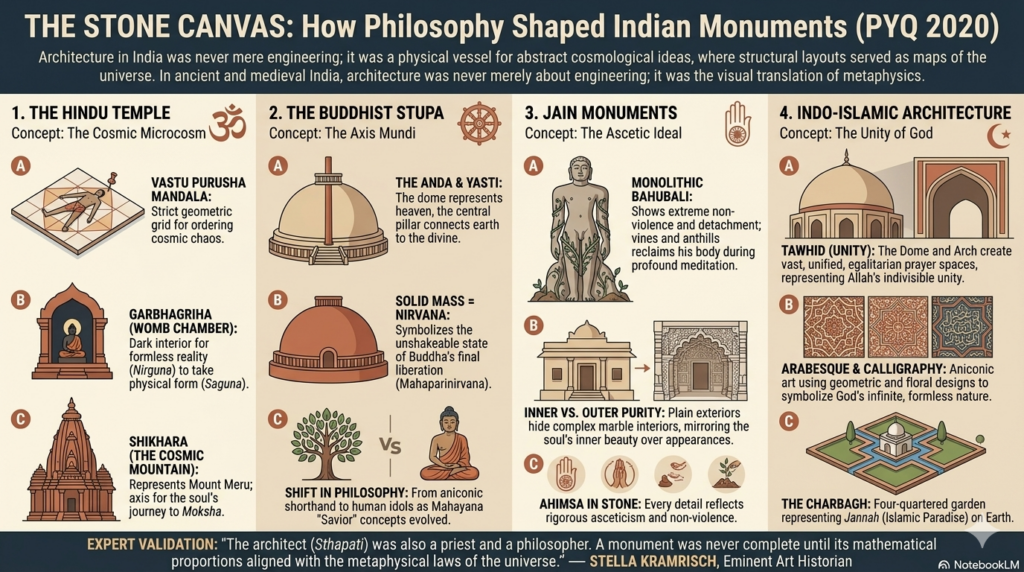
Instead of promoting random factual accumulation, the document is designed to help aspirants develop a structured understanding of History and Art & Culture in a mains-oriented manner.
Modern India, World History & Post-Independence India – Value Added Material
The Modern India, World History & Post-Independence India VAM is built around the analytical and recurring themes frequently asked in UPSC Mains.
The 2025 Mains Examination once again demonstrated this trend, where questions on Jyotiba Phule, French Revolution, and Post-Independence consolidation together accounted for nearly 45 marks.
Accordingly, the material focuses on:
- analytical dimensions,
- ready arguments,
- answer-writing articulation,
- and theme-based preparation.
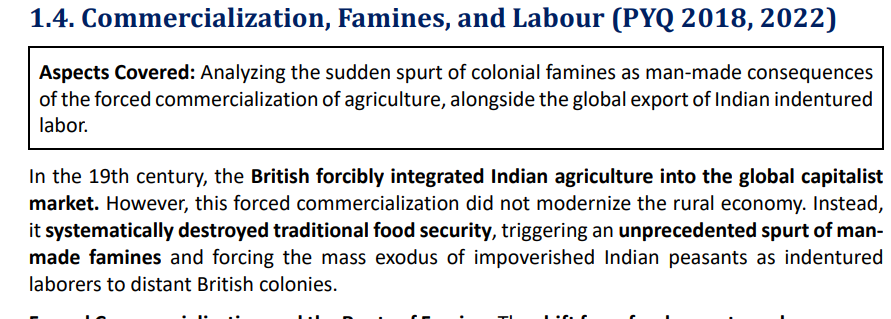
Similar to the previous VAM, this document also incorporates exam-ready introductions, conclusions, structured arguments, and revision-friendly infographics to simplify answer writing during the examination.
Excerpt 1:
Excerpt 2:
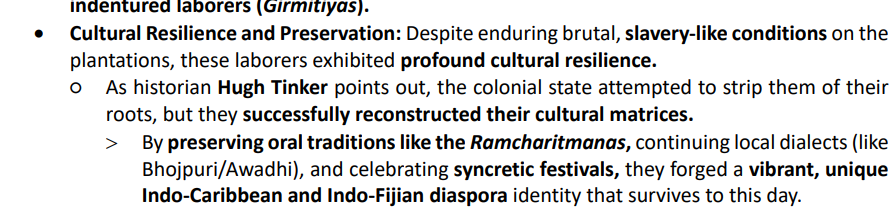
Excerpt 3:
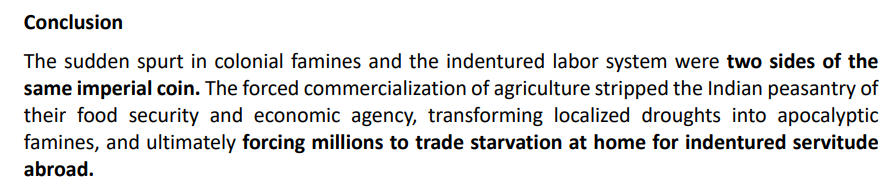
The broader aim is to minimize thinking time in the examination hall and help aspirants write faster, more structured, and more effective answers.
Final Thoughts
History is no longer merely a static portion of GS1. It has increasingly become one of the most strategically important and predictable scoring areas in UPSC Mains.
A smart preparation strategy therefore lies not in collecting endless material, but in identifying recurring themes, understanding their analytical dimensions, and preparing them in a form that can be effectively reproduced in the examination hall.
The VisionIAS GS Paper 1 History Value Added Materials have been designed with this exact purpose — to help aspirants approach History in a more structured, revision-friendly, and mains-oriented manner.
Click on the link below to Download the VisionIAS Value Added Materials (V.A.M.s)
VisionIAS Value added Material (VAM) Reflections in UPSC GS paper 2025
Below are the related links showcasing how VisionIAS VAM (Value added material) were reflected in UPSC GS Papers 2025 and how they proved helpful in enhancing UPSC Mains answer writing.