Russia is developing oncolytic vaccine Enteromix and Personalized mRNA cancer vaccines for cancer treatment.
About oncolytic vaccine Enteromix
- Oncolytic vaccines are a type of cancer therapy that uses oncolytic viruses (OVs) to directly kill cancer cells and stimulate an anti-tumor immune response.
- Enteromix is based on a combination of four non-pathogenic viruses that have the ability to destroy malignant cells and simultaneously activate the patient's antitumor immunity.
- Vaccine showed 100% success in preclinical trials.
- Initial target of vaccine is colorectal cancer, Moreover, promising progress has been made in developing vaccines for glioblastoma and specific types of melanoma.
About Personalized mRNA Vaccines
- Personalized Vaccine: Based on the genetic analysis of each patient's tumor, a unique vaccine is created that can "teach" the immune system to recognize cancer cells.
- mRNA vaccines are a type of vaccine that use a small piece of messenger RNA (mRNA) to instruct our cells to produce a protein specific to a virus.
- mRNA (messenger Ribonucleic Acid) is a genetic molecule that contains instructions or recipe that directs cells to make a protein using its natural machinery.
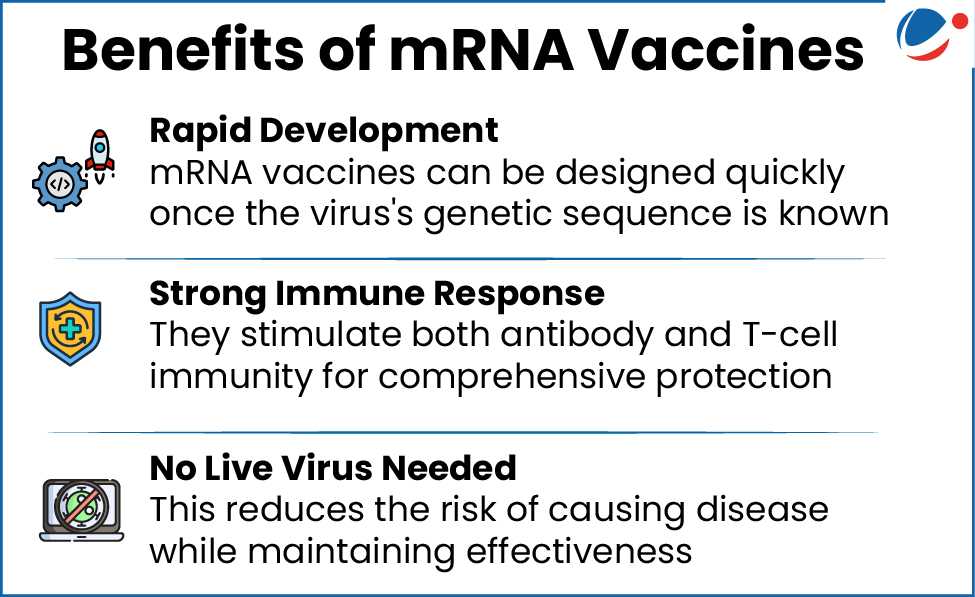
- mRNA delivers genetic material, encapsulated in lipid nanoparticles, into body to prompt protein production that match up with parts of pathogen called antigens.
- E.g., the mRNA vaccine for COVID-19 directed cells to produce copies of a protein on the outside of the coronavirus known as the spike protein.
- Immune system sees these foreign antigens as invaders, dispatching defenders called antibodies and T-cells and training immune system for potential future attacks.
Challenges of mRNA vaccines:
- Storage requirements: Require ultra-cold storage, making distribution difficult.
- Short-term side effects: E.g. fever, fatigue, and soreness at the injection site.
- Long-term safety: mRNA vaccines are relatively new, so long-term effects are still being studied.