
Trilemma of Digital Governance: Digital Ascendancy, Digital Capitulation, or Genuine Digital Sovereignty | Current Affairs | Vision IAS
MENU
Home

Periodically curated articles and updates on national and international developments relevant for UPSC Civil Services Examination.

Quick Links

High-quality MCQs and Mains Answer Writing to sharpen skills and reinforce learning every day.

Watch explainer and thematic concept-building videos under initiatives like Deep Dive, Master Classes, etc., on important UPSC topics.

ESC

In Summary

India faces a digital governance trilemma amid geopolitical tensions, global digital dominance, and dependency risks, emphasizing the need for sovereign data control, digital industrialization, and indigenous tech development.

In Summary

As the locus of geopolitical influence shifts from oil to data, India faces a trilemma of digital governance (refer infographic).

What factors are pushing India towards Digital Sovereignty?
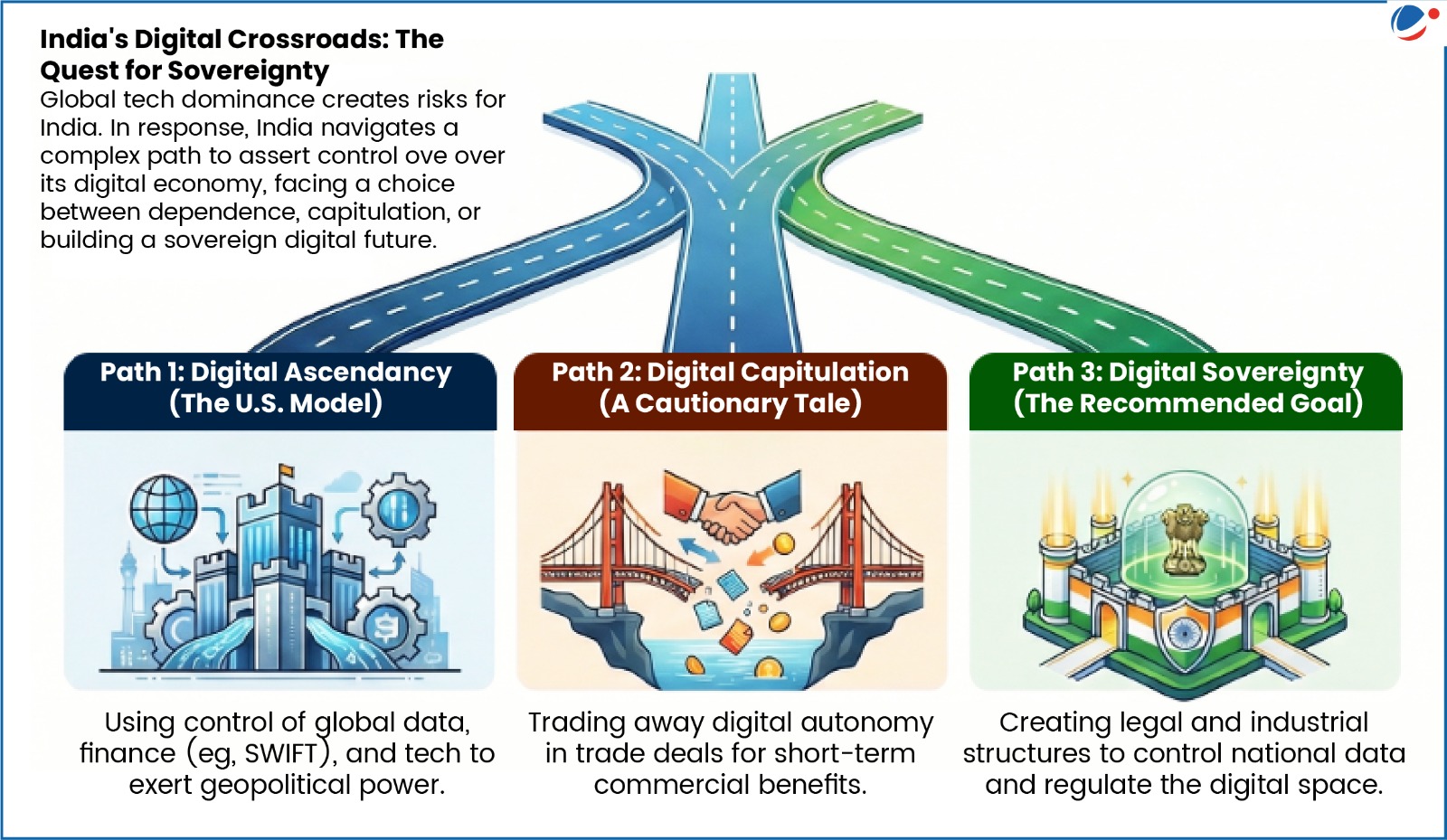
  • Geopolitical Volatility: Strained India–U.S. ties over trade, tariffs, Russian oil purchases, and regional issues create persistent uncertainty, pushing India toward tech self-reliance.
  • Global Digital Dominance: The U.S.-led “digital ascendancy model” controls global data, internet, and financial infrastructure (e.g., SWIFT), weaponized against Iran, Russia, and indirect pressure on India’s energy trade.
  • Vulnerability to Foreign Control: E.g. Microsoft’s sudden suspension of services to Nayara Energy (due to EU sanctions) exposed India’s risky dependence on foreign tech providers.
  • Data as the New Currency: A nation’s digital footprint determines its strategic strength unlike traditional factors.

Pathways to Digital Sovereignty for India

  • Digital Sovereignty Defined: creating legal and regulatory structures that ensure sovereign control over data exports and national digital space. E.g. through Digital Personal Data Protection Act.
  • Digital Industrialization: Unlike China’s exclusion model (restricting foreign tech presence), India should develop a national digital industrialization policy framework.
  • Foundational Initiatives (India Stack): through initiatives like the Digital Public Infrastructure (DPI), the Aadhaar system, etc.
  • Others: Sovereign AI (e.g. BharatGen); Free and Open Source Software (FOSS) approach, Indigenous Technology (e.g. Arattai, messaging app developed by Zoho), etc.

Challenges for India

  • Risk of Digital Capitulation: India must avoid FTA clauses forcing non-discrimination on foreign digital services/products.
    • E.g. Indonesia & Malaysia traded digital autonomy for commercial gains.
  • Foreign Investment vs. Sovereignty: E.g. Google’s $15B AI hub carries geopolitical and sovereignty risks.
  • Failure of Domestic Alternatives: E.g. Koo failed to replace X as political hub despite state push and shut down.
  • Privacy vs. Secrecy: E.g. Zoho blurred privacy/secrecy lines on Arattai; promises not to mine data aren’t future-proof.
Watch Video News Today

Explore Related Content

Discover more articles, videos, and terms related to this topic

RELATED VIDEOS

1
Lateral Entry

Lateral Entry

YouTube HD
Title is required. Maximum 500 characters.

Search Notes

Filter Notes

Loading your notes...
Searching your notes...
Loading more notes...
You've reached the end of your notes

No notes yet

Create your first note to get started.

No notes found

Try adjusting your search criteria or clear the search.

Saving...
Saved

Please select a subject.

Referenced Articles

linked

No references added yet
