
Gross Non-Performing Assets (NPA) of Banks fall to Multi-decade Low | Current Affairs | Vision IAS
MENU
Home

Periodically curated articles and updates on national and international developments relevant for UPSC Civil Services Examination.

Quick Links

High-quality MCQs and Mains Answer Writing to sharpen skills and reinforce learning every day.

Watch explainer and thematic concept-building videos under initiatives like Deep Dive, Master Classes, etc., on important UPSC topics.

ESC

In Summary

  • Indian banks' Gross NPA ratio dropped to a multi-decade low of 2.1% by late 2025, with Net NPA at 0.5%.
  • Key drivers for NPA reduction include the IBC 2016, SARFAESI Act, ARCs, and initiatives like Indradhanush.

In Summary

According to the Report on Trend and Progress of Banking in India 2024-25 of

RBI, the NPA of Indian banks has reached a multi-decade low, with the gross NPA ratio dropping to 2.1% by late 2025.
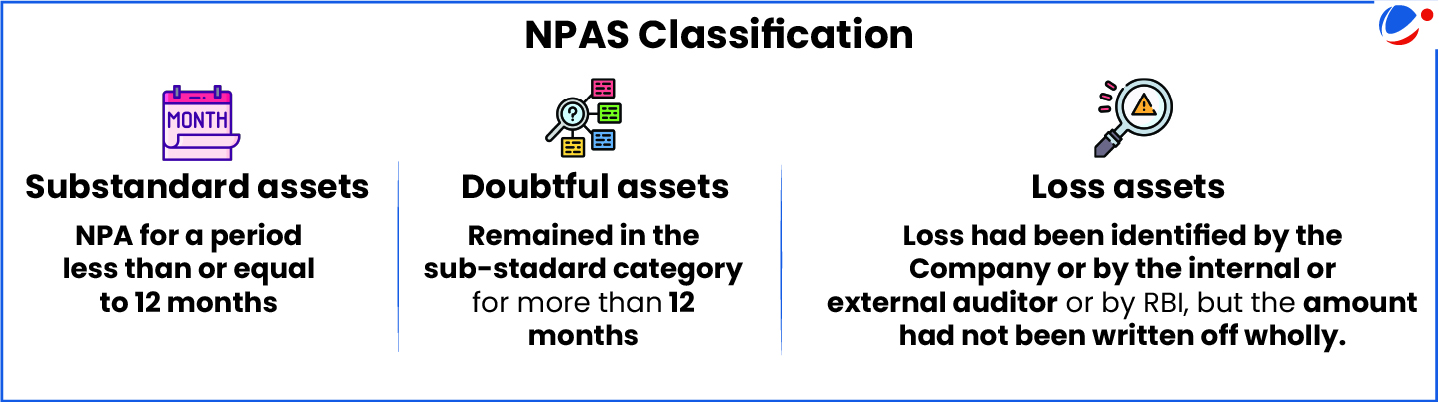
  • The net NPA (NNPA) ratio also declined to 0.5 % at the end of March 2025
  • GNPA ratio of banks started reached its peak in 2018 at 11.18%.  

What is Non-Performing Assets (NPAs)? 

  • NPAs are loans or advances for which the principal or interest payment remains overdue for a period of more than 90 days. 
    • Gross NPA is the total value of loans where interest or principal remains overdue and Net NPA is obtained by subtracting provisions (the funds the bank sets aside to cover expected losses) from GNPA. 
  •  Key Drivers of NPA: Economic slowdowns, fraudulent borrowers, poor monitoring, etc. 
  • Challenges associated with NPAs: high provisioning, reduced lending capacity, etc. 

Key initiatives that have played a crucial role in reducing NPAs

  • Insolvency and Bankruptcy Code (IBC), 2016: Created a time-bound and creditor-driven resolution framework for stressed assets
  • Securitisation and Reconstruction of Financial Assets and Enforcement of Security Interest Act, 2002 (SARFAESI Act): It allows secured creditors to take possession of collateral, against which a loan had been provided, upon a default in repayment.
  • Asset Reconstruction Companies (ARCs): Banks continued to clean their balance sheets by selling NPAs to ARCs
  • Other: Indradhanush plan (launched for revamping PSBs, envisaging infusion of capital in PSBs), Debt Recovery Tribunals (DRTs), etc. 
Watch Video News Today

Explore Related Content

Discover more articles, videos, and terms related to this topic

RELATED VIDEOS

3
News Today (Aug 18-19-20, 2024)

News Today (Aug 18-19-20, 2024)

YouTube HD
News Today (Jan 21, 2025)

News Today (Jan 21, 2025)

YouTube HD
News Today (May 30, 2025)

News Today (May 30, 2025)

YouTube HD

RELATED TERMS

3

Debt Recovery Tribunals (DRTs)

Specialised quasi-judicial bodies established under the Recovery of Debts Due to Banks and Financial Institutions Act, 1993, to expedite the recovery of debts owed to banks and financial institutions.

Indradhanush plan

A comprehensive plan launched by the government for the revamp of Public Sector Banks (PSBs), which envisages capital infusion, improving governance, and other reforms to strengthen their financial health and operational efficiency.

Asset Reconstruction Companies (ARCs)

Companies that acquire NPAs from banks and financial institutions. They specialise in the recovery and resolution of these bad loans, thereby helping banks clean up their balance sheets.

Title is required. Maximum 500 characters.

Search Notes

Filter Notes

Loading your notes...
Searching your notes...
Loading more notes...
You've reached the end of your notes

No notes yet

Create your first note to get started.

No notes found

Try adjusting your search criteria or clear the search.

Saving...
Saved

Please select a subject.

Referenced Articles

linked

No references added yet