


This underscores the critical role of water governance for sustainable use of water.
Need of efficient water governance
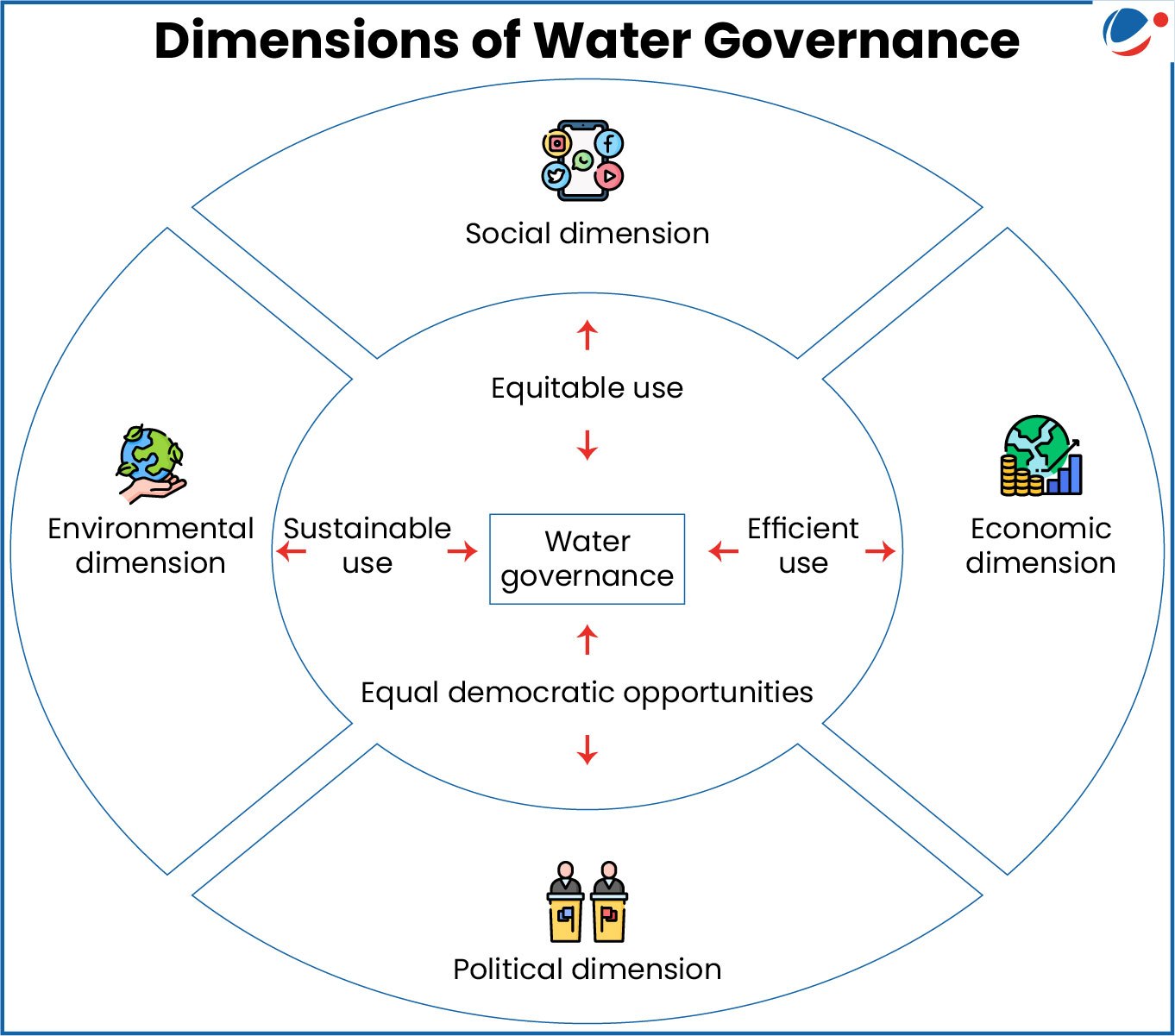
- Manage Scarcity: India supports ~18% of world's population but has only 4% of freshwater resources.
- Economic Growth: Inefficient water management could lead to a 6% loss in GDP by 2050. (NITI Aayog)
- Climate resilience: Integrated Water Resource Management (IWRM) is needed to maintain the eco-hydrological cycle and sustain biodiversity.
Challenges in water governance
- Fragmented Governance: In silos water management (e.g. Groundwater, surface water, irrigation, and domestic use) by institutions like CGWB, CWC, etc.
- Over-Exploitation: Severe depletion of groundwater aquifers due to subsidized power and lack of regulation.
- Lack of Equitable Access: Lack of access to sustainable water sources hinders development of vulnerable sections. E.g. Women and sanitation needs
- Climate change: impacts the hydrological cycle.
Way Forward
- Integrated Water Resource Management: Treating river basins as units and linking land, water, and ecosystems.
- Promoting Behavioural change, Community participation, Circular Water Economy and Gender-Responsive Water Governance.
o E.g Jan Bhagidari- empower Gram Panchayats and village committees to manage local water systems.
Water Governance in India
o Article 262: Parliament can provide for adjudication inter-state river disputes.
o Inter-State River Water Disputes (ISRWD) Act,1956 (constitution of Tribunals) o River Boards Act, 1956 (establishment of River Boards for regulating inter-state rivers) o Water (Prevention and Control of Pollution) Act, 1974 Initiatives for Ground water governance
|


