
RBI proposes new methodology for identification of Upper Layer NBFCs | Current Affairs | Vision IAS

Upgrade to Premium Today

Start Now
MENU
Home
Quick Links

High-quality MCQs and Mains Answer Writing to sharpen skills and reinforce learning every day.

Watch explainer and thematic concept-building videos under initiatives like Deep Dive, Master Classes, etc., on important UPSC topics.

A short, intensive, and exam-focused programme, insights from the Economic Survey, Union Budget, and UPSC current affairs.

ESC

In Summary

  • RBI proposes new SBR framework for NBFCs, including a ₹1 lakh crore asset size criterion for Upper Layer NBFCs.
  • Government NBFCs will now face stricter regulations, and unlimited state guarantees will be permitted for Upper Layer NBFCs.
  • NBFCs differ from banks by not accepting demand deposits, not being part of the payment system, and lacking DICGC deposit insurance.

In Summary

As per the current Scale Based Regulatory (SBR) framework, NBFCs are classified into four layers – Base, Middle, Upper and Top Layers (refer infographic).
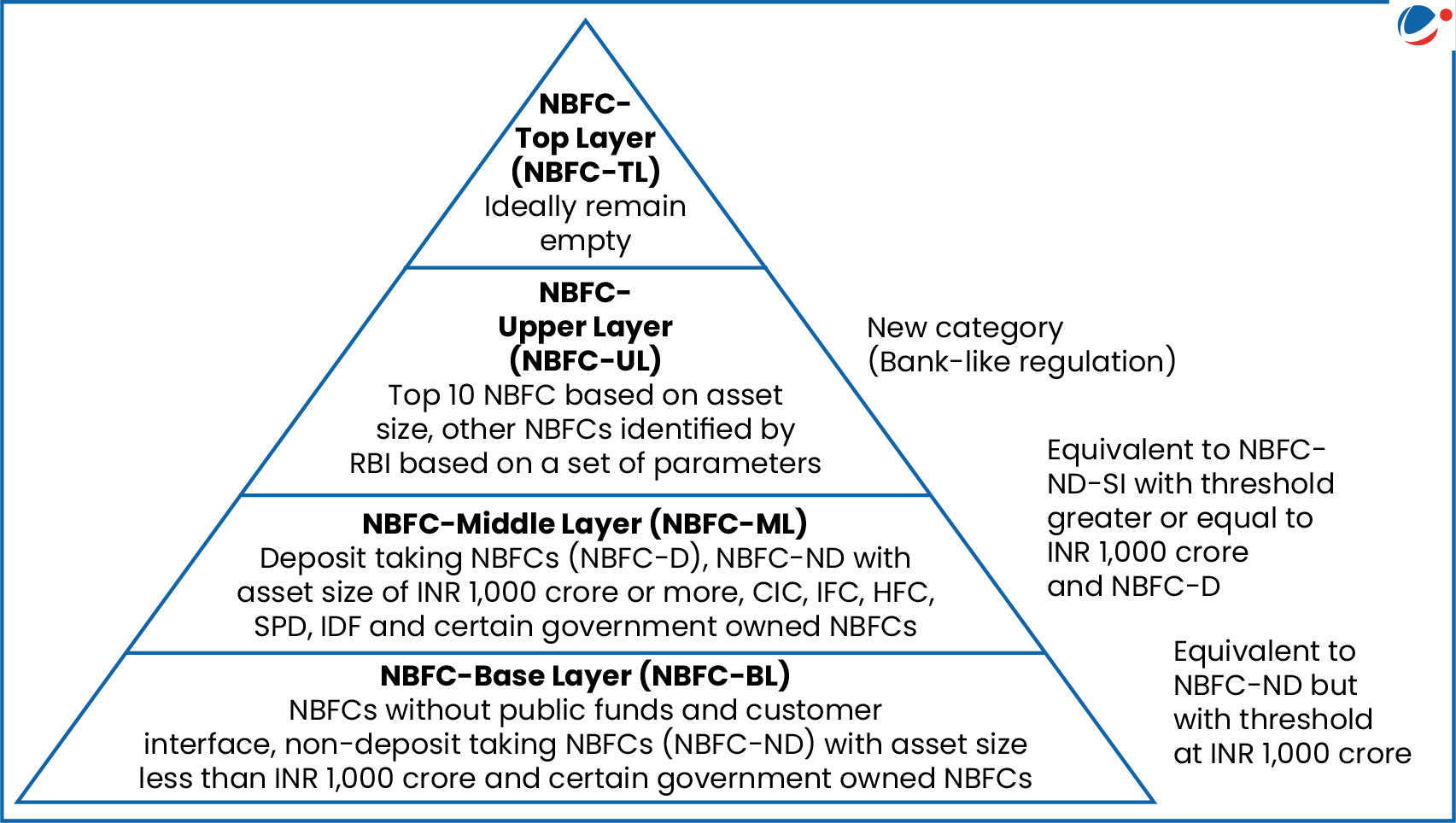
Proposed amendments by the RBI 

  • New Criterion for Upper Layer NBFCs: A simple asset size of ₹1 lakh crore or more, replacing the current complex scoring model that identifies only top-ten NBFCs based on asset size.
    • This threshold will be reviewed every five years.
  • Inclusion of Government NBFCs: State-owned entities (like NABARD, Exim Bank, and SIDBI) will no longer be exempt and will face the same strict regulations as private NBFC-ULs.
  • Unlimited State Guarantees: Upper-layer NBFCs to be permitted to use state government guarantees as a credit risk transfer mechanism without any quantitative caps.

What is a Non-Banking Financial Company (NBFC)?

  • Definition: NBFC is a company registered under the Companies Act, 1956 or Companies Act, 2013, and engaged in the business of loans and advances, acquisition of shares, stocks, bonds, debentures, and securities.
  • Regulation: primarily by the Reserve Bank of India (RBI), under Chapter III B of the Reserve Bank of India Act, 1934.
  • However, some specific types of non-banking financial entities fall under the jurisdiction of other regulatory bodies to avoid overlap. 
    • For e.g. Insurance Companies - IRDA; Stock Broking & Merchant Banking –  SEBI, etc.

Difference between Banks and NBFCs

  • NBFCs cannot accept demand deposits;
  • NBFCs do not form part of the payment and settlement system and cannot issue cheques drawn on itself;
  • Deposit insurance facility of Deposit Insurance and Credit Guarantee Corporation (DICGC) is not available to depositors of deposit taking NBFCs.
  • Standalone Primary Dealers, registered as NBFCs with the RBI, can access the Liquidity Adjustment Facility window of the RBI.
  • Exception: Only those NBFCs holding a specific deposit-accepting Certificate of Registration and a minimum investment-grade credit rating of 'BBB-' are permitted to accept deposits.
Watch Video News Today

Explore Related Content

Discover more articles, videos, and terms related to this topic

RELATED VIDEOS

3
News Today (Aug 18-19-20, 2024)

News Today (Aug 18-19-20, 2024)

YouTube HD
News Today (Oct 18, 2024)

News Today (Oct 18, 2024)

YouTube HD
News Today (May 30, 2025)

News Today (May 30, 2025)

YouTube HD

RELATED TERMS

3

SIDBI

Small Industries Development Bank of India. Established in 1990 under the SIDBI Act, 1989, it is the principal financial institution for promoting, financing, and developing the Micro, Small, and Medium Enterprises (MSME) sector in India.

Exim Bank

Acronym for Export-Import Bank of India, a statutory body that finances, facilitates and promotes India's international trade. It is a state-owned NBFC now subject to stricter regulations.

NABARD

National Bank for Agriculture and Rural Development. It is a statutory body established by an Act of Parliament for the purpose of financing agricultural and rural development in India.

Title is required. Maximum 500 characters.

Search Notes

Filter Notes

Loading your notes...
Searching your notes...
Loading more notes...
You've reached the end of your notes

No notes yet

Create your first note to get started.

No notes found

Try adjusting your search criteria or clear the search.

Saving...
Saved

Please select a subject.

Referenced Articles

linked

No references added yet
