


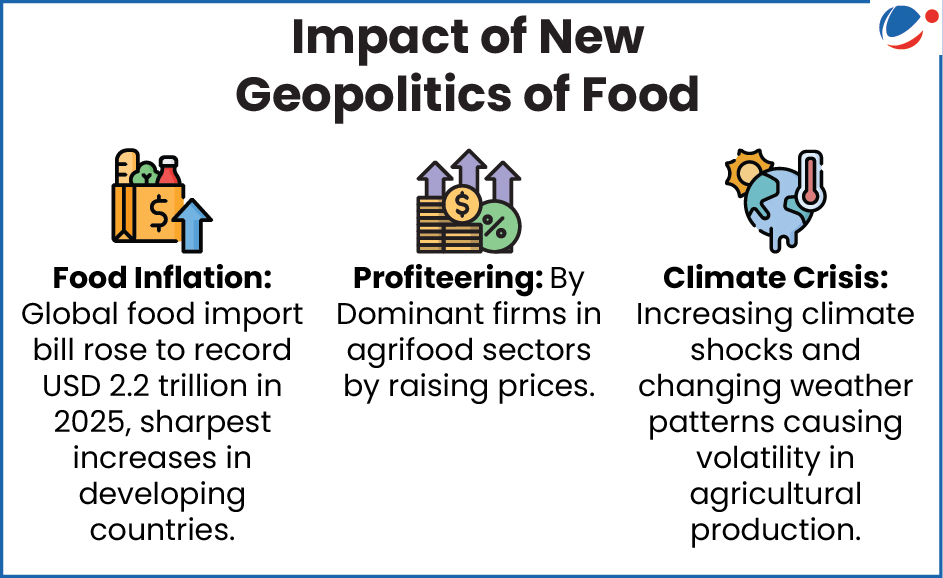
Released by IPES-Food, International Panel of Experts on Sustainable Food Systems, examines how new geopolitics of food is reshaping food systems.
Key Factors Driving New Geopolitics of Food
- Trade Wars and Economic Chaos: E.g. shift in US tariff policy is impacting countries exporting agricultural products to USA.
- Military Conflicts: Food could be used as weapon of war and coercion, deepening crises in the world’s “hunger hotspots”.
- Crisis of multilateralism: Global institutions including United Nations, are facing both budget shortfalls and a crisis of legitimacy.
Market Management Tools and Associated Concerns
- Public food stockholding (PSH): Involving strategic procurement, storage and management of food by public entity and release via auctions or public food distribution programs.
- E.g., India’s PSH program backed National Food Security Act of 2013 and managed by Food Corporation of India (FCI).
- Concerns: fiscal and infrastructure costs; issues with management capacity, coordination across stakeholders, and corruption.
- Supply Management Mechanisms: Including marketing boards having exclusive authority to buy/sell a given commodity, and production quotas limiting quantity of food commodities that producers can sell.
- E.g., Supply management in Canada’s dairy, poultry, and egg sectors; Farmer-owned cooperatives in Norway’s supply management system.
- Concerns Associated: Inefficiencies and market-distorting effects, etc.
Way Forward
- Resilience Food Systems: Transition away from systemic dependencies through self-reliance; targeted fiscal measures, tax reduction on essential goods, export reductions, etc.
- Role of civil society and social movement: Mobilize pressure, open debate, build consensus, and generate support for food systems that meet needs of vulnerable.
- Food sovereignty: Stronger policies to curb corporate concentration, financial market regulation, reform of trade agreements, etc.


