
Growing Russia-China Relations | Current Affairs | Vision IAS

Upgrade to Premium Today

Start Now
MENU
Home
Quick Links

High-quality MCQs and Mains Answer Writing to sharpen skills and reinforce learning every day.

Watch explainer and thematic concept-building videos under initiatives like Deep Dive, Master Classes, etc., on important UPSC topics.

A short, intensive, and exam-focused programme, insights from the Economic Survey, Union Budget, and UPSC current affairs.

ESC

In Summary

  • Russia's recent China visit solidified a growing dependence, marked by 40+ agreements and mutual support for a multipolar world order against Western dominance.
  • Key drivers include shared geopolitical rivalry with the US, economic complementarity amplified by sanctions, and a push for de-dollarisation via BRICS and SCO.
  • Implications for India include weakened Russian strategic balancing, defence vulnerabilities due to supply risks and tech transfer to China, and pressure on its strategic autonomy.

In Summary

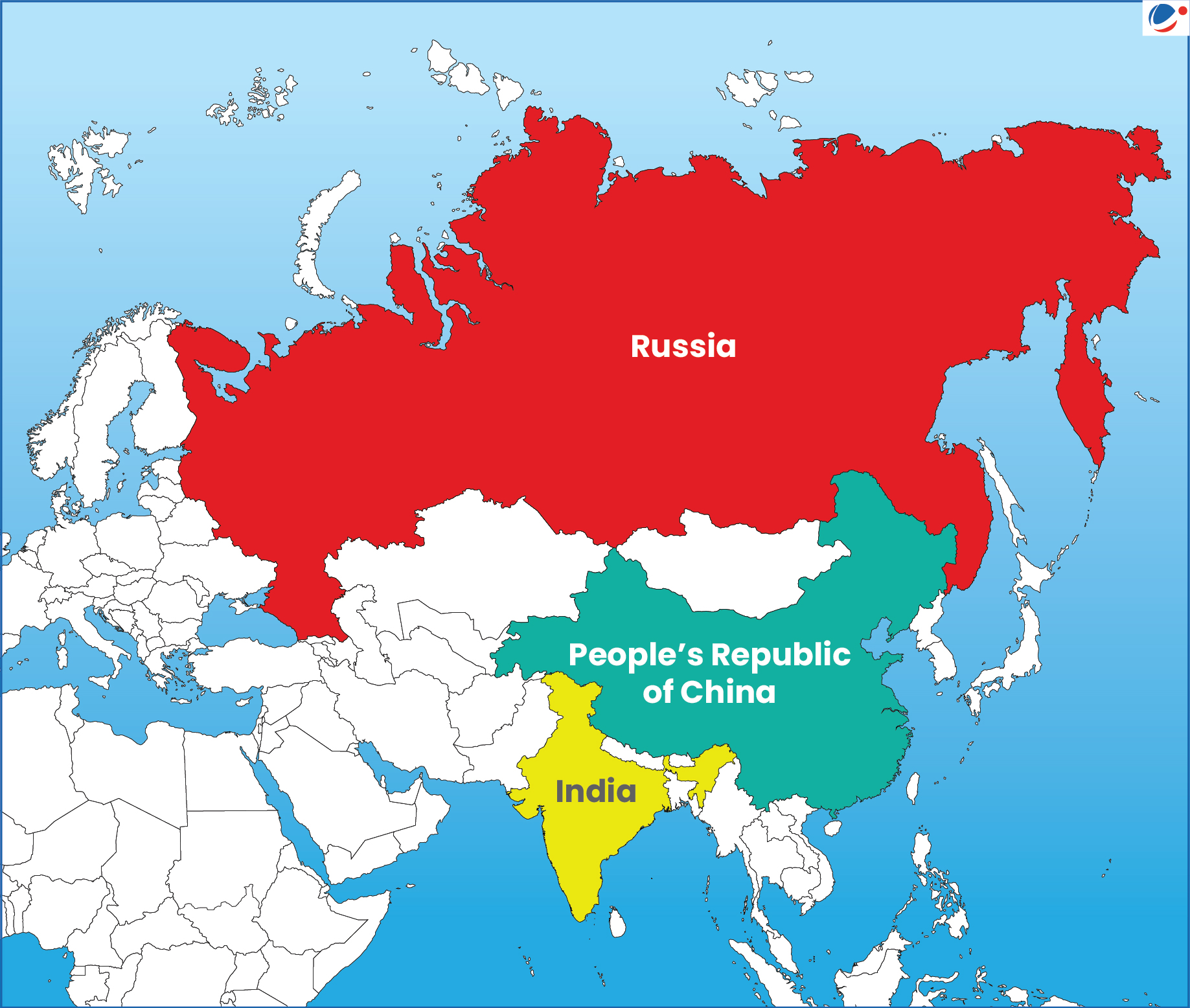
Russian President’s recent China visit highlighted Russia’s growing dependence on China, with both sides signing 40+ agreements and reaffirming support for a multipolar world order against Western dominance. 

Reasons for the Increasing Russia-China Nexus

  • Shared Geopolitical Rivalry: Both view US-led order as a threat to their core interests. 
  • Economic Complementarity: Western sanctions increased Russia’s dependence on China. 
  • De-dollarisation & Alternative Institutions: Growing trade in Yuan and Ruble. Use of BRICS and SCO to promote a non-Western Eurasian security architecture.

Implications on India 

  • Erosion of Russia as a Strategic Balancer: Russia’s growing dependence on China weaken its neutrality in India-China tensions. 
  • Defence Vulnerabilities: India’s reliance on Russian arms faces risks due to delays in supplies (e.g., S-400, stealth frigates) and transfer of advanced platforms to China affects India’s security.
  • Emerging Russia–China–Pakistan Convergence:  E.g., Russia is expanding ties with Pakistan through arms salesdiscounted oil exports, etc. 
  • Challenges in Multilateral Forums: E.g., Cooperation between Russia and China in Shanghai Cooperation Organisation
  • Pressure on India’s Strategic Autonomy: Russia-China proximity and uncertain US policies constrain India’s multi-alignment strategy.

Watch Video News Today

Explore Related Content

Discover more articles, videos, and terms related to this topic

RELATED VIDEOS

2
Simplified | Global China: Geostrategic Ramifications and Policy Responses

Simplified | Global China: Geostrategic Ramifications and Policy Responses

YouTube HD
Role of Indian Diaspora in Making India Self-Reliant

Role of Indian Diaspora in Making India Self-Reliant

YouTube HD

RELATED TERMS

3

Multi-alignment Strategy

A foreign policy approach where a nation maintains active and cooperative relationships with multiple major global powers simultaneously, even if those powers are rivals, to maximize its strategic autonomy and national interests.

Strategic Autonomy

The ability of a nation to pursue its own interests and make independent decisions in critical sectors, free from undue influence or dependence on external powers. A strong manufacturing base contributes significantly to strategic autonomy.

Strategic Balancer

A country that plays a crucial role in maintaining equilibrium in a region by fostering relationships with multiple major powers, thus preventing any single power from becoming overly dominant. This neutrality allows it to mediate or prevent conflicts.

Title is required. Maximum 500 characters.

Search Notes

Filter Notes

Loading your notes...
Searching your notes...
Loading more notes...
You've reached the end of your notes

No notes yet

Create your first note to get started.

No notes found

Try adjusting your search criteria or clear the search.

Saving...
Saved

Please select a subject.

Referenced Articles

linked

No references added yet