


The proposed Smart Border Project will be equipped with drones, radars, modern cameras, and other advanced technologies, making entire borders with Bangladesh and Pakistan impenetrable.
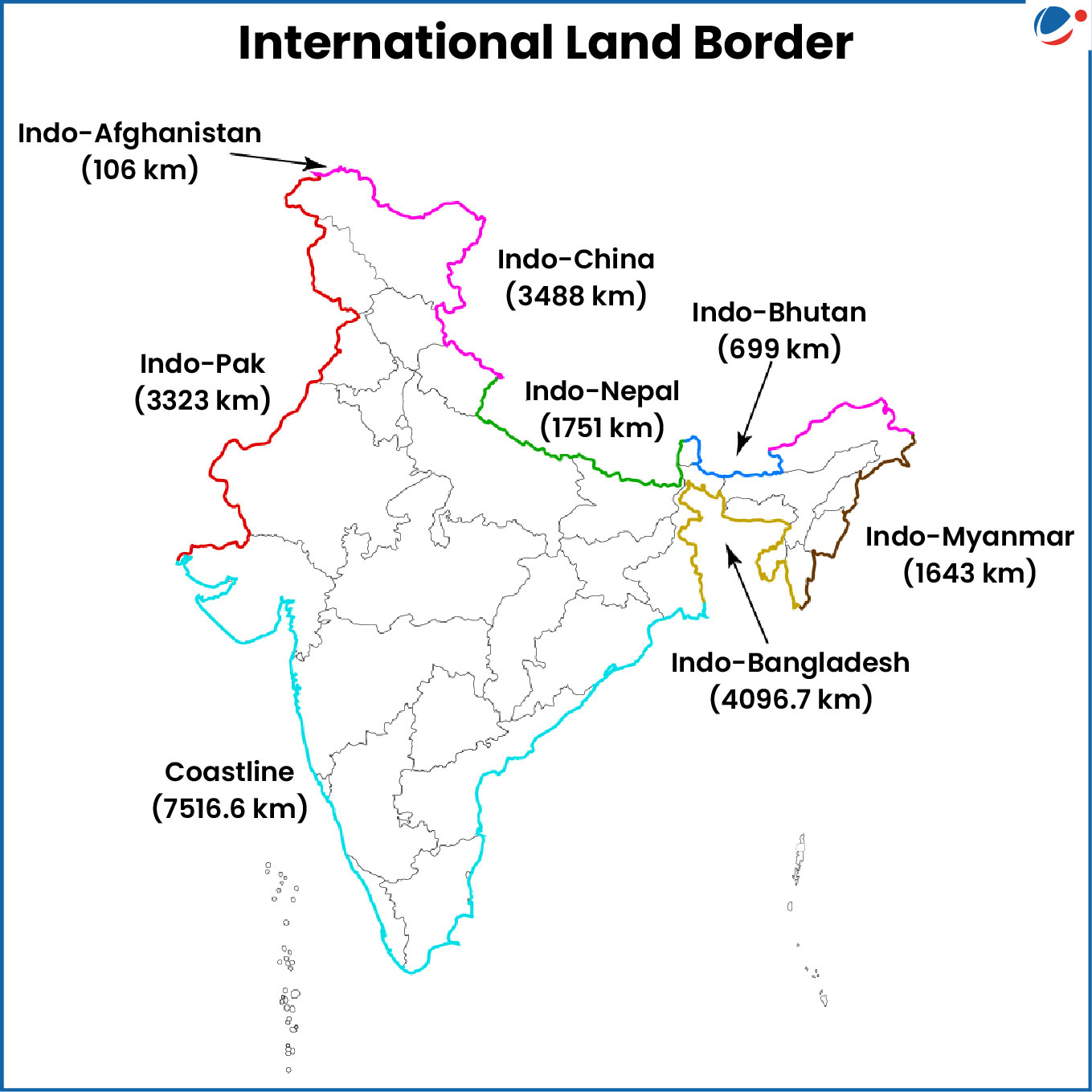
Need for Smart Border Project in India
- Vast Land Border: India shares 15,106.7 kilometres of land border with seven countries (Bangladesh, China, Pakistan, Nepal, Myanmar, Bhutan and Afghanistan).
- Countering Illegal Activities: To curb illegal infiltration, organized crime, smuggling of narcotics, cattle, weapons and counterfeit currency.
- Tackling Emerging Security Threats: Such as cyber threats, hybrid warfare, and drone-based intrusions.
- Managing Difficult Terrain and Climate: Varied terrain such as deserts, glaciers, lakes, rivers, snow-covered peaks, swampy marshes, fertile lands, and tropical forests not suitable for sustaining manpower.
- Enhancing Efficiency Through Technology: To ensure integrated, real-time, and technology-driven border security management.
Initiatives taken for Smart Border Management
- Anti-Drone Systems: Integration of jamming and detection tech to counter aerial threats. E.g. IG T-Shul Pulse Anti-Drone System.
- Comprehensive Integrated Border Management System (CIBMS): Deployment of smart fencing, sensors, radars, CCTV cameras, and command-control systems for real-time border monitoring.
- BOLD-QIT (Border Electronically Dominated QRT Interception Technique) project: It is a high-tech "smart fencing" initiative launched by the Border Security Force (BSF) along the Indo-Bangladesh border.

