
Study finds 95% increase in prevalent cases of Mental Disorders from 1990 to 2023 globally | Current Affairs | Vision IAS

Upgrade to Premium Today

Start Now
MENU
Home
Quick Links

High-quality MCQs and Mains Answer Writing to sharpen skills and reinforce learning every day.

Watch explainer and thematic concept-building videos under initiatives like Deep Dive, Master Classes, etc., on important UPSC topics.

A short, intensive, and exam-focused programme, insights from the Economic Survey, Union Budget, and UPSC current affairs.

ESC

In Summary

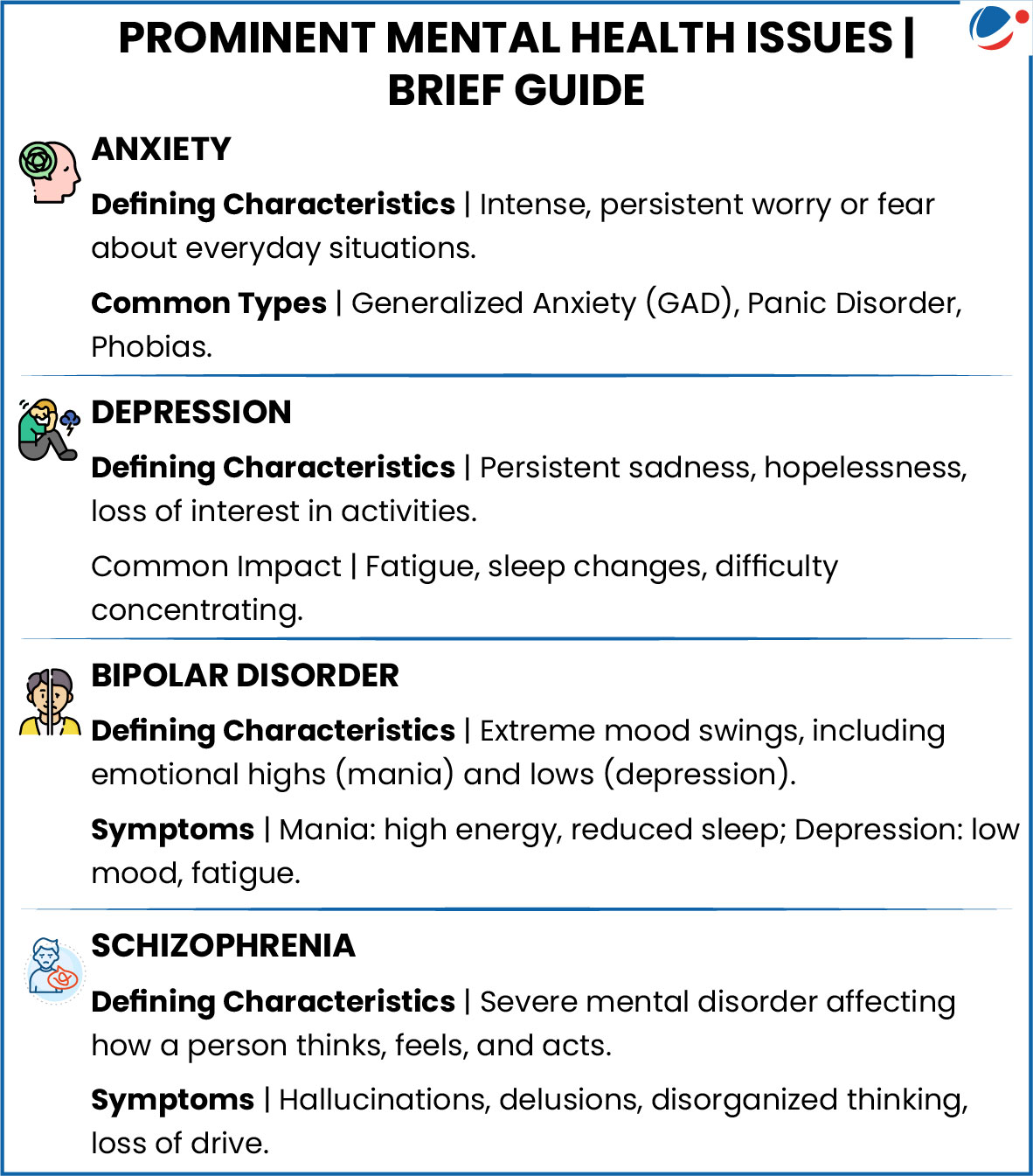
  • A Lancet study estimates 1.17 billion mental disorder cases globally in 2023, with anxiety and depression being leading contributors.
  • Women are disproportionately affected by anxiety and depression, while males show higher rates of neurodevelopmental disorders; youth (15-19) bear the highest burden.
  • Key drivers include economic insecurity, social isolation, violence, digital stress, and climate/conflict-related trauma, with India seeing a significant prevalence increase.

In Summary

Lancet study estimates nearly 1.17 billion cases of mental disorders globally in 2023. 

Key Findings of the Study

  • Disability Burden: Mental disorders is a leading cause of disability, accounting for over 17% of total Years Lived with Disability (YLDs) worldwide.
  • Major Contributors:Anxiety and depression emerged as the leading contributors to rising mental health burden.
  • Gender Impact:Women were disproportionately affected, especially by anxiety and depressive disorders.
    • Neurodevelopmental and behavioural disorders such as ADHD, conduct disorder and autism were found to be more common in males.
  • Age Group Impact: Highest mental disorder burden observed among the 15–19 years age group, highlighting need for early intervention.
  • India Scenario: The prevalence rate increased from 2,591.9 cases per lakh in 1990 to 5,792.8 per lakh in 2023.

Drivers of Rising Mental Disorders

  • Economic Insecurity: Poverty, unemployment, inequality and financial stress aggravating psychological distress.
  • Social Isolation: Declining social connectedness, loneliness and weakening family/community support systems.
  • Violence & Abuse: Domestic violence, child maltreatment and gender-based violence contributing to trauma and mental disorders.
  • Digital & Lifestyle Stress: Excessive social media use, cyberbullying, FOMO and performance pressure increasing anxiety and depression among youth.
  • Climate & Conflict Stress: Climate change, disasters, wars and displacement increasing anxiety and PTSD, e.g., Gaza conflict and refugee crises. 
Watch Video News Today

Explore Related Content

Discover more articles, videos, and terms related to this topic

RELATED VIDEOS

1
Transformation of Family Structures in India

Transformation of Family Structures in India

YouTube HD

RELATED TERMS

3

FOMO

Acronym for 'Fear Of Missing Out'. In the context of social media, it refers to the anxiety that arises from the belief that others are having rewarding experiences from which one is absent, often exacerbated by seeing curated online content.

PTSD

Post-Traumatic Stress Disorder is a mental health condition that's triggered by a terrifying event, either experiencing it or witnessing it. Symptoms may include flashbacks, nightmares, and severe anxiety.

ADHD

Attention-Deficit/Hyperactivity Disorder is a neurodevelopmental disorder characterized by persistent patterns of inattention and/or hyperactivity-impulsivity that interfere with functioning or development.

Title is required. Maximum 500 characters.

Search Notes

Filter Notes

Loading your notes...
Searching your notes...
Loading more notes...
You've reached the end of your notes

No notes yet

Create your first note to get started.

No notes found

Try adjusting your search criteria or clear the search.

Saving...
Saved

Please select a subject.

Referenced Articles

linked

No references added yet
