Ladakh’s Lt. Governor approved a five-year extension to MoU with Oil and Natural Gas Corporation (ONGC) to set up this plant at an altitude of 14, 000 feet in Puga Valley.
- Under the revised MoU, ONGC will establish a 1-MWe pilot geothermal power plant and prepare a detailed project report (DPR) for large-scale commercial exploitation of geothermal resources in Ladakh.
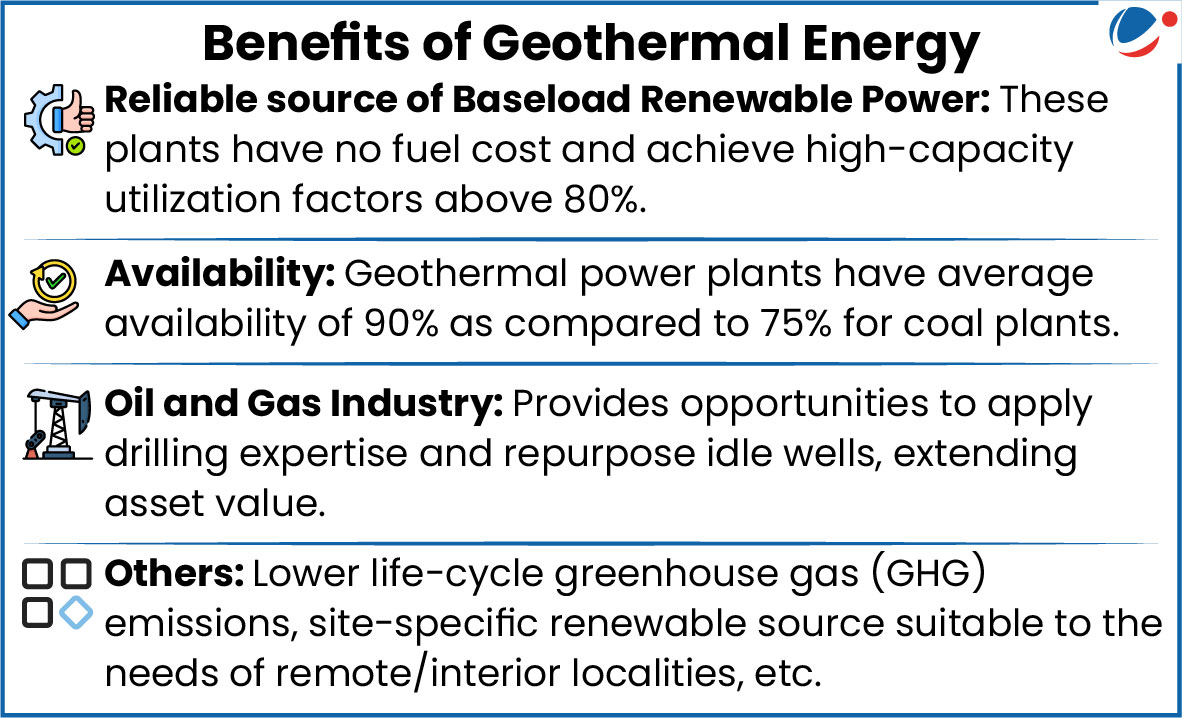
About Geothermal Energy
- Meaning: It harnesses heat stored within Earth's crust.
- Geothermal system consists of multiple components including production and reinjection (wells, pumps), transport (pipelines), distribution (heat exchangers) and end-use application.
- Sources
- High-enthalpy resources: Volcanic regions, geysers and hot springs primarily for electricity generation.
- Low- to medium-enthalpy resources: Like hot rocks and shallow ground layers, better suited for direct-use applications (e.g. heating and cooling, agri-food, aquaculture), etc.
- Potential In India
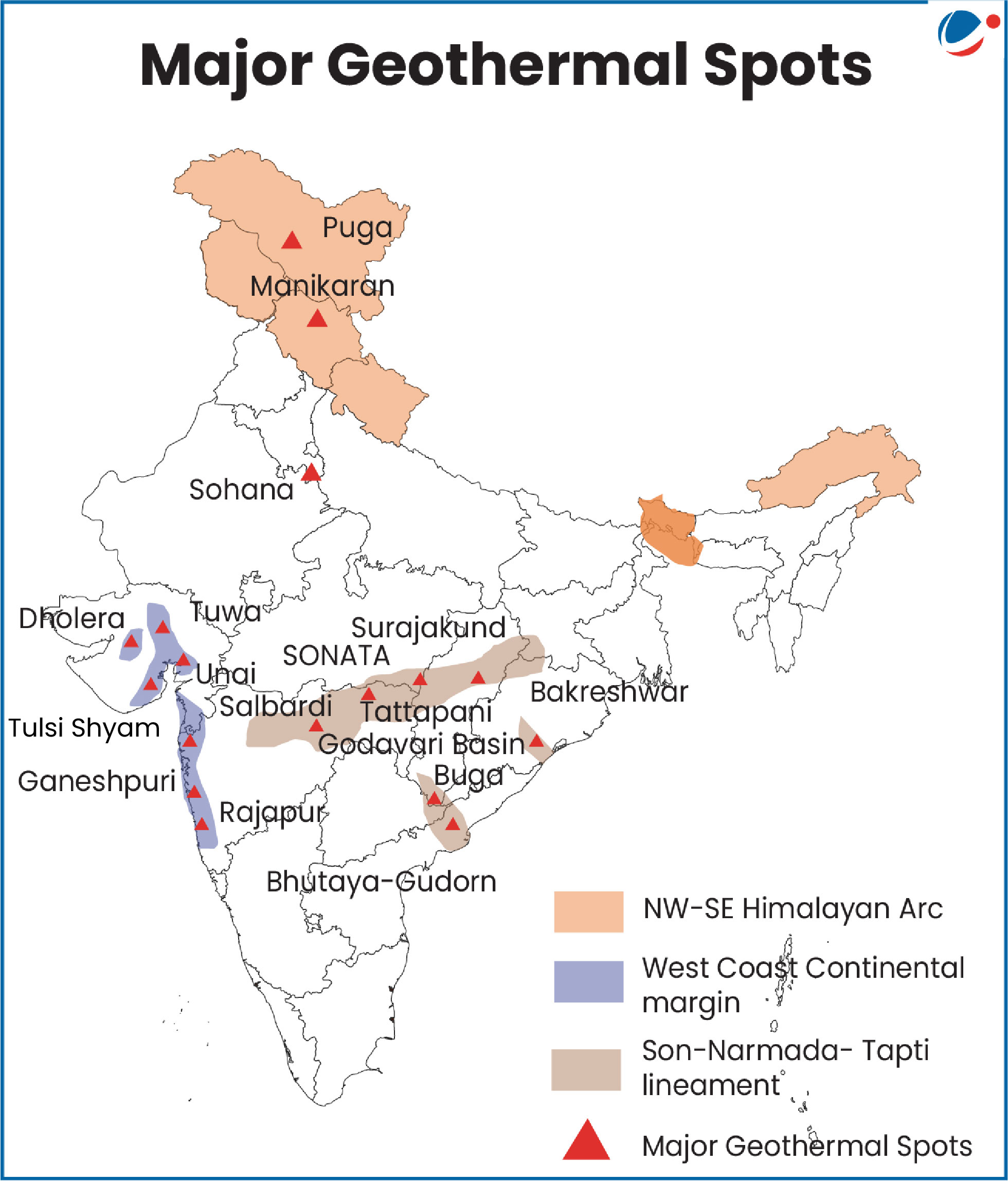
- Geological Survey of India (GSI) identified 381 hot springs with surface temperatures ranging from 35°C to 89°C.
- It has also identified 10 geothermal provinces in India including Himalayan Geothermal Province; Andaman Nicobar Islands, etc.
- A potential of about 10,600 MW of geothermal power has been estimated with Puga and Chumathang areas appearing to be most promising.
- Geological Survey of India (GSI) identified 381 hot springs with surface temperatures ranging from 35°C to 89°C.
- National Policy on Geothermal Energy (2025): Establishing geothermal energy as major pillars of India’s renewable energy landscape, contributing to 2070 Net Zero Goal, and energy security.