


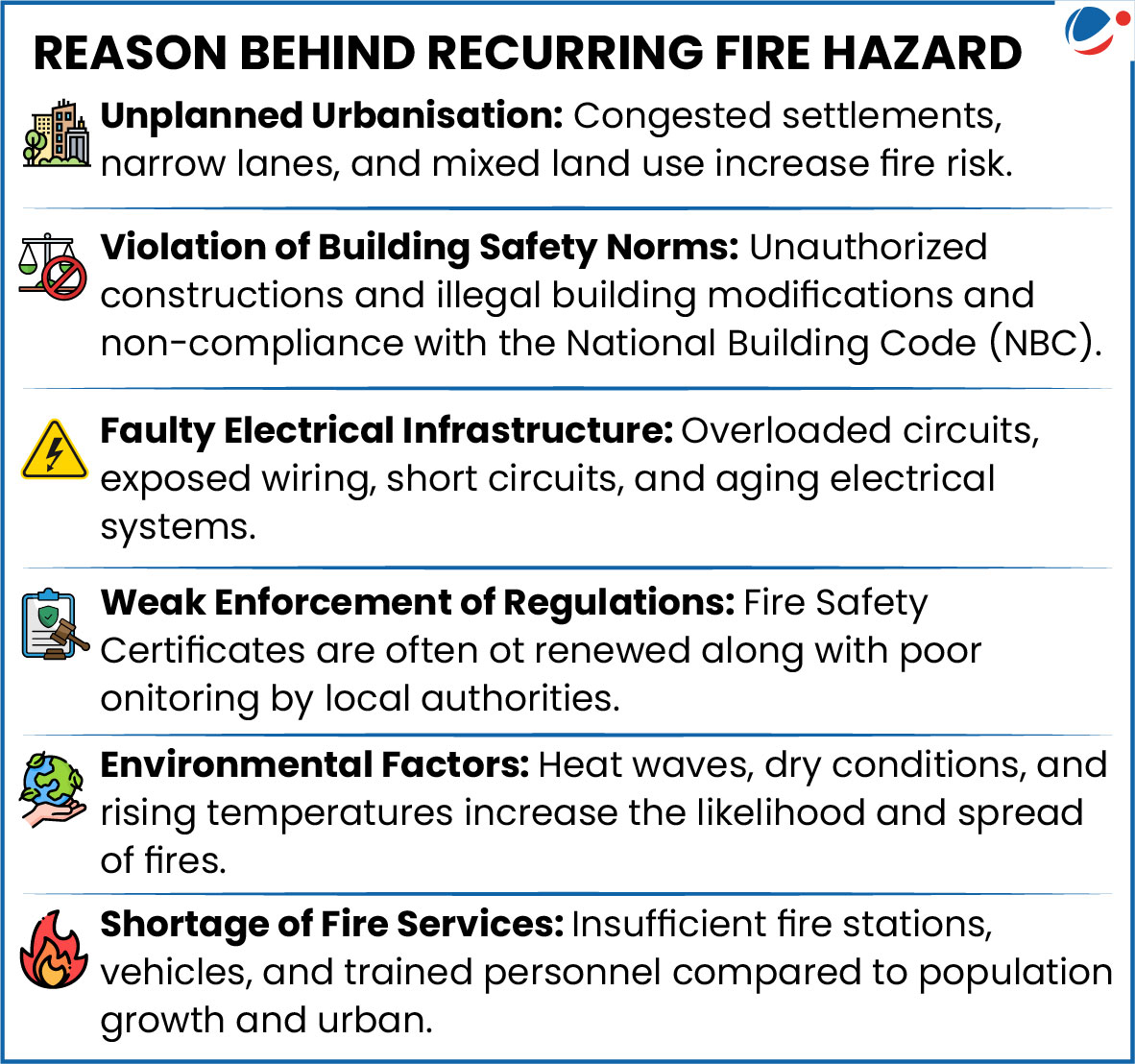
Fire has been identified as one of the major hazards in the United Nation Global Assessment Report 2018.
- Apart from uncontrolled burning, fire also depletes oxygen from surroundings causing asphyxiation, releases toxic gases choking lungs, and results in explosions and bursts.
- According to NCRB report, 5,888 fire-related deaths were recorded nationally in 2024.
Fire safety Regulation in India
- Constitutional & Legal Framework
- Constitutional Provisions: Article 243W & Twelfth Schedule assign fire prevention and firefighting services to Urban Local Bodies (Municipalities).
- State Fire Acts: States enact their own Fire Service Acts to regulate fire safety.
- National Building Code (NBC), 2016: Prepared by the Bureau of Indian Standards (BIS), it deals with fire and life safety, covering Fire prevention measures, Fire-safe building design etc.
- Institutional Framework
- National Disaster Management Authority (NDMA): Formulates guidelines for strengthening fire services and promotes modernization, capacity building etc.
- Standing Fire Advisory Council (SFAC): Apex advisory body on fire services under the Ministry of Home Affairs which recommends standards for Fire stations, Equipment and technology, Manpower and training etc.
- Scheme for Expansion and Modernization of Fire Services: Implemented by Home Ministry based on 15th Finance Commission recommendations to strengthen fire infrastructure and capacity.




