


NHRC noted that Indians lost about ₹52,976 crore to cyber-enabled frauds over the last six years, with nearly 8% linked to digital arrest scams.
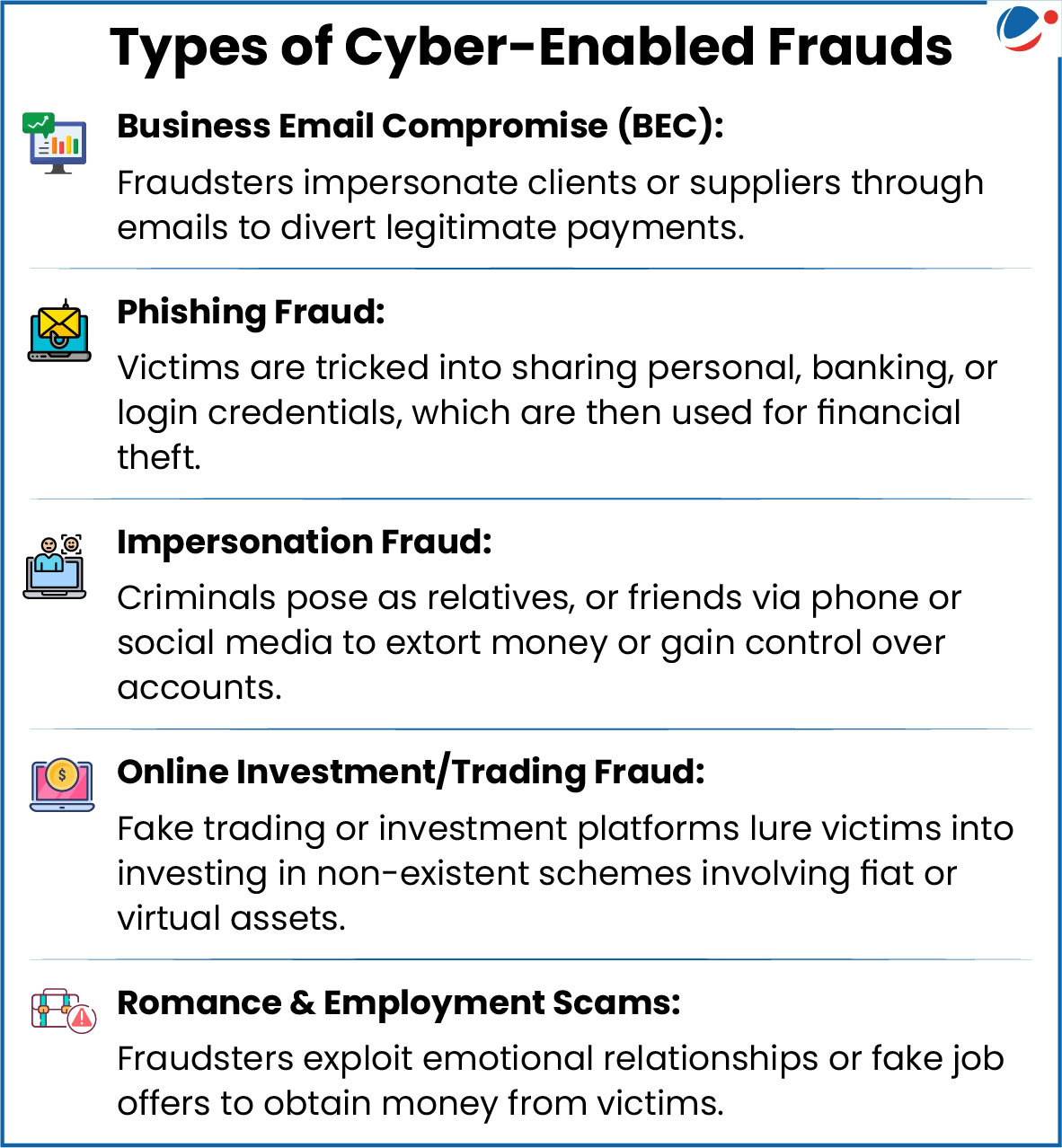
- Cyber-enabled frauds are traditional offline crimes whose scale, reach, and speed are amplified using information and communication technology (ICT).
Digital Arrest Scam
- Definition: It is a scam designed to extort money from victims using fear, deceit, and intimidation.
- Method: Victims receive a phone call, email, or message claiming they are under investigation for illegal activities, such as identity theft or money laundering.
- Threats and Pressure: Scammers use arrest threats to create panic and prevent victims from thinking rationally.
Suggestions to Curb Digital Arrest Scams
- Legal & Regulatory Reforms: Recognise digital arrest scams as a distinct offence, criminalise mule accounts and related enablers, and regulate OTT communication platforms to curb cyber fraud.
- Victim Support: Create a dedicated victim compensation fund, and enable rapid freezing of fraudulent transactions during the “golden hour.”
- Single Verification Portal: Establish a unified government platform for verifying the authenticity of law enforcement credentials, notices, and communications.




