
US Indo-Pacific Command (USINDOPACOM) announced to restore its name to US Pacific Command (USPACOM) | Current Affairs | Vision IAS

Upgrade to Premium Today

Start Now
MENU
Home
Quick Links

High-quality MCQs and Mains Answer Writing to sharpen skills and reinforce learning every day.

Watch explainer and thematic concept-building videos under initiatives like Deep Dive, Master Classes, etc., on important UPSC topics.

A short, intensive, and exam-focused programme, insights from the Economic Survey, Union Budget, and UPSC current affairs.

ESC

In Summary

  • USPACOM renamed USINDOPACOM in 2018, highlighting the Indo-Pacific region's security importance and potential US realignment.
  • The Indo-Pacific is crucial for India's trade (95%), counterbalancing China, maritime security, and economic integration via the Act East Policy.
  • Challenges include geopolitical flashpoints (South China Sea), maritime choke points, supply chain vulnerability, and non-traditional threats like climate change and piracy.

In Summary

USPACOM was renamed to USINDOPACOM in 2018 stressing the importance of Indian Ocean region in regional security architecture. 
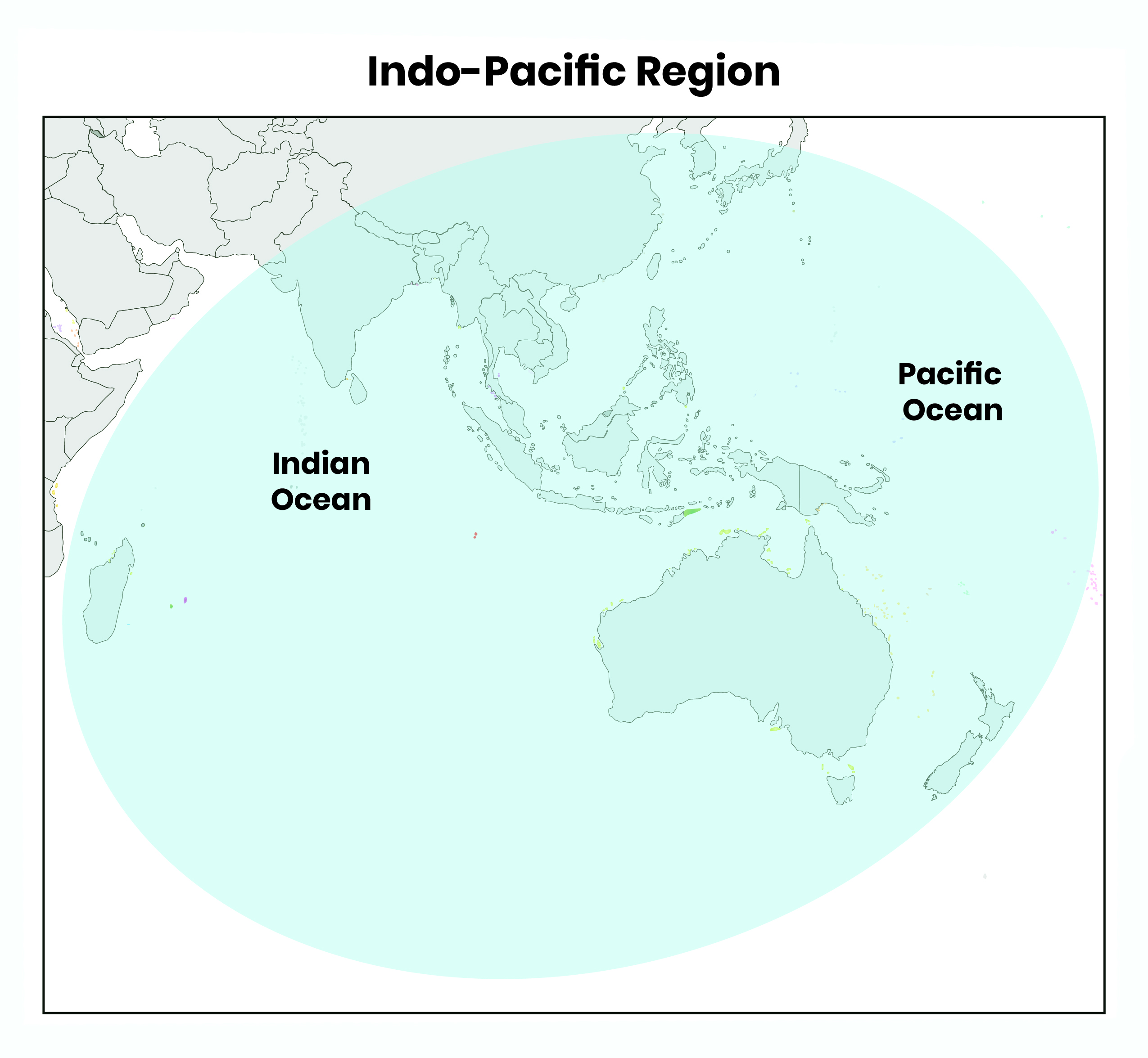
  • Name change suggests possible realignment in US security interests and engagement in the Indo-Pacific region.
  • Different naming constructs of the region arise due to lack of consensus over the geographical contours and ever-shifting geopolitical alignments. 

Significance of Indo-Pacific Region for India

  • Trade: Anchor of India’s external trade as it handles 95% of India's trade and energy imports.
  • Counterbalancing China: Checks Beijing's military expansion and strategic encirclement (E.g. Belt and Road Initiative) in India’s neighbourhood.
  • Maritime Security: India projects itself as the primary first responder and net security provider in the Indian Ocean Region (IOR).
  • Economic Integration: Advances the "Act East Policy" by linking Northeast India with Southeast Asian economies.

Challenges in Indo-Pacific Region:

  • Geopolitical Flashpoint: Strategic competition has resulted in overlapping claims (E.g.South China Sea) and a high risk of conflict escalation (E.g. Taiwan).
  • Maritime Choke Points: Threats to Indo-Pacific chokepoints such as Strait of Hormuz, the Bab el-Mandeb, and the Strait of Malacca as seen during US-Iran conflict. 
  • Supply Chain Vulnerability: The global manufacturing concentration in China can create global supply chain shocks (Eg; Semiconductor chips).
  • Non-Traditional Security Threats: Such as rising sea levels and climate change, piracy, illegal, unreported, and unregulated (IUU) fishing, and cyber warfare.
Watch Video News Today

Explore Related Content

Discover more articles, videos, and terms related to this topic

RELATED VIDEOS

1
Role of Indian Diaspora in Making India Self-Reliant

Role of Indian Diaspora in Making India Self-Reliant

YouTube HD

RELATED TERMS

3

Strategic encirclement

A military or geopolitical strategy where a country aims to surround an adversary's territory or sphere of influence with its own forces or allies, thereby limiting the adversary's strategic options and maneuverability. China's Belt and Road Initiative is cited as an example in the context of the Indo-Pacific.

IUU fishing

Illegal, Unreported, and Unregulated fishing refers to fishing activities that violate national laws or international regulations. It poses a threat to marine ecosystems, sustainable fisheries, and economic security.

Maritime Choke Points

Narrow sea passages that are critical for global maritime traffic and trade. Disruptions at these points, such as the Strait of Hormuz, Strait of Malacca, and Bab el-Mandeb, can have significant economic and geopolitical consequences.

Title is required. Maximum 500 characters.

Search Notes

Filter Notes

Loading your notes...
Searching your notes...
Loading more notes...
You've reached the end of your notes

No notes yet

Create your first note to get started.

No notes found

Try adjusting your search criteria or clear the search.

Saving...
Saved

Please select a subject.

Referenced Articles

linked

No references added yet
