


UN Secretary-General urged global regulations to safeguard children amid its growing use.
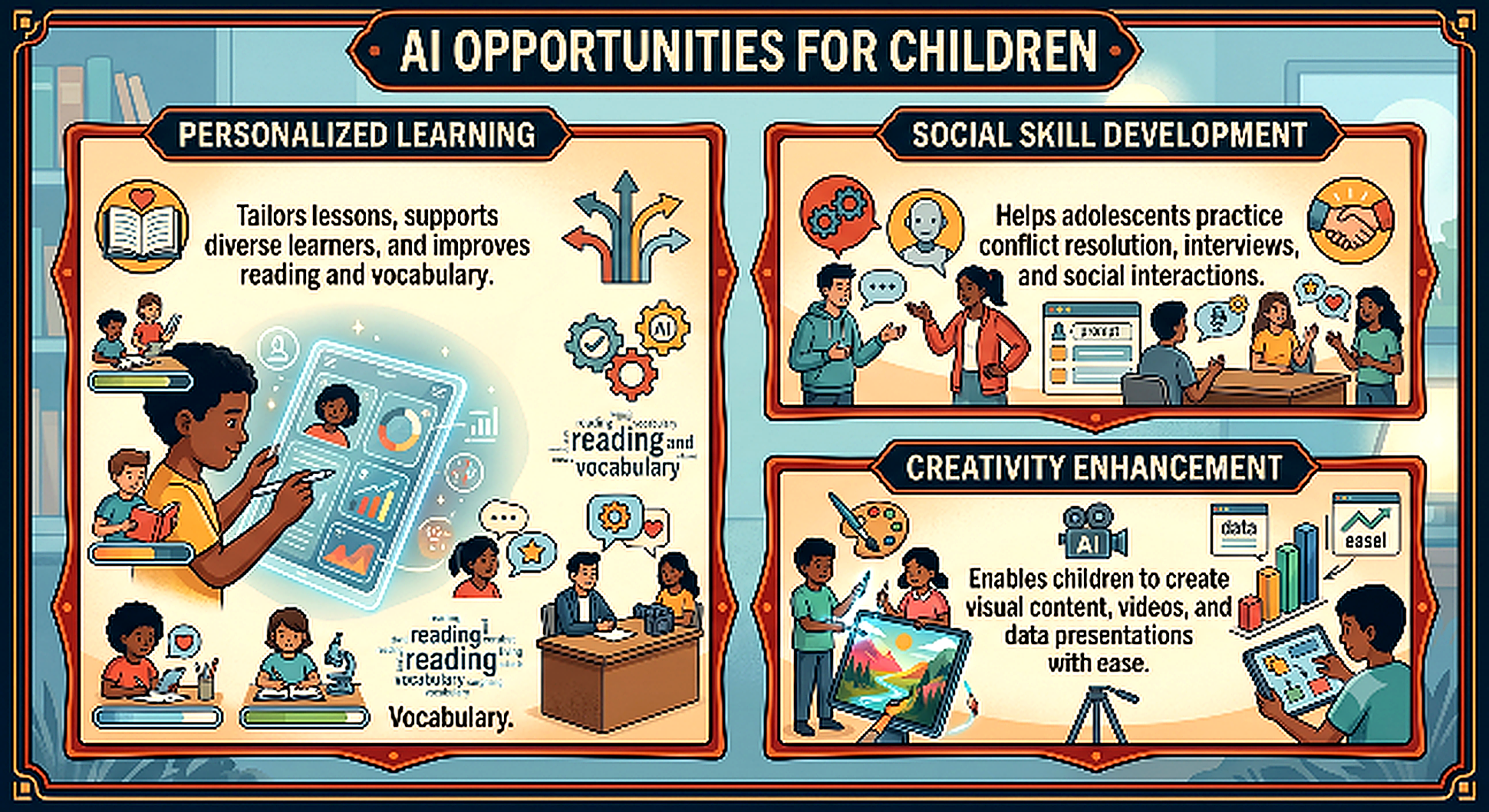
Negative Impact of AI on Children
- Privacy Risks: Sharing personal information increases digital footprints and targeted advertising.
- Safety Threats: Risks include deepfakes, synthetic Child Sexual Abuse Material (CSAM), voice-cloning fraud, and biased AI outputs.
- Developmental impacts: Weakened critical thinking due to overreliance on AI for instant answers; Emotional dependency on AI companions affecting real-world relationships etc.
- Behavioural changes: Excessive AI interaction may weaken empathy, patience, resilience, and negotiation skills and may encourage rude or command-based behaviour,
Legal Safeguards Against Harmful Effects of AI on Children
|
Way Ahead
- Global AI Child Safety Framework: Harmonized global rules requiring AI firms to prove child safety before deployment. E.g., UNICEF’s guidance on AI and children.
- Built-in Safety Measures: Ban AI-generated child sexual content and enable human intervention for children in distress.
- Ethical & Transparent AI: Ensure AI clearly identifies itself as non-human and promotes critical evaluation of information.
- Human-Centric Design: Design AI to complement, not replace, parental, educational, and social interactions.
- AI Literacy: Integrate AI education to build critical thinking, misinformation awareness, and ethical AI use.


