
Indian Scientists Recreate Key Human Placenta Functions on a Chip | Current Affairs | Vision IAS

Upgrade to Premium Today

Start Now
MENU
Home
Quick Links

High-quality MCQs and Mains Answer Writing to sharpen skills and reinforce learning every day.

Watch explainer and thematic concept-building videos under initiatives like Deep Dive, Master Classes, etc., on important UPSC topics.

A short, intensive, and exam-focused programme, insights from the Economic Survey, Union Budget, and UPSC current affairs.

ESC

In Summary

  • Researchers developed an indigenous, lab-grown placenta-on-a-chip platform to replicate human placental barrier functions.
  • This technology aids in stage-specific pregnancy modeling, gestational diabetes study, and drug safety testing, reducing animal model dependency.
  • Organ-on-chip technology uses living human cells in microdevices to mimic organ functions, aiding personalized medicine and drug discovery, despite challenges in replicating full complexity and regulatory validation.

In Summary

Researchers from ICMR-NIRWoH (Mumbai) and IIT Bombay have developed an indigenous, lab-grown placenta-on-a-chip platform that replicates key functions of the human placental barrier.

  • The placenta-on-chip offers novel advancements in making pregnancies safe.
    • It enables stage-specific pregnancy modeling, gestational diabetes study, and drug safety testing, reducing animal model dependency.
  • Placenta is a temporary mammalian organ regulating maternal-fetal nutrient-oxygen transfer, waste clearance, and hormone secretion
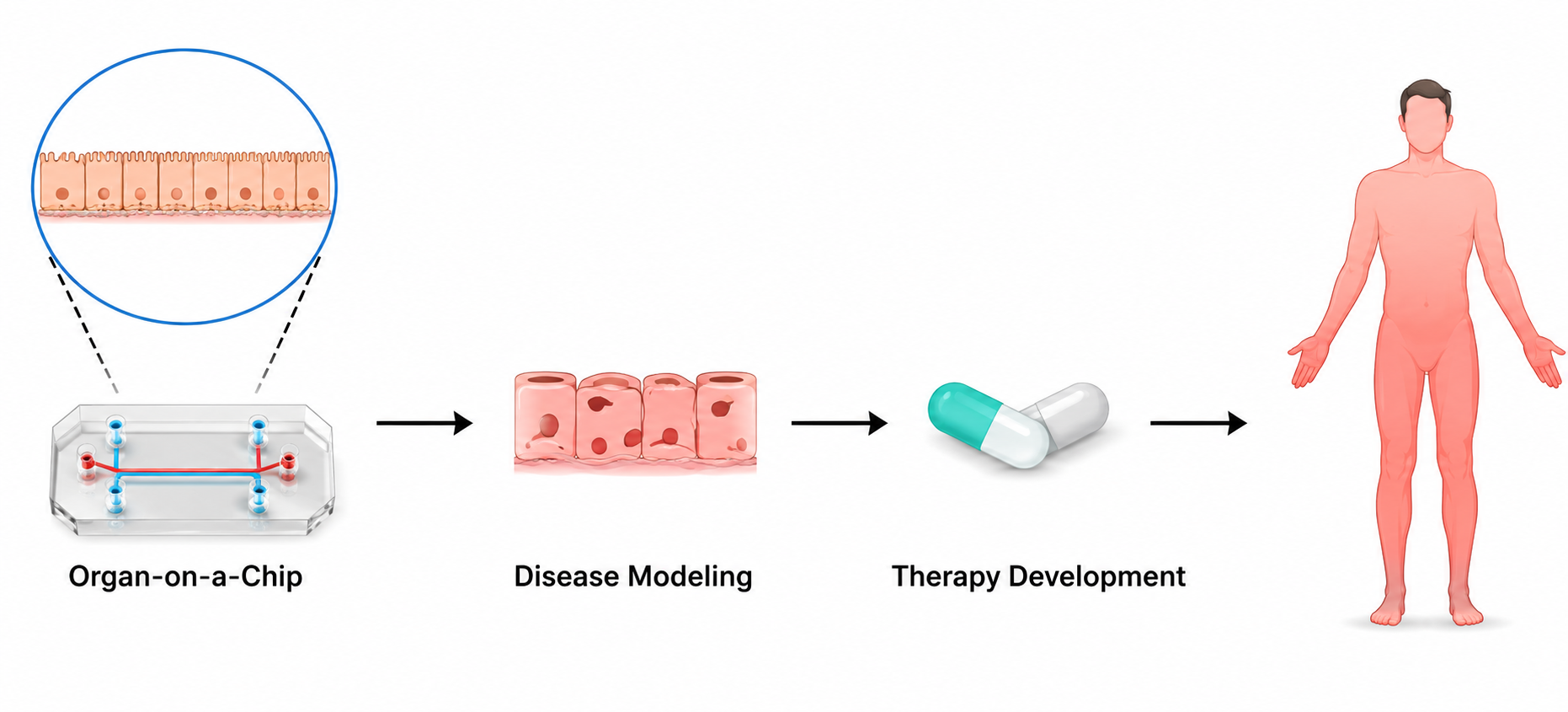
About Organ on Chip Technology 

  • Miniature devices containing living human cells that mimic the structure and function of specific tissues/organs.
    • It combines tissue engineering and microfabrication to control cell microenvironments and replicate organ-level physiology outside the body.
  • Components: Comprises microchannels, porous polymeric membranes, and human cells. 
  • Types: Single-organ chips, Multi-organ/body-on-chip systems, and Parenchymal/mesenchymal-tissue chips.
  • Significance: 
    • Reduces dependence on animal testing, 
    • Enables personalized medicine and disease modelling using human cells, and 
    • Supports drug discovery, toxicity screening, and clinical trial design.
  • Challenges: Difficulty replicating the full complexity and changing structure of organs (placenta evolves across gestation stages).
    • Scalability, standardisation, and regulatory validation for clinical use remain limited.
Watch Video News Today

Explore Related Content

Discover more articles, videos, and terms related to this topic

RELATED TERMS

3

Personalized Medicine

A medical approach that tailors medical treatment to the individual characteristics of each patient, often based on genetic makeup or other biological markers.

Gestational Diabetes

A type of diabetes that develops during pregnancy in women who did not have diabetes before pregnancy. It can affect both the mother and the baby's health.

Microfabrication

The process of creating extremely small structures, typically at the micrometer scale, often used in the creation of microfluidic devices like 'organ-on-a-chip' platforms.

Title is required. Maximum 500 characters.

Search Notes

Filter Notes

Loading your notes...
Searching your notes...
Loading more notes...
You've reached the end of your notes

No notes yet

Create your first note to get started.

No notes found

Try adjusting your search criteria or clear the search.

Saving...
Saved

Please select a subject.

Referenced Articles

linked

No references added yet
