


The Thar landscape in Jaisalmer, Rajasthan is the last stronghold for the Critically Endangered Great Indian Bustard (GIB).
- Thar is part of the Desert Biogeographic Zone and is among India’s most ecologically distinct and biologically rich arid ecosystems.
- Biodiversity: Supports the GIB, Chinkara, Desert Fox, Indian Fox, Desert Cat, and Spiny-tailed Lizard.
- Climate: Temperatures range from 50°C in summer to 0°C in winter, with high diurnal variation.
- Landscape: Features a mosaic of grasslands and croplands over gravel plains, rocky hillocks, sand-soil cover and sand dunes.
Key Highlights of Report
- Stable Population: GIB population estimated at 130 ± 21, remaining stable since 2017–18.
- Threats: Power lines, agricultural fencing, roads, water sources, and solar plants have expanded substantially, intensifying habitat fragmentation and mortality risks.
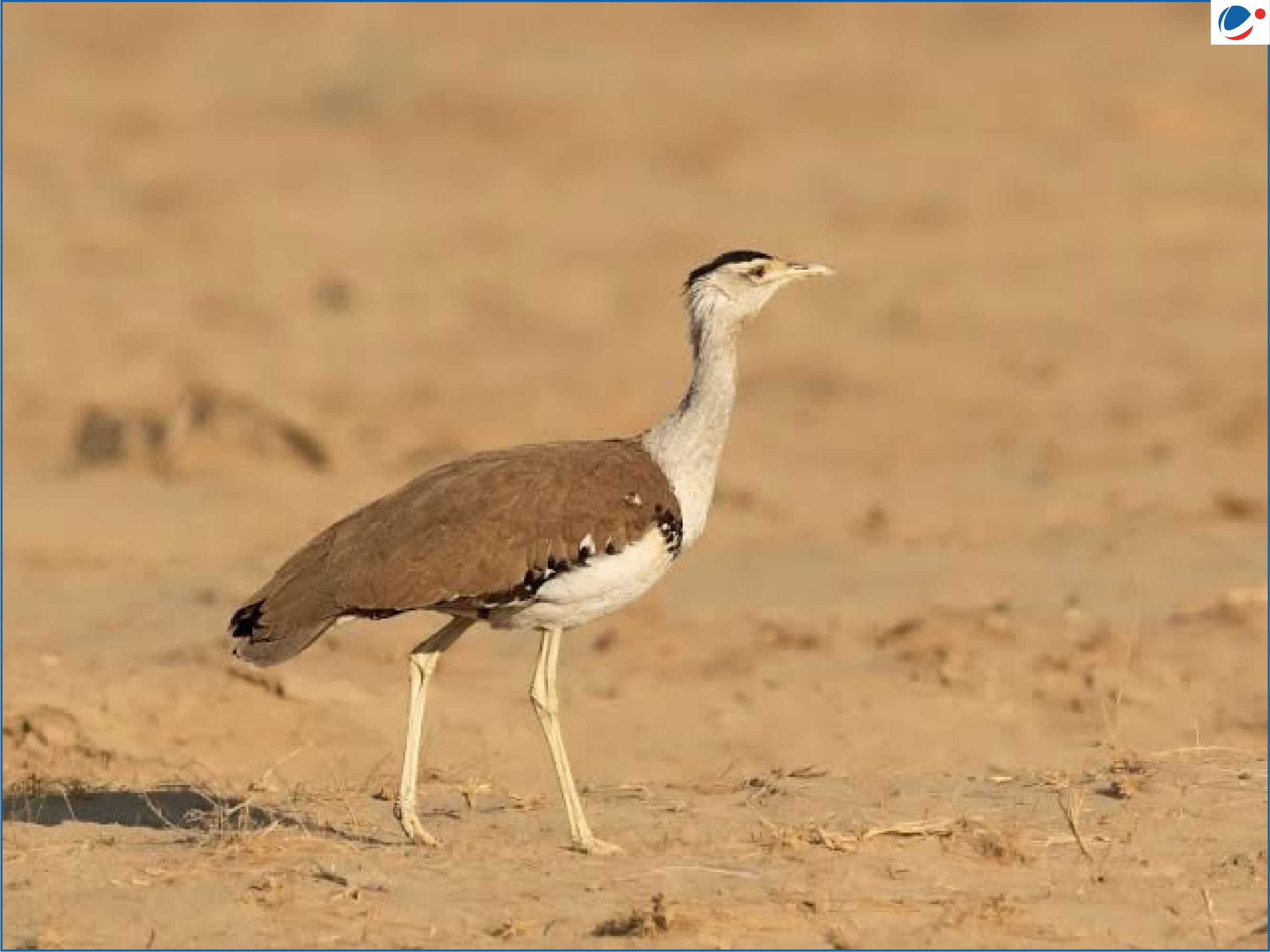
About Great Indian Bustard (GIB)
- Conservation Status:
- IUCN: Critically Endangered.
- Wildlife (Protection) Act 1972): Schedule I.
- CITES: Appendix I.
- Habitat: It is an agro-grassland bird that thrives in open habitats including short grasslands, open scrub, and rain-fed agricultural land.
- Range: The bird is endemic to the Indian Subcontinent found in Rajasthan, Gujarat, Maharashtra, Andhra Pradesh.
- It is State Bird of Rajasthan.
- Diet: Omnivorous.
- Threats: Infrastructure expansion, invasive predators (free-ranging dogs, feral dogs, nilgai), vegetation changes etc.
- Conservation Efforts: Conservation breeding, habitat restoration, predator translocation, removal of invasive Prosopis juliflora, scientific monitoring etc.


