
The issue of Economic development vs. Tribal Rights | Current Affairs | Vision IAS

Upgrade to Premium Today

Start Now
MENU
Home
Quick Links

High-quality MCQs and Mains Answer Writing to sharpen skills and reinforce learning every day.

Watch explainer and thematic concept-building videos under initiatives like Deep Dive, Master Classes, etc., on important UPSC topics.

A short, intensive, and exam-focused programme, insights from the Economic Survey, Union Budget, and UPSC current affairs.

ESC

In Summary

  • Tribal communities protested the Ken-Betwa Link Project, highlighting the conflict between economic development and tribal rights.
  • Key issues include displacement (40-50% of displaced people are tribal), inadequate rehabilitation under the LARR Act, 2013, and violations of the Forest Rights Act, 2006.
  • Inclusive development requires Free, Prior, and Informed Consent (FPIC), effective implementation of FRA, PESA, LARR Act, and transparent impact assessments.

In Summary

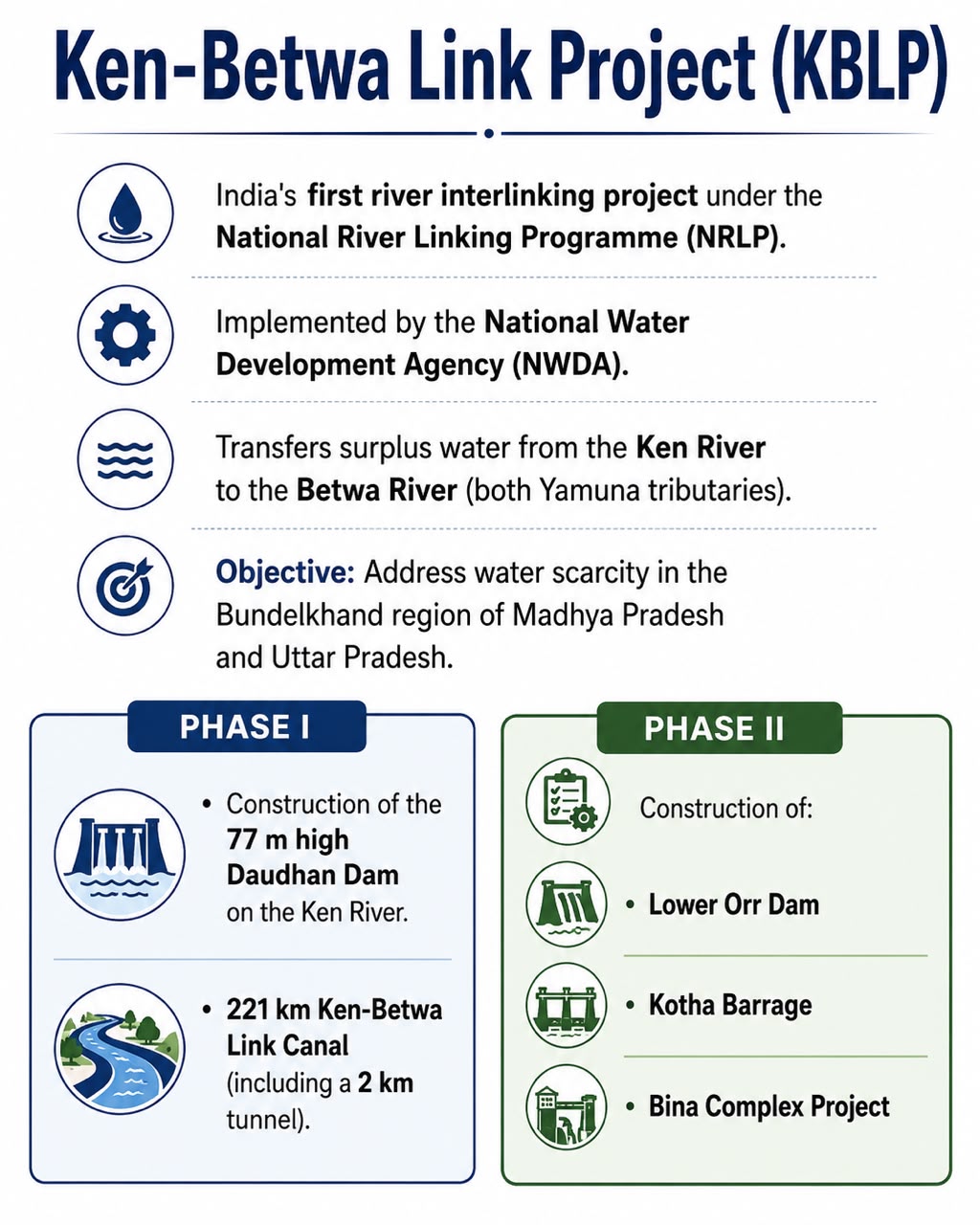
The 'Chita Andolan' (Pyre Protest) launched by tribal communities against the Ken-Betwa Link Project (KBLP) in Chhatarpur, Madhya Pradesh highlighted Economic development versus Tribal Rights debate.
The Issues of Tribal Right vs. Development 

  • Displacement: Loss of land, forests, and traditional livelihoods due to dams and infrastructure projects.
    • While making up roughly 8% of the total population, they represent 40 to 50% of all people displaced by such projects. 
  • Rehabilitation Concerns: Delays, inadequate compensation, and weak implementation of the Right to Fair Compensation and Transparency in Land Acquisition, Rehabilitation and Resettlement Act, 2013 (LARR Act).
  • Forest Rights: Concerns over violation of Forest Rights Act (FRA), 2006 and inadequate recognition of community forest rights.
  • Consultation: Participation of Gram Sabhas in project decisions.
  • Other: Loss of biodiversity and cultural heritage, Resource Curse as tribal regions are rich in minerals resources, remain poor and subjected to atrocities.

Ethical Aspects of Tribal Right vs Development

  • Welfare vs. Development: Ignore tribal welfare in the name of economic development can lead to notion of alienation.
  • Human Dignity: Balancing national development goals with constitutional and human rights of indigenous communities.
  • Intergenerational Equity: Conserving natural resources for future generations while meeting present developmental needs.

For inclusive development we need to Ensure Free, Prior and Informed Consent (FPIC), effective implementation of FRA, 2006, PESA, 1996, and LARR Act, 2013 with transparent Social and Environmental Impact Assessments.

Watch Video News Today

Explore Related Content

Discover more articles, videos, and terms related to this topic

RELATED VIDEOS

1
Economic Growth and Structural Transformation

Economic Growth and Structural Transformation

YouTube HD

RELATED TERMS

3

Social and Environmental Impact Assessments

Evaluations conducted to predict the environmental and social consequences of a proposed project or policy, aiming to identify potential negative impacts and suggest mitigation measures.

PESA Act, 1996

The Panchayats (Extension to Scheduled Areas) Act, 1996, extends Part IX of the Constitution (Panchayati Raj) to Scheduled Areas with modifications, recognizing tribal self-governance and customary laws.

Free, Prior and Informed Consent (FPIC)

A principle that recognizes the rights of indigenous peoples to give or withhold their consent to a project that may affect them or their territories, ensuring their participation before any decisions are made.

Title is required. Maximum 500 characters.

Search Notes

Filter Notes

Loading your notes...
Searching your notes...
Loading more notes...
You've reached the end of your notes

No notes yet

Create your first note to get started.

No notes found

Try adjusting your search criteria or clear the search.

Saving...
Saved

Please select a subject.

Referenced Articles

linked

No references added yet
