


- France has become the first European Union (EU) country to ban social media access for children under 15 years
- Earlier, Australia became the first country to impose the ban, followed by countries such as Indonesia.
Need for Banning Social Media for Children
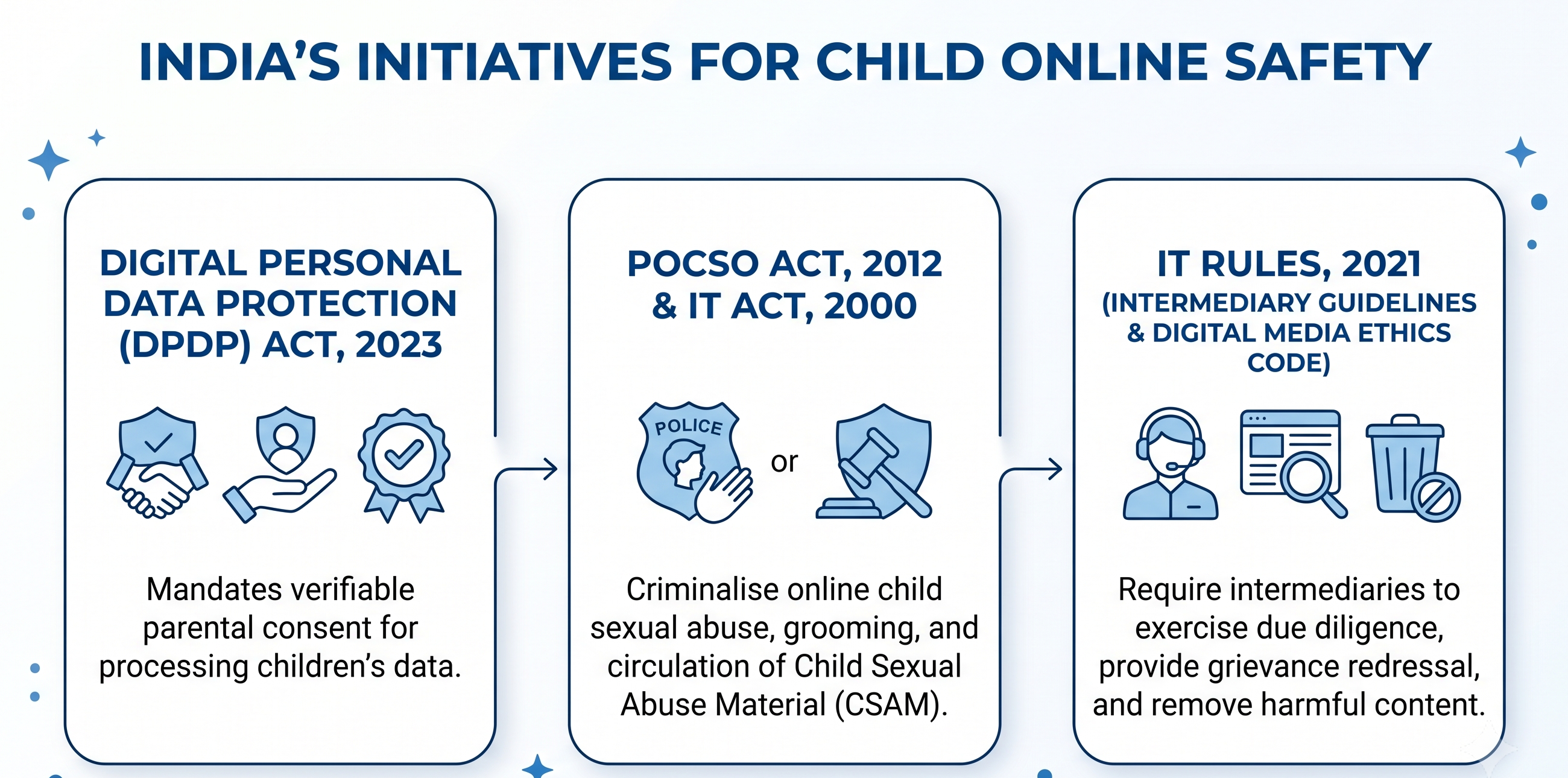
- Child Safety: Protects children from cyberbullying, online grooming, Child Sexual Abuse Material (CSAM), substance-related content, violent material, and harmful online challenges, e.g., Blackout Challenge.
- Addiction-like Behaviour: Dopamine-driven reward pathways reinforce compulsive social media use, like behavioural addictions, e.g., Instagram Reels and YouTube Shorts.
- Body Image Issues: Exposure to edited and idealized images contributes to poor self-esteem, body dysmorphic disorder, and demand for cosmetic procedures.
- Attention and Cognitive Problems: Heavy screen use is linked to reduced attention span, impulsivity, and poorer academic performance.
Concerns over Banning Social Media for Children
- Implementation Challenges: VPNs, fake accounts, and weak age verification can undermine bans and push children to unregulated platforms.
- Rights & Freedom: Blanket bans may restrict children's rights to information, expression, and participation under UN Convention on the Rights of the Child (UNCRC) (Articles 12, 13 & 17).
- Digital Divide: May hinder digital literacy, informal learning, and access to educational resources, especially in rural areas.
- Social Inclusion: Can deprive vulnerable children (e.g., LGBTQ+ youth, children with disabilities) of vital online support networks.

