


Long-term analysis of the Situation Assessment Survey (SAS) data highlights that rural families increasingly function as "mixed" (or pluri-active) units, combining crop farming, animal rearing, casual agricultural/non-agricultural wage labor, small trades, and migration.
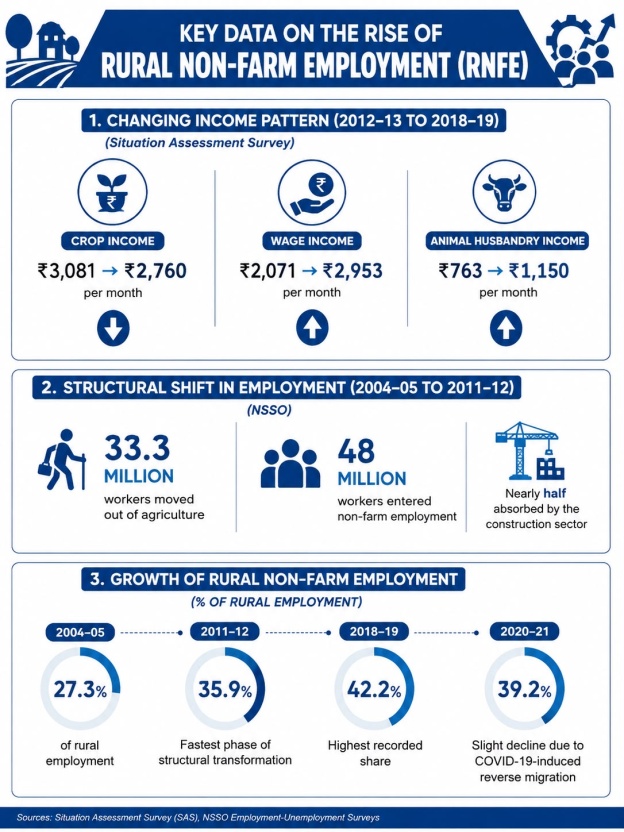
Reason behind rising RNFE
- Distress Push:Falling farm incomes, land fragmentation and stagnant agricultural productivity have pushed workers towards non-farm occupations in states like Bihar.
- Prosperity Pull: Green Revolution-led agricultural prosperity in states like Punjab and Haryana generated demand for rural industries and services, creating non-farm jobs.
- Expansion of Construction & Services: Construction has become the largest absorber of rural labour, while trade, transport and other services have expanded steadily.
- Diversification of Rural Livelihoods: Rural households increasingly combine farming, animal husbandry, wage labour, small businesses and seasonal migration to reduce dependence on agriculture and stabilise incomes.
Government initiatives leading to rise in RNFE
|

![Viksit Bharat – Guarantee for Rozgar and Ajeevika Mission (Gramin) [VB–G RAM G] Act, 2025](https://dfenvgnom4mc9.cloudfront.net/public/images/featured-images/news-today.svg)

