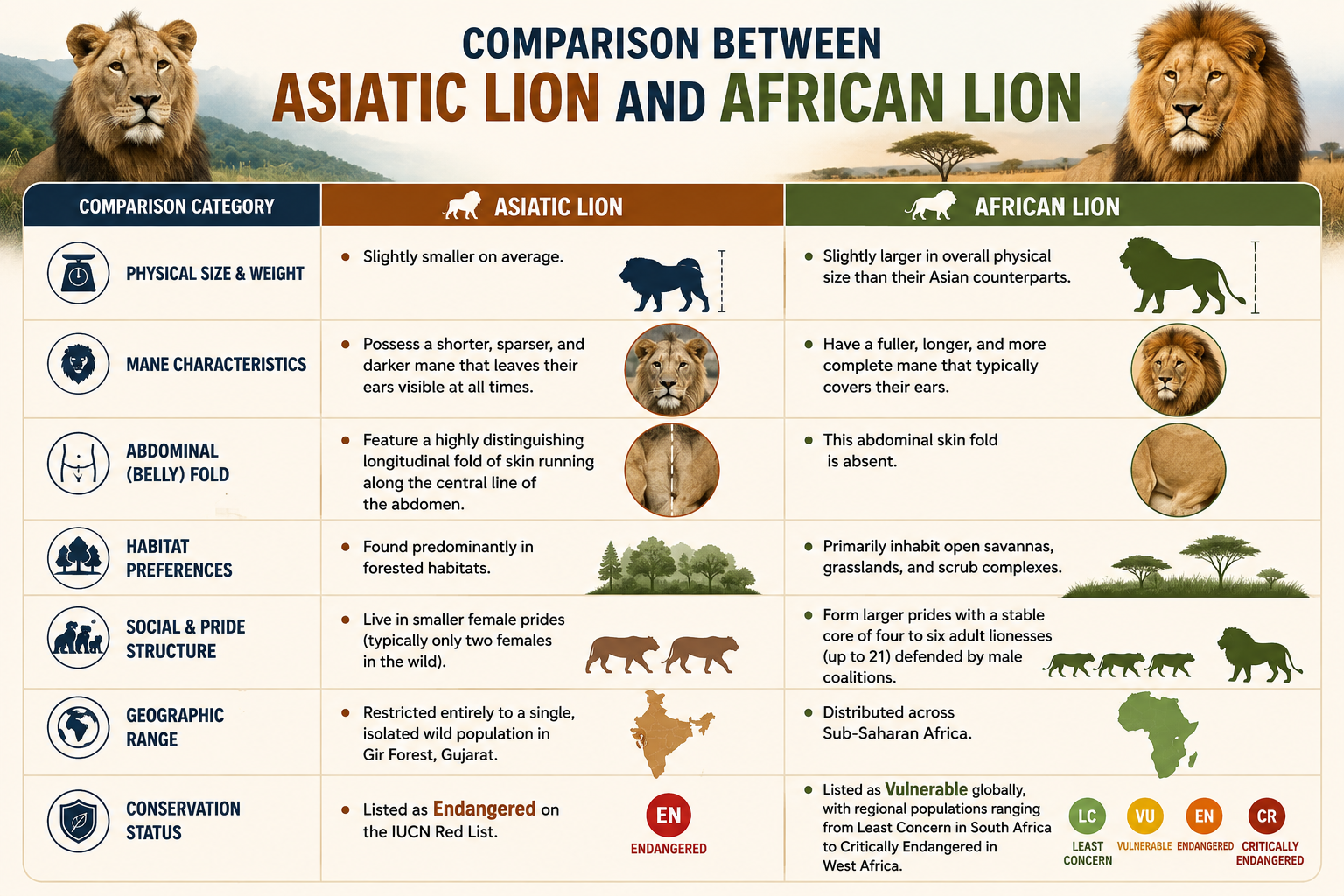
16th Asiatic Lion Population Estimation found 891 lions across the Greater Gir landscape in Gujarat, following decades of conservation efforts after Asiatic Lions were pushed close to extinction.
- The revival was attributed to strict legal protection, revival of the lions’ prey base, a landscape-level conservation approach and community participation.
About Asiatic Lion
- One of the Big Cats, Lions are the only cats that live in groups, called prides.
- Conservation Status:
- IUCN Red List Status: Endangered.
- CITES: Appendix I.
- Wildlife Protection Act (1972): Schedule I.
- Geographic Range: Single isolated population in Gir National Park and Wildlife Sanctuary, Gujarat.
- Environmental Preferences: They predominantly inhabit dry deciduous forests.
- Threats:
- Extinction Vulnerability: Single-isolated population faces risks from disease, forest fires and inbreeding.
- Human-Lion Conflict: Agricultural expansion and settlements increase livestock predation and conflict.
- Accidental & Retaliatory Killing: Lions face deaths from wire snares, traps and poisoned carcasses.
- Habitat Degradation: Livestock overgrazing promotes invasive weeds and shrubs in lion habitats.
- Conservation Initiatives
- Project Lion: Launched in 2020 adopting landscape-based approach through habitat restoration, population management and ecological resilience.
- Second Wild Population: Barda Wildlife Sanctuary is emerging as their second home and their planned reintroduction in Kuno National Park.
- International Collaborations: Formation of International Big Cat Alliance (IBCA).
- Local Initiatives and Community Participation: Like Gir Samvad Setu Initiative.