
‘Industry 4.0 adoption and strategic roadmap for Indian manufacturing Report’ released by Confederation of Indian Industry | Current Affairs | Vision IAS
MENU
Home

Periodically curated articles and updates on national and international developments relevant for UPSC Civil Services Examination.

Quick Links

High-quality MCQs and Mains Answer Writing to sharpen skills and reinforce learning every day.

Watch explainer and thematic concept-building videos under initiatives like Deep Dive, Master Classes, etc., on important UPSC topics.

ESC

Industry 4.0 refers to “smart” and connected production systems that are designed to sense, predict, and interact with physical world.
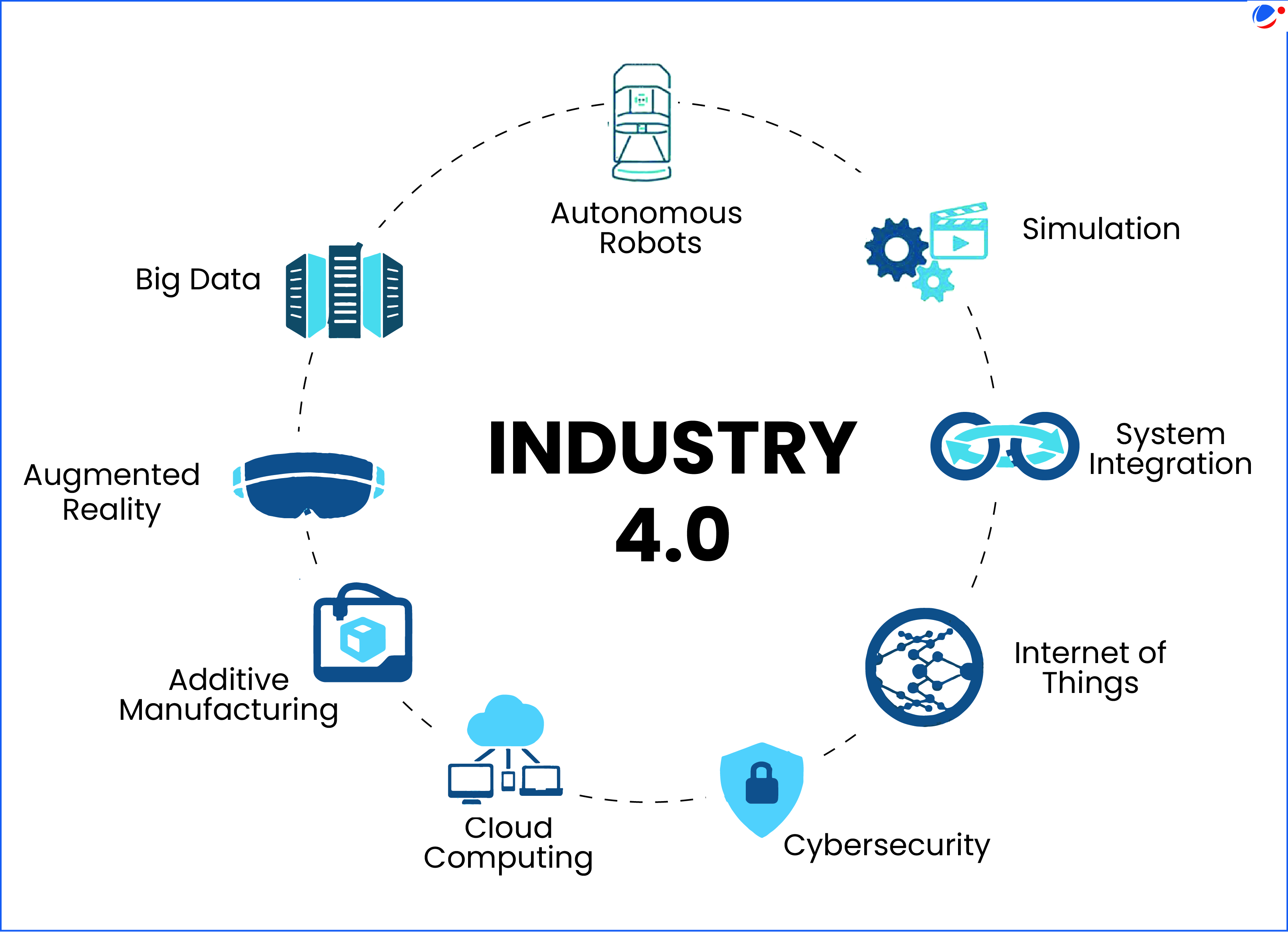
An infographic illustrating the key components of Industry 4.0. The central title reads "INDUSTRY 4.0," surrounded by icons and labels representing its main elements: Autonomous Robots, Simulation, System Integration, Internet of Things, Cybersecurity, Cloud Computing, Additive Manufacturing, Augmented Reality, and Big Data. The icons are connected in a circular layout, symbolizing interconnectedness and integration.

Key Highlights of Report

  • Industry 4.0 adoption in India: Automotive, electronics, and pharmaceuticals are frontrunners. In contrast, textiles, metals & mining face significant barriers.
  • Key Drivers of Industry 4.0 in India
    • Workforce Up-skilling, Digital Infrastructure, Sustainability (To meet global consumer and regulatory expectations for green manufacturing).
  • Barriers to Adoption 
    • Awareness: Many MSMEs lack understanding of Industry 4.0's benefits versus costs.
    • Technological Barriers:
      • Legacy Systems: Difficult to integrate with modern tech.
      • Data Integration: Challenges in handling big data across systems.
      • Cyber-security Risks: Increased digital exposure brings higher risks.
    • Financial Constraints: High initial investment and ongoing costs, limited access to funding.
    • Human Resource Issues: Shortage of skilled workers and cultural resistance to new methods.
  • Way forward: 
    • Harnessing Global Value Chains (GVCs) present immense opportunities for MSMEs to access global markets and enhance competitiveness. 
    • Develop comprehensive digital strategies and phased implementation roadmaps.
    • Other focus areas: Prioritize key technologies such as AI and automation, invest in workforce up-skilling etc.

Government Support and Policy Interventions

  • SAMARTH Udyog Bharat 4.0: Provides infrastructure and training to accelerate advanced manufacturing adoption.
  • Make in India 2.0: Attracts investment in high-tech manufacturing.
  • Digital India: Aims at digital empowerment through better connectivity and innovation ecosystems.
Watch Video News Today

Explore Related Content

Discover more articles, videos, and terms related to this topic

RELATED VIDEOS

3
News Today (Dec 31, 2024)

News Today (Dec 31, 2024)

YouTube HD
News Today (May 12-13, 2024)

News Today (May 12-13, 2024)

YouTube HD
Weekly Focus | India's Natural Wealth

Weekly Focus | India's Natural Wealth

YouTube HD
Title is required. Maximum 500 characters.

Search Notes

Filter Notes

Loading your notes...
Searching your notes...
Loading more notes...
You've reached the end of your notes

No notes yet

Create your first note to get started.

No notes found

Try adjusting your search criteria or clear the search.

Saving...
Saved

Please select a subject.

Referenced Articles

linked

No references added yet

Subscribe for Premium Features