


Scientists have analysed how and why stable parts of continents (called cratons) gradually rise to form some of the planet’s greatest topographic features like escarpments and plateaus.
- Cratons remain one of the least understood aspects of Plate Tectonics.
What are the findings?
- When tectonic plates break apart, powerful waves are triggered deep within the Earth that can cause continental surfaces to rise by over a kilometre, even far from plate boundaries.
- Mechanism: Continental rifting (e.g., in African Rift Valley) stretches the crust, setting about a ‘deep mantle wave’ that travels along the continent’s base at about 15-20 kilometres per million years.
- These waves remove layers of rocks from the continental roots, causing uplift.
- Erosion triggered by these waves further removes rock, amplifying uplift and forming plateaus.
About Plate Tectonic Theory
- Also referred to as Geology’s Theory of Everything.
- It explains how major landforms (e.g. volcanoes and earthquakes) are created as a result of Earth’s subterranean movements.
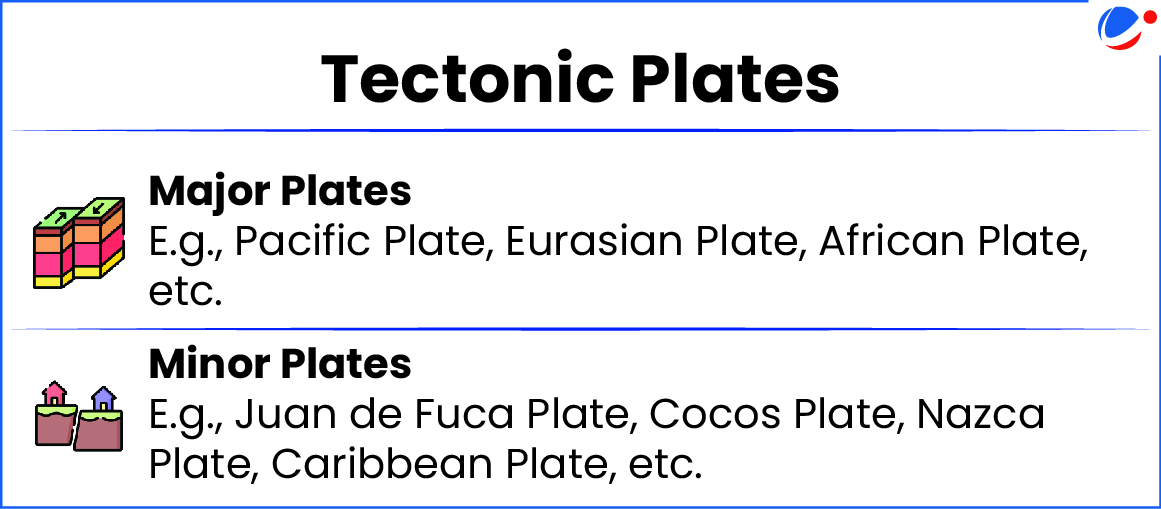
- Mechanism: Earth’s outermost layer (lithosphere), made up of the crust and upper mantle, is broken into large rocky plates.
- These plates float on top of a partially molten layer of rock called the asthenosphere.
