


RBI committee unveils Framework for Responsible and Ethical Enablement of Artificial Intelligence (FREE-AI) to balance innovation with risk management in financial services.
About FREE-AI Vision
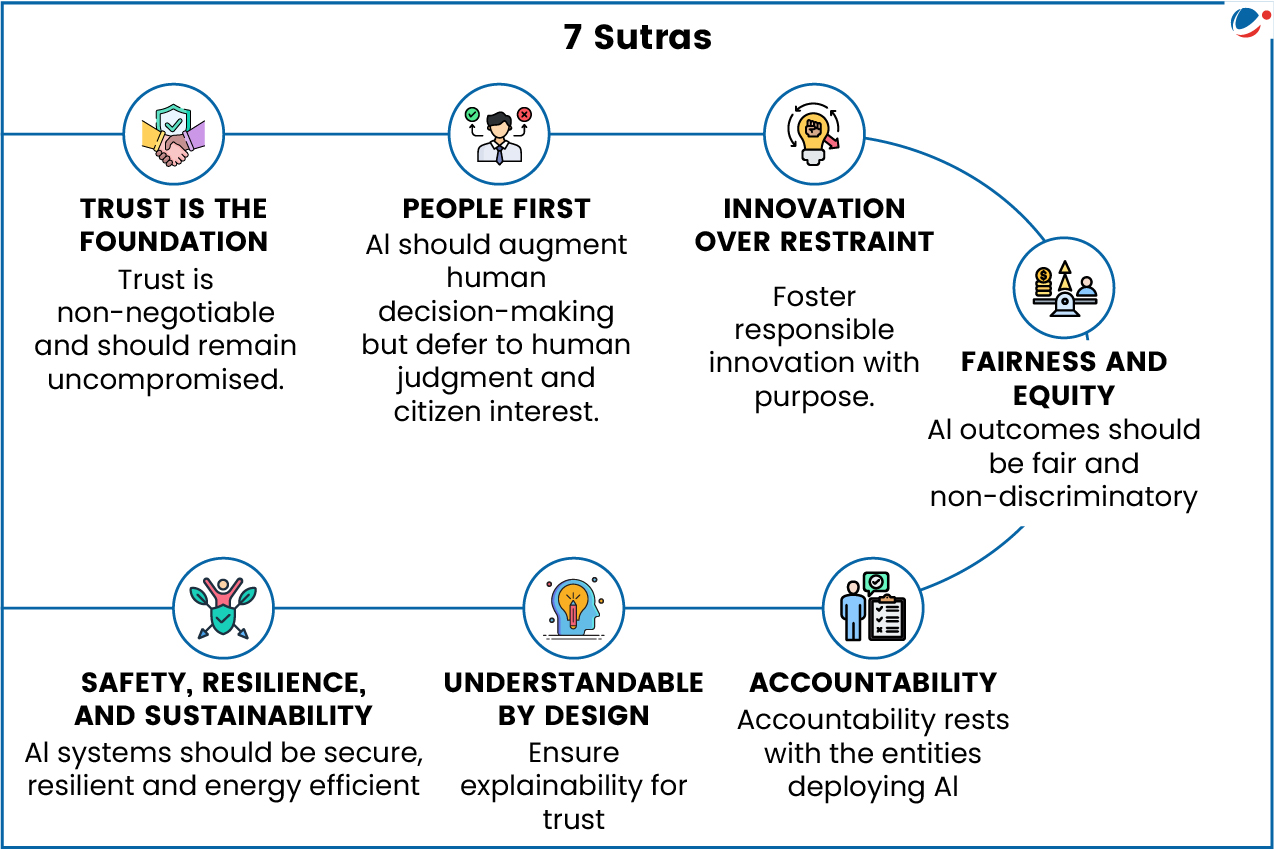
- Aim: Ensuring safe, fair and accountable AI adoption in India’s financial sector
- 7 Sutras: Foundational principles for AI adoption (refer to the infographics)
- Dual Approach:
- Fostering Innovation
- Shared infrastructure for democratized data and compute access, which may be integrated with the AI Kosh established under the IndiaAI Mission.
- AI Innovation Sandbox for testing and Indigenous financial AI models
- Create AI policy for regulatory guidance
- Institutional capacity building (boards and workforce)
- Relaxed compliance for low-risk AI solutions to facilitate inclusion and other priorities
- Mitigating Risk:
- Board-approved AI policies by Regulated Entities
- Inclusion of AI-related aspects in product approval processes, consumer protection frameworks and audits
- Strengthened cybersecurity and incident reporting
- Robust AI lifecycle governance
- Consumer awareness when they interact with AI
- Fostering Innovation
Why FREE-AI Vision Matters?
- AI's Growing Impact: The financial sector's AI investment is projected to reach:
- ₹8 lakh crore ($97 billion) by 2027 across banking, insurance, capital markets, and payments
- ₹1.02 lakh crore ($12 billion) by 2033 for GenAI alone, growing at 28-34% annually
- Emerging Complex Risks: AI introduces data privacy, algorithmic bias, market manipulation, cybersecurity vulnerabilities, and governance failures that traditional risk frameworks struggle to address.
- These risks could undermine market integrity, erode consumer trust, and create systemic vulnerabilities without proper management.


