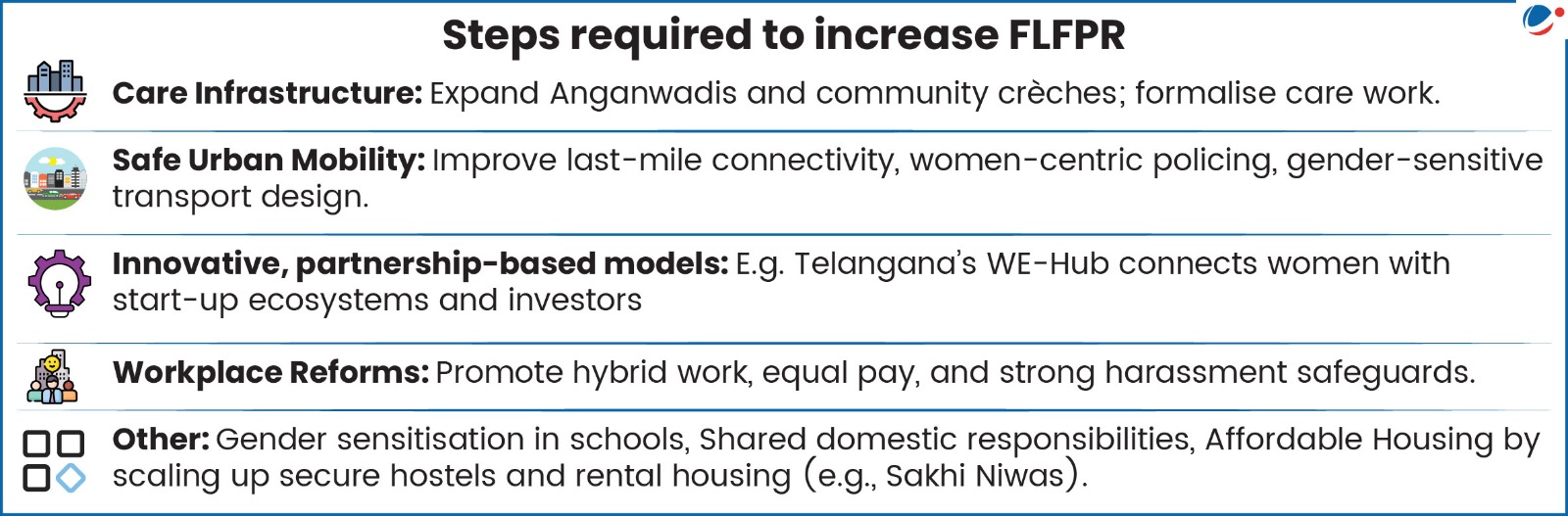
Survey noted that raising female labor force participation rate (FLFPR) to around 55% by the 2050 could be critical for sustaining a high annual GDP growth trajectory.
Status of female labor force participation in India
- Rising Participation: FLFPR has seen a significant rise from 23.3% in 2017-18 to 41.7% in 2023-24.
- Entrepreneurship: There is a positive trend in female-headed proprietary establishments, which increased from 24.2% in 2021-22 to 26.2% in 2023-24.
Issues in female labor force participation
- Dual Work Burden: Women spend an average of 363 minutes per day on unpaid activities, compared to just 123 minutes for men. (Time Use Survey, 2024)
- Mobility and "Pink Tax": Women often face a "Pink Tax" by paying higher costs for safer modes of transport due to security concerns.
- A World Bank study noted that 31% of women cited commuting as a barrier to working.
- Structural Barriers: Such as limited affordable housing and inflexible work arrangements that conflict with caregiving duties.
- Skill and Education Gaps: Perception of STEM as a male domain and high cost of education continue to limit women's entry into these high-value sectors.