
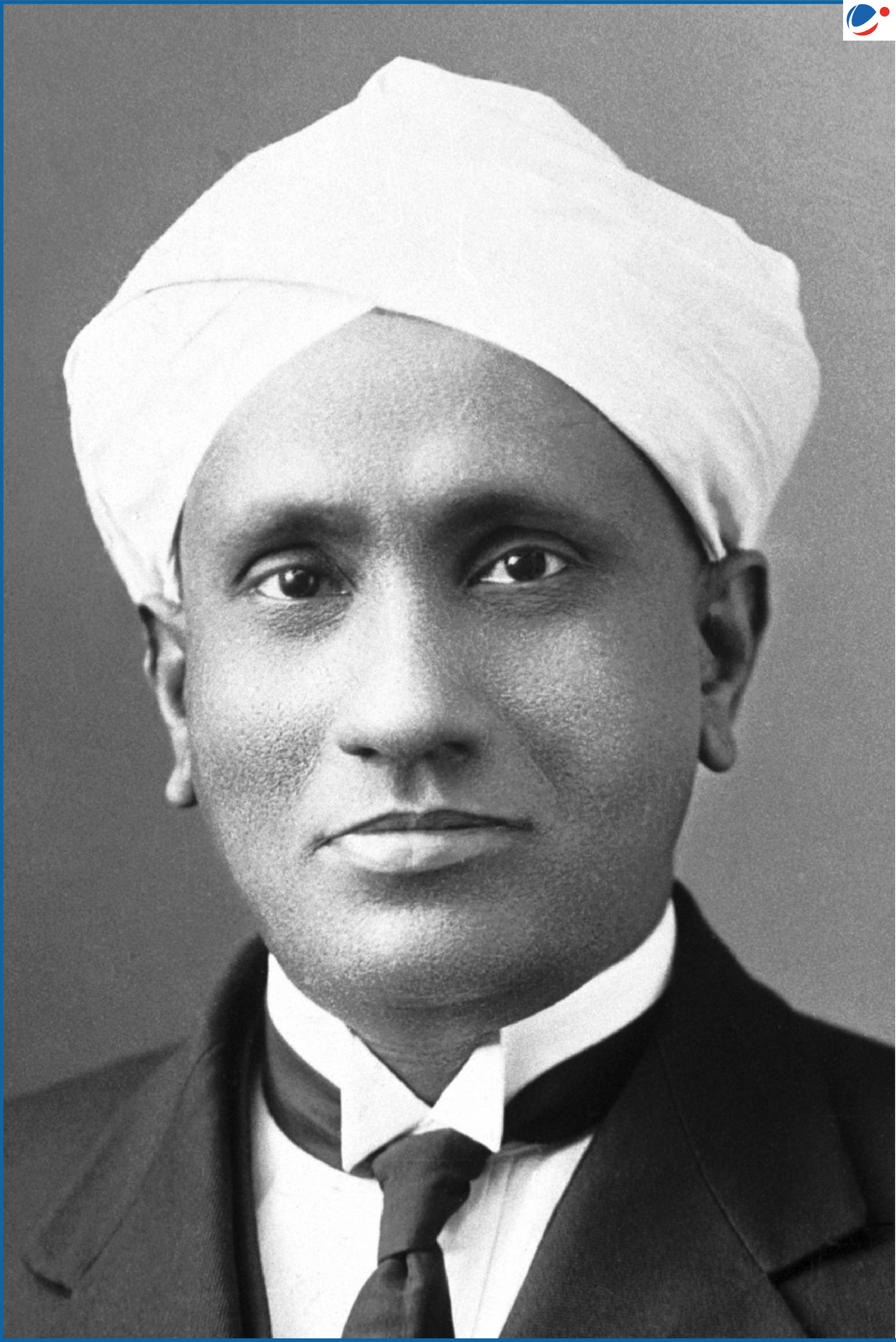
Personality in News: C V Raman | Current Affairs | Vision IAS

Upgrade to Premium Today

Start Now
MENU
Home
Quick Links

High-quality MCQs and Mains Answer Writing to sharpen skills and reinforce learning every day.

Watch explainer and thematic concept-building videos under initiatives like Deep Dive, Master Classes, etc., on important UPSC topics.

A short, intensive, and exam-focused programme, insights from the Economic Survey, Union Budget, and UPSC current affairs.

ESC

In Summary

  • National Science Day on Feb 28 commemorates C.V. Raman's 1928 discovery of the Raman Effect.
  • The Raman Effect explains light scattering by molecules, revealing structural and vibrational information.
  • C.V. Raman received the Nobel Prize in Physics (1930) and Bharat Ratna (1954) for his contributions.

In Summary

National Science Day in India is celebrated every year on 28 February to mark the discovery of the Raman Effect by renowned physicist Chandrasekhara Venkata Raman in 1928.

About C V Raman (1888-1970)

  • Born at Tiruchirappalli, Tamil Nadu. 

Scientific Contributions

  • Discovery of the Raman Effect (1928).
    • The Raman Effect is the change in the wavelength (color) of light when a light beam is scattered by molecules in a material, revealing information about the molecule's structure and vibrations.
  • Other Major contributions: to optics and spectroscopy; Research on acoustics of Indian musical instruments; Advances in crystallography and solid-state physics.

Awards and Honors

  • Nobel Prize in Physics for Raman Effect (1930), Bharat Ratna(1954), Fellow of the Royal Society, Franklin Medal, Lenin Peace Prize.
  • Values: Scientific rigour, Fortitude, Excellence, Curiosity, etc.
Watch Video News Today

Explore Related Content

Discover more articles, videos, and terms related to this topic

RELATED TERMS

3

Bharat Ratna

The highest civilian award of India.

Solid-state physics

A branch of physics that studies the macroscopic and microscopic physical and chemical properties of solid materials. It is fundamental to understanding semiconductors, superconductors, and other materials used in modern technology.

Crystallography

The scientific study of crystals, including their structure, formation, and properties. It involves analyzing the arrangement of atoms in a crystalline solid, which is vital in fields like materials science and solid-state physics.

Title is required. Maximum 500 characters.

Search Notes

Filter Notes

Loading your notes...
Searching your notes...
Loading more notes...
You've reached the end of your notes

No notes yet

Create your first note to get started.

No notes found

Try adjusting your search criteria or clear the search.

Saving...
Saved

Please select a subject.

Referenced Articles

linked

No references added yet