
India’s DPI: A Global Population-Scale Benchmark | Current Affairs | Vision IAS

Upgrade to Premium Today

Start Now
MENU
Home
Quick Links

High-quality MCQs and Mains Answer Writing to sharpen skills and reinforce learning every day.

Watch explainer and thematic concept-building videos under initiatives like Deep Dive, Master Classes, etc., on important UPSC topics.

A short, intensive, and exam-focused programme, insights from the Economic Survey, Union Budget, and UPSC current affairs.

ESC

In Summary

  • India leads in Digital Public Infrastructure (DPI) using a public good model, enabling secure citizen-government-business interactions.
  • DPIs like UPI, CoWIN, and ONDC demonstrate scale, efficiency, economic impact, and global diplomacy through open-source platforms.
  • UPI is operational in 8 countries, and MOSIP is adopted by over 25 nations for digital identity systems.

In Summary

By leveraging a "public good" model rather than closed platforms, India has transitioned from a consumer of digital systems to a primary architect of population-scale Digital Public Infrastructure (DPI).

What is DPI?

  • UN defines DPI as foundational digital systems that enable secure interactions between citizens, businesses, and governments
  • Effective DPI must be:
    • Inclusive: Ensuring access regardless of geography or socio-economic status.
    • Interoperable: Allowing different systems to work together seamlessly through open APIs.
    • Publicly Governed: Designed to deliver public value and protect the public interest.

Significance of India’s DPI

  • Scale and Efficiency: India’s DPI facilitates billions of transactions monthly at a very low cost, significantly reducing leakages in welfare delivery (saving over ₹4.31 lakh crore via the Public Financial Management System).
  • Economic Impact: UPI now accounts for 49% of global real-time payment transaction volume.
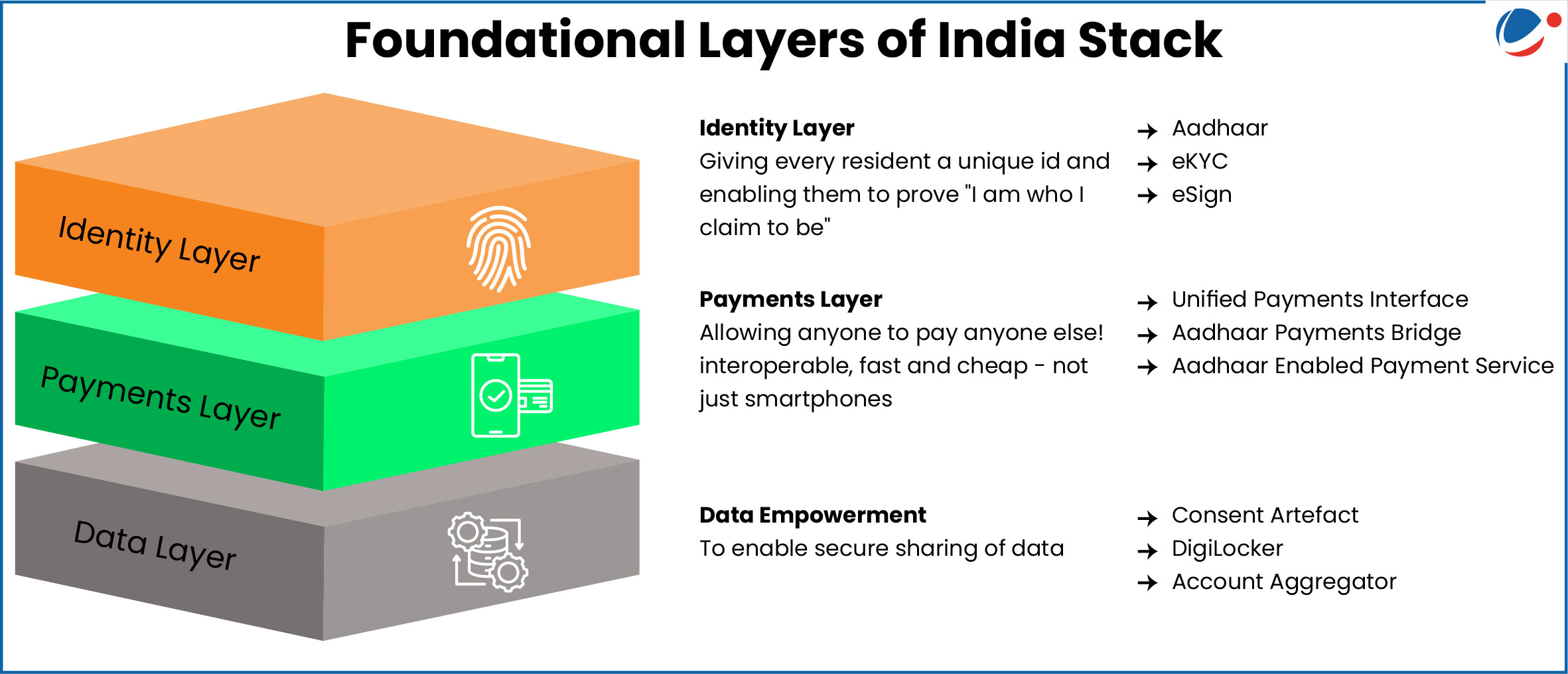
  • Sectoral Depth: Beyond payments, the "India Stack" has expanded into health (CoWIN, eSanjeevani), education (DIKSHA), e-commerce (ONDC), and judicial services (e-Courts).
  • Global Diplomacy: India is actively exporting this model, having signed MoUs with 24 countries and offering platforms like CoWIN as open-source digital public goods.
    • UPI Cross-Border: UPI is live in 8 countries: UAE, Singapore, Bhutan, Nepal, Sri Lanka, France, Mauritius, and Qatar.
    • Modular Open-Source Identity Platform (MOSIP): Developed in India, MOSIP is being explored or adopted by more than 25 nations for sovereign digital identity systems.
Tags:
Watch Video News Today

Explore Related Content

Discover more articles, videos, and terms related to this topic

RELATED VIDEOS

1
Success of India's Digital Public Infrastructure

Success of India's Digital Public Infrastructure

YouTube HD

RELATED TERMS

3

Open APIs

Application Programming Interfaces that are publicly accessible, allowing different software systems to communicate and share data with each other. This feature is essential for interoperability in Digital Public Infrastructure.

Open Source Digital Public Goods

Digital products or services that are freely available for anyone to use, modify, and distribute. India leverages this model, offering platforms like CoWIN globally to promote digital transformation and public value.

Unified Payments Interface (UPI)

An instant real-time payment system developed by the National Payments Corporation of India (NPCI). It allows for seamless money transfer between bank accounts on mobile platforms, facilitating peer-to-peer and person-to-merchant transactions.

Title is required. Maximum 500 characters.

Search Notes

Filter Notes

Loading your notes...
Searching your notes...
Loading more notes...
You've reached the end of your notes

No notes yet

Create your first note to get started.

No notes found

Try adjusting your search criteria or clear the search.

Saving...
Saved

Please select a subject.

Referenced Articles

linked

No references added yet