
Personality in News: Rabindranath Tagore | Current Affairs | Vision IAS

Upgrade to Premium Today

Start Now
MENU
Home
Quick Links

High-quality MCQs and Mains Answer Writing to sharpen skills and reinforce learning every day.

Watch explainer and thematic concept-building videos under initiatives like Deep Dive, Master Classes, etc., on important UPSC topics.

A short, intensive, and exam-focused programme, insights from the Economic Survey, Union Budget, and UPSC current affairs.

ESC

In Summary

  • Gurudev Rabindranath Tagore (1861-1941) was a Bengali poet, philosopher, composer, playwright, painter, and social reformer.
  • He composed India's and Bangladesh's national anthems, founded Visva-Bharati University, and was awarded the Nobel Prize in Literature in 1913.
  • Tagore advocated universal humanism and cultural exchange, and renounced his knighthood in protest against the Jallianwala Bagh massacre.

In Summary

The Prime Minister pays heartfelt tributes to Gurudev Rabindranath Tagore on the occasion of Pochishe Boishakh.

About Rabindranath Tagore (1861-1941)
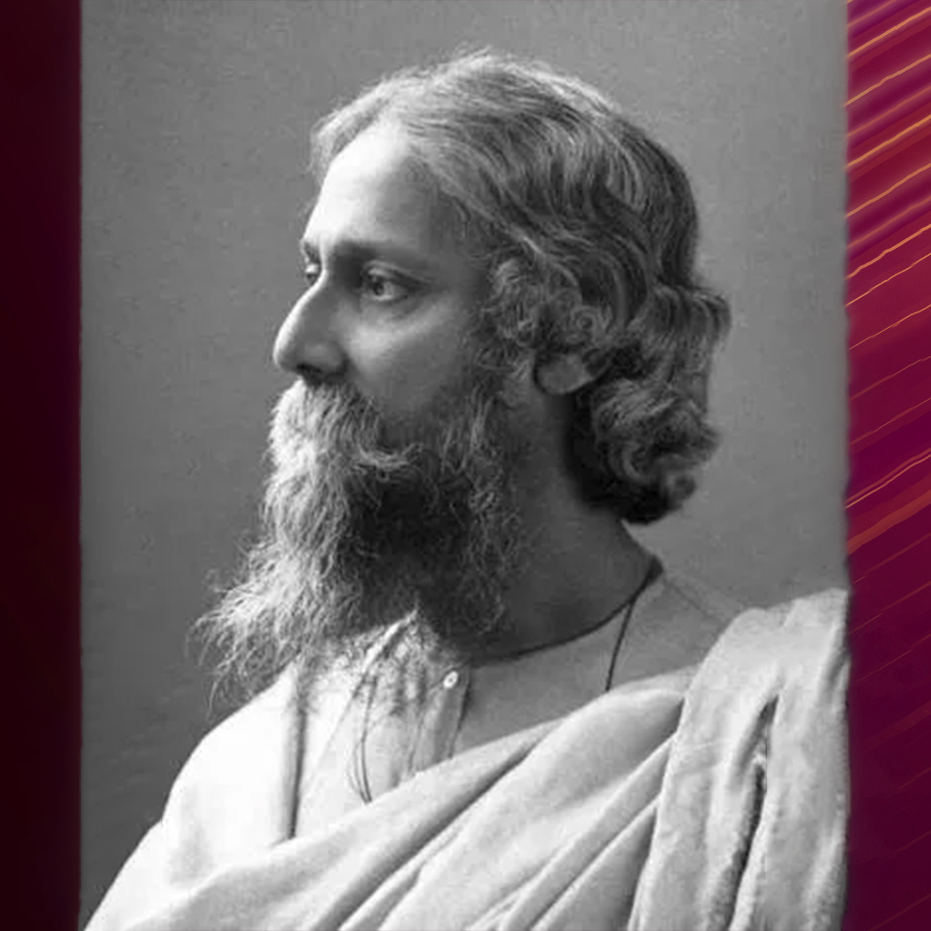
  • Birth: Born in Calcutta to Debendranath Tagore and Sarada Devi.
  • He was a renowned Bengali poet, philosopher, composer, playwright, painter and social reformer.

Key Contributions

  • Composed Jana Gana Mana and Amar Shonar Bangla, the national anthems of India and Bangladesh respectively.
  • Founded Visva-Bharati University and Shantiniketan School
  • Advocated universal humanism, global peace and cultural exchange.
  • Major literary work: 
    • Poetry: Gitanjali, Manasi, Sonar Tari, Gitimalya and Balaka
    • Plays: Raja, Dakghar, Achalayatan, Muktadhara and Raktakaravi.
    •  Novels: Gora, Ghare-Baire and Yogayog.
  • Recognition: He was awarded the Nobel Prize for Literature in 1913.
    • Knighted by the British in 1915, later he renounced his knighthood in protest against the Jallianwala Bagh massacre.
  • Values: Nationalism, courage, humanism, etc
Watch Video News Today

Explore Related Content

Discover more articles, videos, and terms related to this topic

RELATED TERMS

3

Nobel Prize for Literature

One of the five Nobel Prizes established by Alfred Nobel's will. Rabindranath Tagore received it in 1913 for his profoundly sensitive, fresh and beautiful verse, by which, with consummate skill, he has made his poetic thought, expressed in his own English words, a part of the literature of the West.

Jallianwala Bagh massacre

A significant event in Indian history that occurred on April 13, 1919, where British troops under the command of Brigadier-General Reginald Dyer fired on an unarmed gathering of civilians in Amritsar, Punjab. It is considered a turning point in the Indian independence movement, intensifying anti-British sentiment and leading to widespread condemnation.

Universal Humanism

A philosophical concept advocating for the inherent worth and dignity of all human beings, transcending national, cultural, and religious boundaries, and promoting global unity and peace.

Title is required. Maximum 500 characters.

Search Notes

Filter Notes

Loading your notes...
Searching your notes...
Loading more notes...
You've reached the end of your notes

No notes yet

Create your first note to get started.

No notes found

Try adjusting your search criteria or clear the search.

Saving...
Saved

Please select a subject.

Referenced Articles

linked

No references added yet