The MSMEs encompasses more than 7.47 crore enterprises and 31 of GDP contribution across manufacturing, services, and trade activities of which large share of these enterprises operates in rural and semi-urban areas providing boost to economy.
Role of MSMEs in Rural and Semi-Urban Economies
- Labour-Intensive Employment: MSMEs generate high employment with low capital investment, employing approximately 32.8 crore people, primarily in rural areas; second only to agriculture.
- Check on Distress Migration: Creates local livelihood opportunities in agro-processing and rural services, reducing distress migration.
- Women-led Entrepreneurship: Rural India has higher women-owned MSMEs (22.24%) than urban areas.
- Local Resource-Based Development: Utilizes local raw materials, traditional skills promoting decentralized, sustainable production.
- Integration in formal economy: Institutions like Khadi and Village Industries Commission (KVIC) are integrating rural enterprises with formal credit, and supply chains totaling overall 48.5% export share in economy.
Government initiatives
- Digital MSME Ecosystem: Platforms such as Udyam (online MSME registration), GeM (government procurement marketplace), TReDS (invoice financing), SAMADHAAN (delayed payment resolution), etc.
- PM Vishwakarma Scheme: Supports traditional artisans through skill, and market linkage support.
- CGTMSE: Credit Guarantee Fund Trust for Micro and Small Enterprises for collateral-free credit.
- PMEGP (Prime Minister’s Employment Generation Programme): A credit-linked subsidy scheme
- ASPIRE (A Scheme for Promotion of Innovation, Rural Industries and Entrepreneurship): Promotes rural entrepreneurship.
- SFURTI (Scheme of Fund for Regeneration of Traditional Industries): Supports cluster-based development of traditional industries.
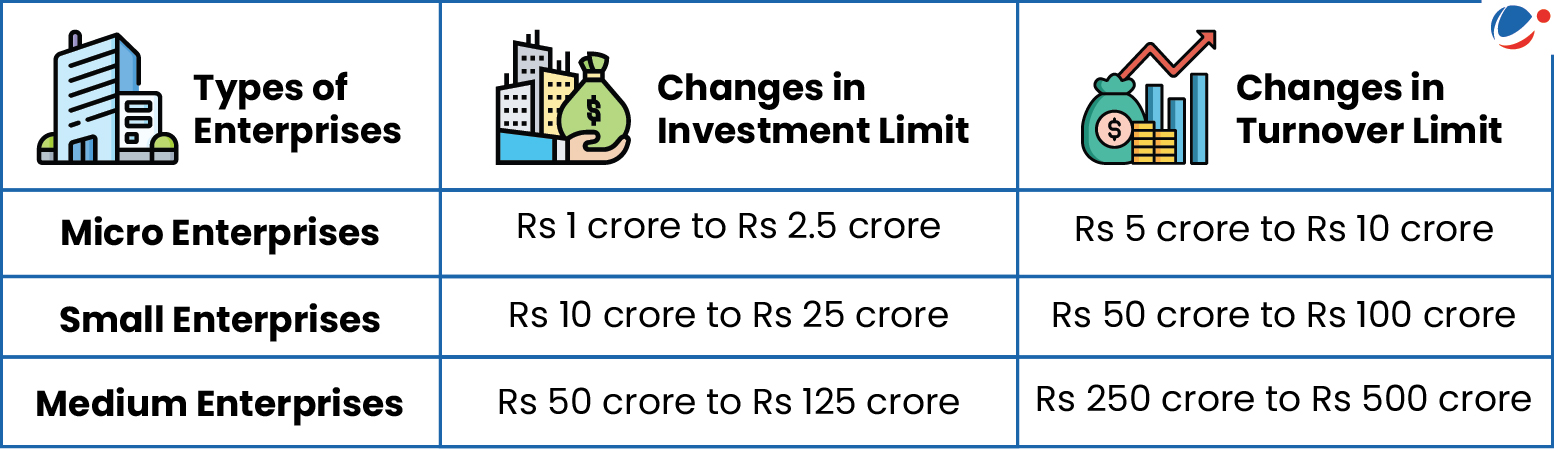
Revision in classification criteria for MSMEs announced in Union Budget 2025-26