


Concerns have emerged over whether Finance Commission transfers adequately balance fiscal equity among States while addressing the Centre’s growing expenditure needs.
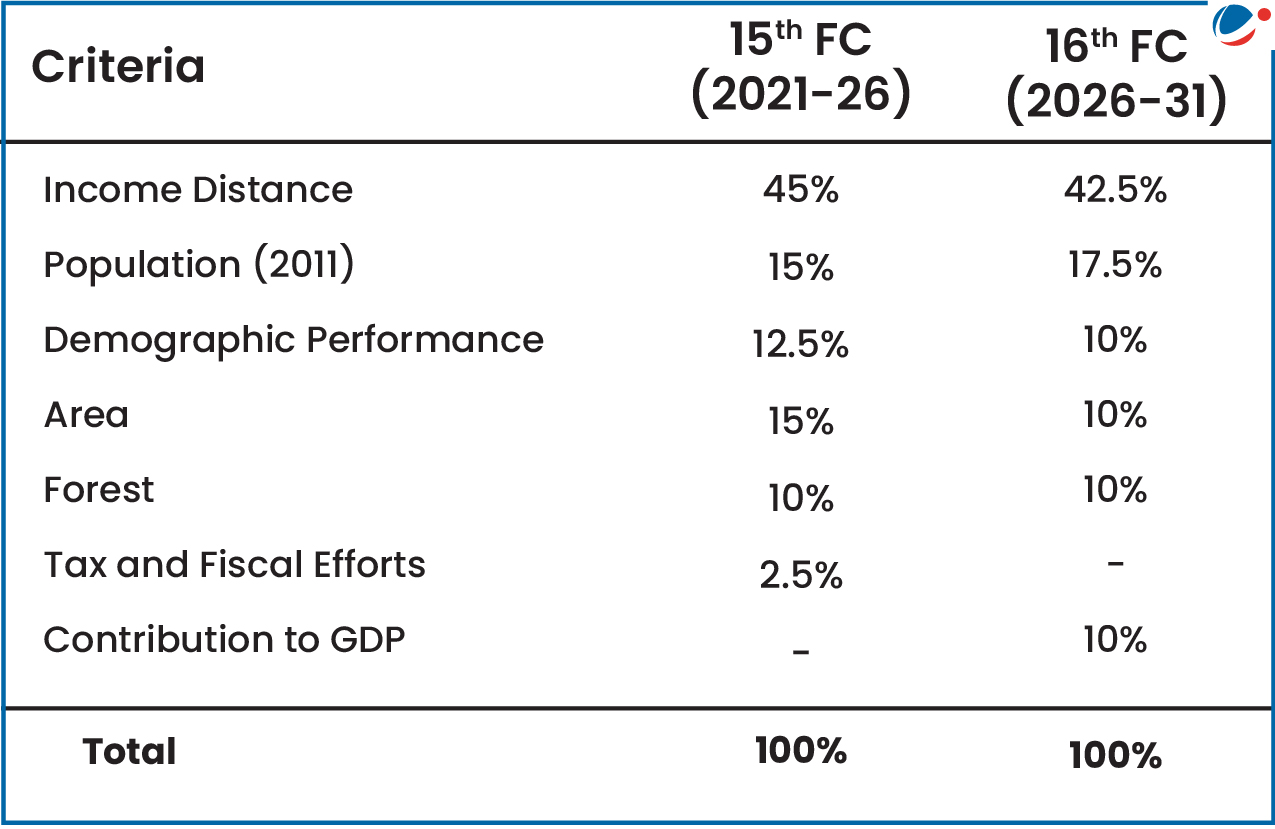
About the 16th FC (2026-31)
- Constituted under Article 280; chaired by Dr. Arvind Panagariya.
- Recommendations:
- States' share in the divisible pool of central taxes remains unchanged at 41%.
- Total grant-in-aid worth ₹9.47 lakh crore for local bodies and disaster management over 5 years.
- Revenue-deficit, sector-specific, and state-specific grants have been discontinued.
Challenges Related to Devolution and Equity
- Shrinking Divisible Pool: Rising non-shareable cesses and surcharges reduce actual funds available to States.
- Equity vs. Performance: High income distance weightage heavily favors less developed states.
- Developed states feel penalized for their economic and demographic success.
- Conditional Transfers: Tied grants may constrain States’ spending flexibility.
- Vertical Imbalance: States bear major expenditure responsibilities in health, education, and welfare, but possess limited taxation powers.
- E.g. restructuring of National Rural Employment Guarantee programme requires States to bear 40% of programme costs.
- Removal of Revenue-deficit Grants: Raises issues of equity and targeting specific state needs, described as “tyranny of the base year”.
Way Forward
- Rationalise cesses and surcharges to expand the divisible pool and foster cooperative federalism through wider state consultations.
- Refine criteria to balance equity with incentives for fiscal discipline.
- Ensure predictable, untied transfers to enhance State-level developmental autonomy.



