
SAPLING Dialogue 2026 focused on Advancing Food Processing for South Asia region | Current Affairs | Vision IAS

Upgrade to Premium Today

Start Now
MENU
Home
Quick Links

High-quality MCQs and Mains Answer Writing to sharpen skills and reinforce learning every day.

Watch explainer and thematic concept-building videos under initiatives like Deep Dive, Master Classes, etc., on important UPSC topics.

A short, intensive, and exam-focused programme, insights from the Economic Survey, Union Budget, and UPSC current affairs.

ESC

In Summary

  • SAPLING, a World Bank Group platform, aims to transform food systems in South Asia, aligning with AgriConnect's goal of boosting private sector participation and investment.
  • India's food processing sector is projected to reach US$2.15 trillion by 2047, with government initiatives like PMKSY, PLISFPI, and PMFME supporting its growth.
  • Key government support includes 100% FDI, PSL benefits, and tax incentives for cold-chain infrastructure to enhance the food processing industry.

In Summary

SAPLING (South Asian Policy Leadership for Improved Nutrition and Growth) is a regional platform led by the World Bank Group (WBG) to accelerate the transformation of resilient, nutrition-focused food systems across South Asia.

  • Aligned with the WBG’s AgriConnect initiative, SAPLING supports greater private sector participation in food system value chains and helps unlock investment for sustainable growth.
    • AgriConnect aims to transform smallholder farming, create jobs, and strengthen global food security.

Food Processing Sector in India  

  • Status: Market size projected to reach US$ 2.15 trillion by 2047; contributes ~7.9% to manufacturing GVA, ~8% to agriculture GVA, accounts for 20.4% of agri-exports, has attracted US$ 15.86 billion FDI, and employs ~7 million workers. 
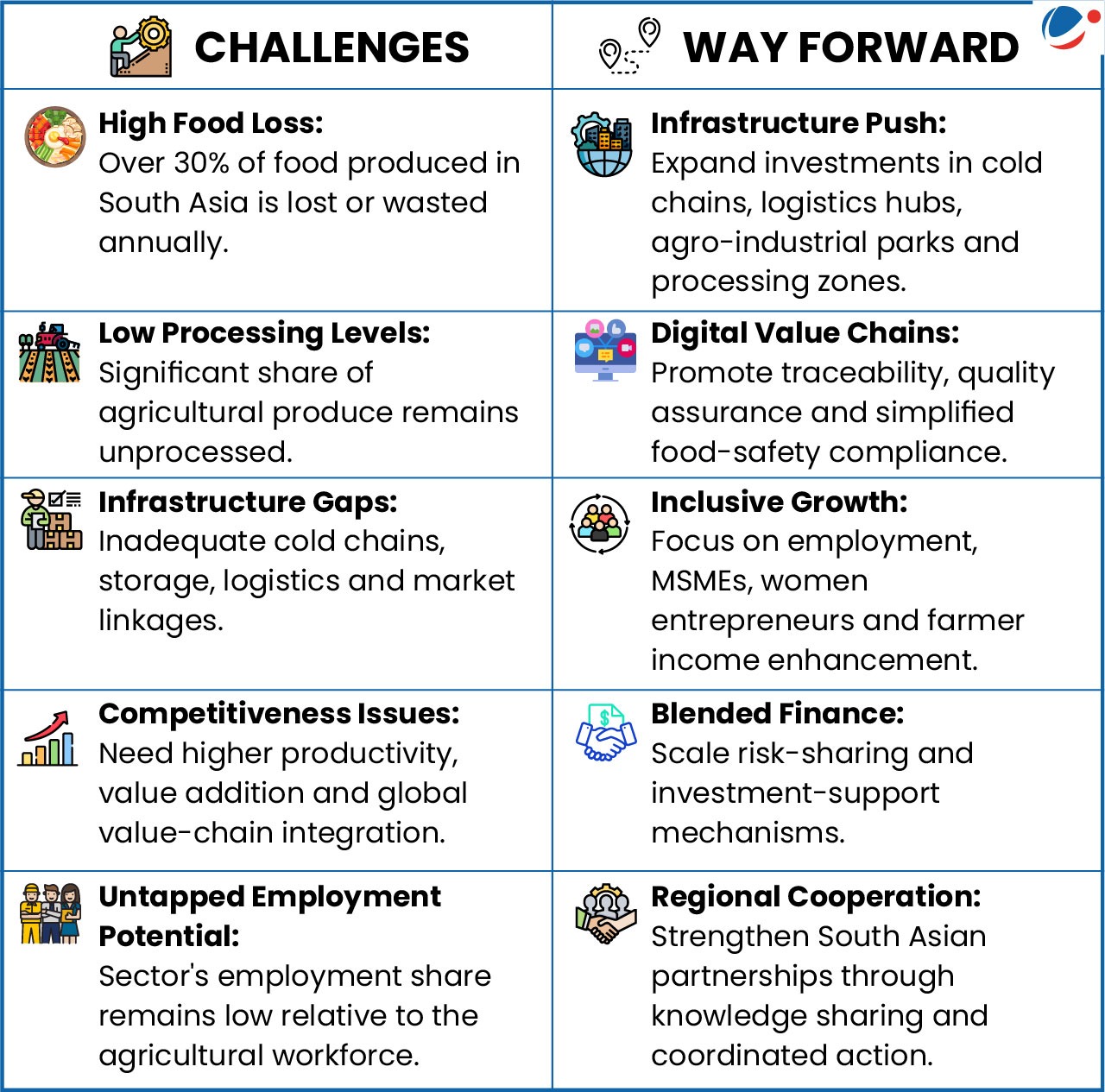
  • Government Initiatives
    • Pradhan Mantri Kisan SAMPADA Yojana (PMKSY): Develops farm-to-retail infrastructure through Mega Food Parks, Cold Chains and Agro-Processing Clusters
      • PMKSY cold-chain projects reduced wastage by up to 70% in fisheries and 85% in dairy.
    • Production Linked Incentive Scheme (PLISFPI): ₹10,900 crore scheme to boost processed food production and global food brands.
    • PM Formalisation of Micro Food Processing Enterprises (PMFME): Supports micro food-processing enterprises under 'Vocal for Local' and ‘One District One Product (ODOP)’  through credit-linked subsidies.
    • Policy Support: 100% FDI under automatic route, PSL benefits, and tax incentives for cold-chain infrastructure.
Watch Video News Today

Explore Related Content

Discover more articles, videos, and terms related to this topic

RELATED TERMS

3

PSL benefits

Priority Sector Lending benefits. In India, this refers to a system where banks are mandated to lend a certain portion of their total credit to specific sectors identified as 'priority sectors' to ensure adequate flow of credit to these areas, such as agriculture and MSMEs.

One District One Product (ODOP)

A government initiative aimed at promoting unique products from each district of a state to boost rural and semi-urban economies. It helps in creating employment opportunities, fostering local entrepreneurship, and showcasing the diversity of Indian craftsmanship and agricultural produce.

Vocal for Local

A campaign that encourages consumers to buy local products, thereby supporting domestic businesses and artisans. It is a key component of the broader 'Atmanirbhar Bharat' vision.

Title is required. Maximum 500 characters.

Search Notes

Filter Notes

Loading your notes...
Searching your notes...
Loading more notes...
You've reached the end of your notes

No notes yet

Create your first note to get started.

No notes found

Try adjusting your search criteria or clear the search.

Saving...
Saved

Please select a subject.

Referenced Articles

linked

No references added yet