


The Delhi High Court in a contempt petition in Delhi High Court Bar Association v. Dr. Kapil Kakar & Ors. (2026) held that social media cannot be used to undermine Constitutional Institutions like the Judiciary.
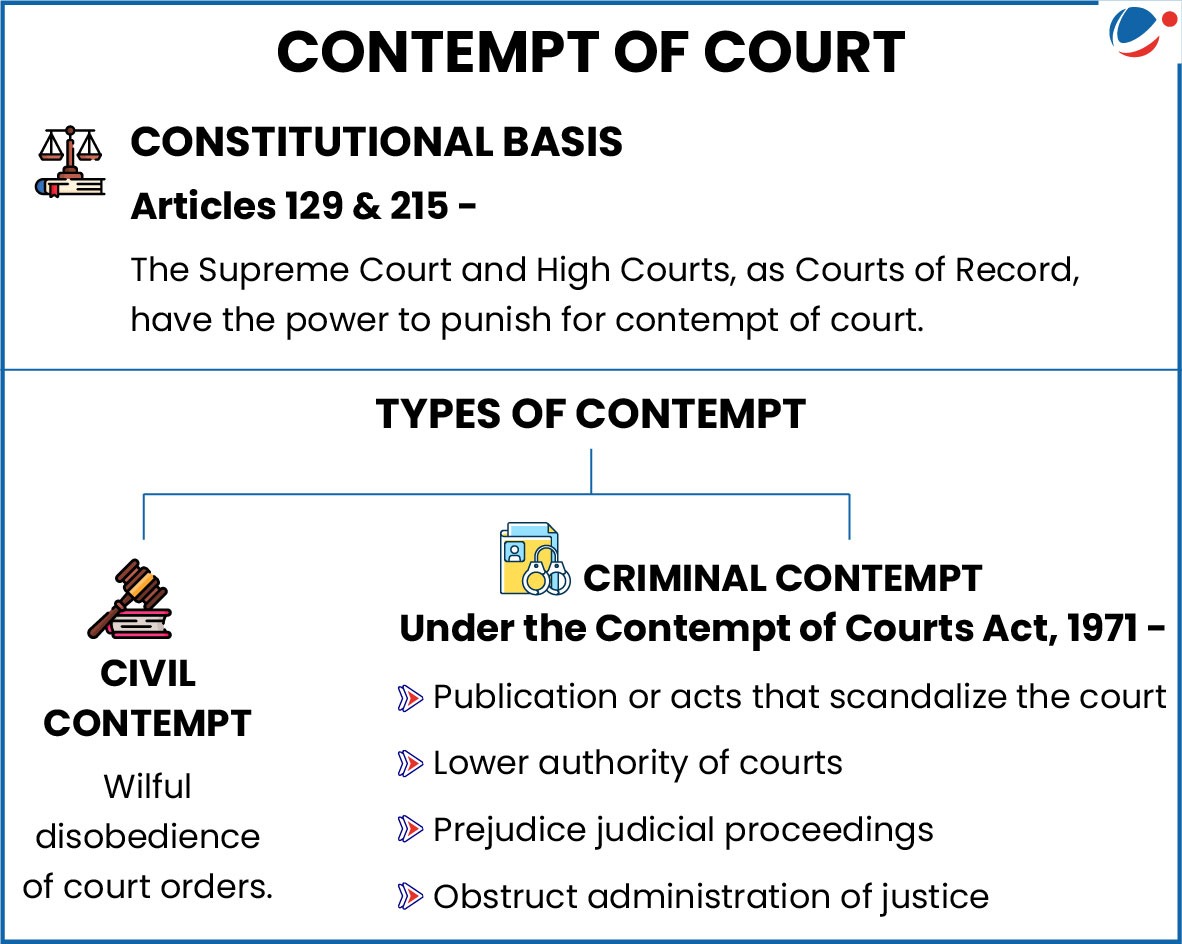
Key Observations
- Judicial criticism: Judicial decisions may be fairly criticized, but baseless allegations of corruption, collusion, or criminality against judges are impermissible.
- Re: Arundhati Roy (2002): Fair criticism of courts is permissible, but statements undermining judicial authority may amount to contempt.
- Amish Devgan v. Union of India (2021): Free speech cannot be used to create public disorder; constitutional institutions deserve protection.
- Safe Harbour & Intermediary Obligations: Social media intermediaries cannot remain “silent spectators” and must promptly remove unlawful content upon actual knowledge, without waiting for specific court orders.
- Under Section 79(3)(b) of the IT Act, 2000, failure to do so may results in the loss of safe harbour protection.
Social Media and Free Speech
- Democratization vs Misuse: Social media democratizes public discourse but enables hate speech, cyberbullying, and misinformation.
- Constitutional Boundaries: Art. 19(1)(a) guarantees free speech, subject to reasonable restrictions Article 19(2), including defamation and contempt of court.
- Risk of Media Trials: Social media campaigns may prejudice public opinion, undermine the presumption of innocence, and affect investigations.
- Scandalizing the Judiciary: Baseless allegations against judicial institutions erode public confidence and obstruct justice delivery.

