


Kerala seeing surge in ‘brain-eating amoeba’ cases mainly due to Acanthamoeba, a free-living amoeba found mainly in contaminated water.
About Brain-eating Amoeba
- Nature: A free-living, single-celled amoeba found in warm freshwater bodies (lakes, rivers, hot springs) and soil.
- Types: Although there are several types of free-living amoebas, three are known to cause severe disease in people are
- Acanthamoeba causes Granulomatous Amoebic Encephalitis (GAE).
- Naegleriafowlericauses Primary Amoebic Meningoencephalitis (PAM).
- &Balamuthiamandrillaris.
- Transmission: Can enter the body through the nose, skin, inhalation, etc. and can infect the brain.
- Why Called "Brain-eating Amoeba": It destroys brain tissue, leading to severe brain infection.
Fatality: PAM is rare but almost always fatal
Scientists Discover ASKAP J1745−5051, a stellar Rosetta Stone to decode Mysterious long-period radiotransients (LPTs) signals detected across the galaxy.
About ASKAP J1745−5051
- System Type: Binary star system consisting of a white dwarf (dense remnant of a dead star about the size of Earth but with a mass similar to the Sun) and a smaller red dwarf (one-tenth of the Sun’s mass).
- Signal Generation: As the orbit is tight, both stars orbit each other in just over one hour.
- This generates strong magnetic interactions producing repeating radio bursts detectable from Earth.
- Significance: May help explain the origin of mysterious LPT signals and distinguish between white dwarf systems and pulsars.
Six states i.e. Himachal Pradesh, Uttarakhand, Delhi, Uttar Pradesh, Haryana and Rajasthan agreed to sign MoU for Kishau Multi-Purpose Dam Project implementation.
About Kishau Multipurpose Dam Project
- Location: Along Uttarakhand-Himachal Pradesh border on River Tons (tributary of Yamuna).
- Dam Type: 236 m high Roller Compacted Concrete gravity dam.
- Power Generation: 660 MW installed capacity.
- Funding: Centre to provide 90% assistance for water component and remaining 10% to be shared by six states.
- Benefits: Drinking water, irrigation, flood control, and enhanced downstream hydropower generation.
- Note: Himachal Pradesh’s share of water to be supplied to Delhi and Rajasthan in return for sharing cost of Himachal Pradesh’s portion of power component of project.
Significance: Expected to improve clean water flow in River Yamuna
Article Sources
1 sourceNCERT has taken the decision to restore the original image of the Harappan “Dancing Girl” in its textbook.
About the Dancing Girl
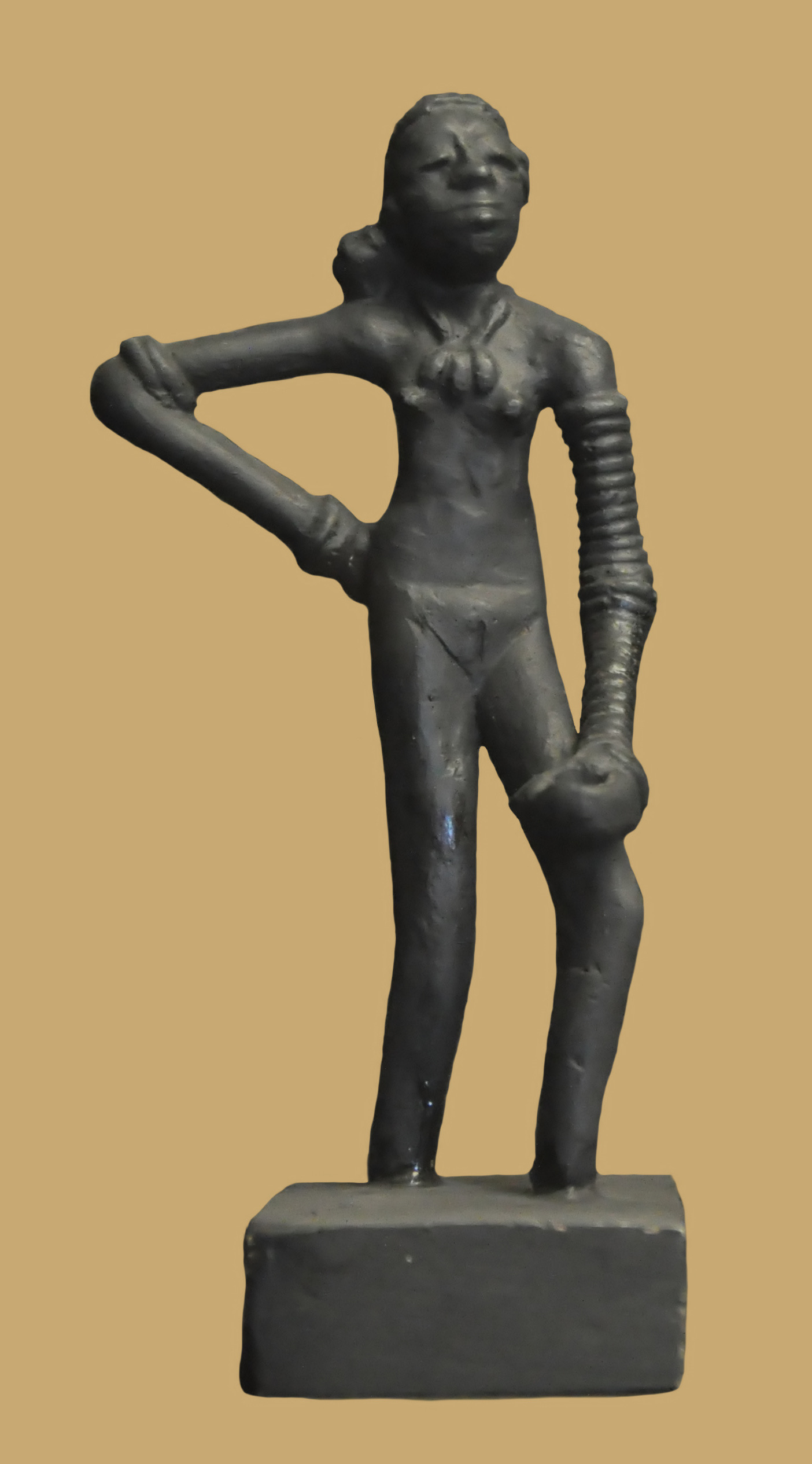
- It is a famous bronze figurine from the ancient city of Mohenjo-daro.
- It belongs to the Harappan (Indus Valley) Civilization (c. 2600–1900 BCE).
- Discovered in 1926 during excavations led by John Marshall.
- The figurine is about 10.8 cm tall and is currently housed at the National Museum, Delhi.
- Created using the lost-wax casting technique.
- Other Artefacts from Indus valley civilization: Steatite Priest King (Mohenjo Daro), Pashupati Seal (Mohenjo-daro), Terracotta Figurine of Mother Goddess, pottery, etc.
Jharkhand’s Bhagaiya silk, Kuchai silk, Munda jewellery and bamboo craft receive GI tag.
About GI tags
- Bhagaiya Silk: It represents a regional handloom tradition linked with Godda district and nearby areas.
- It combines silk, cotton, gheecha yarn, mulberry katan, zari and traditional weaving skill to create sarees etc.
- Kuchai Silk (Tussar silk): It is produced by tussar silkworms cultivated on the trees of Asan and Arjun.
- Part of an ancient tradition of Jharkhand, providing livelihood in rural areas.
- Munda jewellery: Celebrates Munda tribal community's artistic traditions, cultural heritage and creating livelihood opportunities.
- Bamboo Craft: Supports rural artisans in transforming bamboo into utility and decorative products.
India and China are in talks over joint UNESCO nominations for Xuanzang's travelogue, 'The Great Tang Records on the Western Regions'.
About Hiuen Tsang (629–645 CE)
- He is a renowned Chinese Buddhist monk, scholar, traveller and translator of the Tang period.
- He is best known for his 16-year pilgrimage to India. In India, he
- Visited the court of Harshavardhana.
- Participated in religious debates at Kannauj.
- Studied at NalandaMahaviharauniversityunder the guidance of the venerable monk Shilabhadra.
- Information provided by him:
- Harsha's empire (harsh punishment to criminals), incident of robbery on highway.
- Trade routes and duties at barriers,
- Social and religious systems, detailed account of Nalanda University, etc.
Article Sources
1 sourceScientists from India and Japan used the GRAPES-3 muon telescope to analyse 22 years of cosmic-ray data to monitor Earth's upper atmosphere and Sun’s magnetic field.
- Muons are secondary subatomic particles produced when cosmic rays collide with atmospheric oxygen and nitrogen.
About GRAPES-3
- It is a high-energy cosmic ray observatory located at Ooty, Tamil Nadu, at an altitude of about 2200 metres above sea level.
- Working: When high-energy cosmic rays or gamma rays enter Earth's atmosphere, they interact with atmospheric molecules and generate cascades of secondary particles called Extensive Air Showers (EAS).
- GRAPES-3 detects these air showers and analyses them to understand the properties of the original cosmic particles.
GRAPES-3 array is the highest density conventional EAS array in the world
World Gold Council’s survey indicatesCentral banks would increase gold reserves over next 12 months.
About World Gold Council
- It is an international membership organization representing the global gold mining industry.
- Objective: To promote gold as a strategic asset and support the development of a responsible, transparent, and sustainable gold market.
- Founded: 1987
- Created by: leading global gold mining companies.
- HQ: London.
- Membership: 29 major gold mining companies
