


MSMEs (Micro, Small and Medium Enterprises) emerged as gateway for first-generation entrepreneurs, women-led enterprises and youth-led ventures particularly in semi-urban and rural areas.
About MSMEs
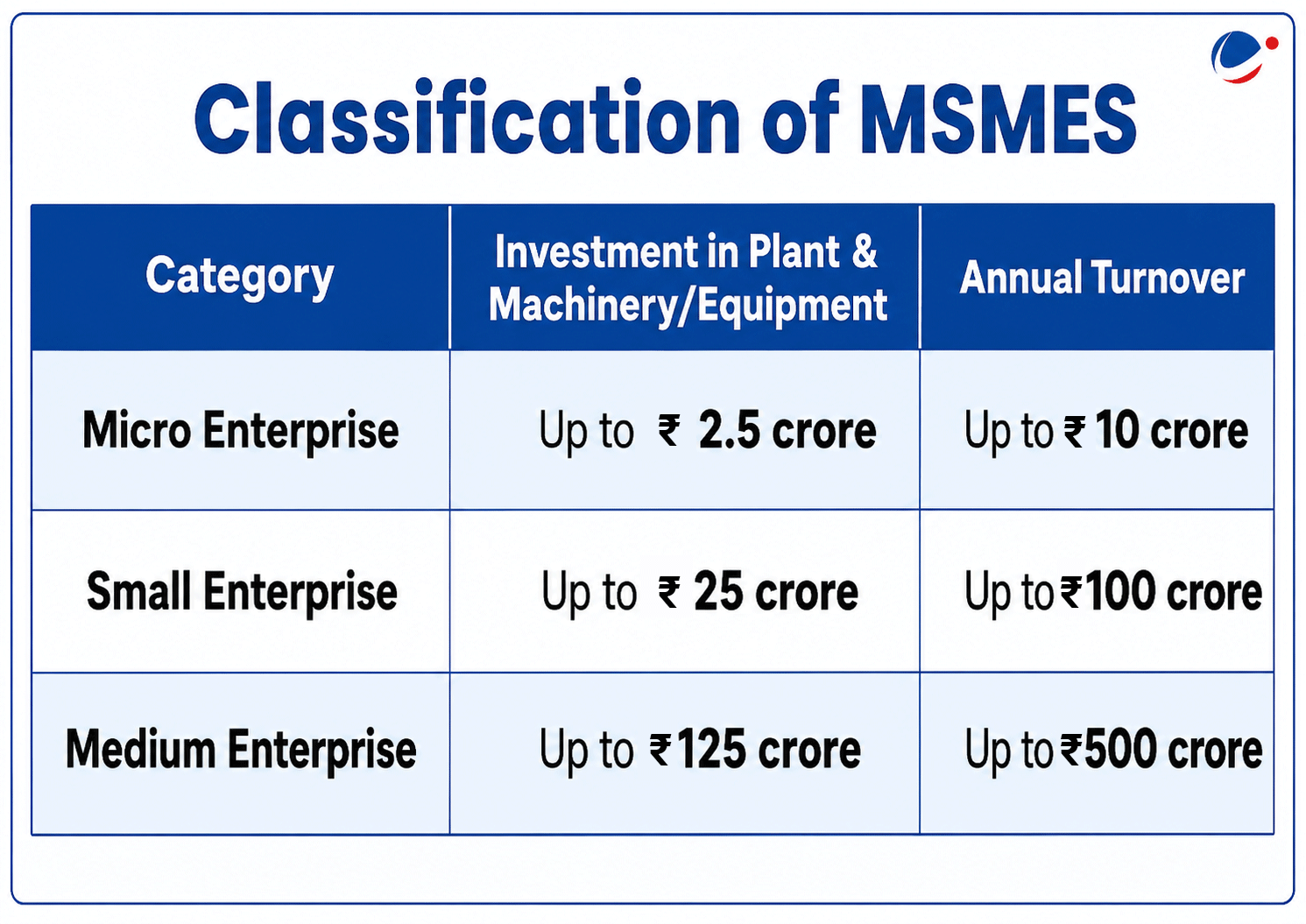
- Definition: Revised based on investment and annual turnover, effective from April 2025. (See Infographic).
- Economic Contribution: 31.1% in GDP, 35.4% in manufacturing output and 48.58% in exports. (January 2026)
- Second Largest source of Employment (After Agriculture): More than 38.9 crore people employed. (January 2026).
Key Achievements of MSMEs
- Increased Formalisation : Registrations under Udyam Registration Portal and Udyam Assist Platform crossed 8.7 Crore. (June 2026).
- Access to Credit: Credit Guarantee Fund Trust for Micro and Small Enterprises (CGTMSE) completed 25 years of operation.
- Responsive and Technology-Driven Governance: Through MSME Samadhaan Portal; CHAMPIONS Portal; Online Dispute Resolution (ODR) Portal, etc.
- Improving Market Access: Of the total goods and services procured by Central Public Sector Enterprises, 54.51% was sourced from MSEs.
Key Enabling Reforms Propelling growth in MSMEs
- Scheme for Promotion of Innovation, Rural Industry and Entrepreneurship (ASPIRE)
- Prime Minister's Employment Generation Programme (PMEGP): Flagship credit-linked subsidy scheme, promotes self-employment micro-enterprises in non-farm sector.
- Raising and Accelerating MSME Performance (RAMP): Supported by World Bank, aims to improve MSMEs' access to markets, finance and technology.
- Initiatives under the scheme have impacted more than 55 lakh MSMEs (June 2026).
- Others: United Nations designated 27 June as MSME Day; Credit Assessment Model (CAM) to enable faster and objective assessment of MSME loan applications; etc.



